
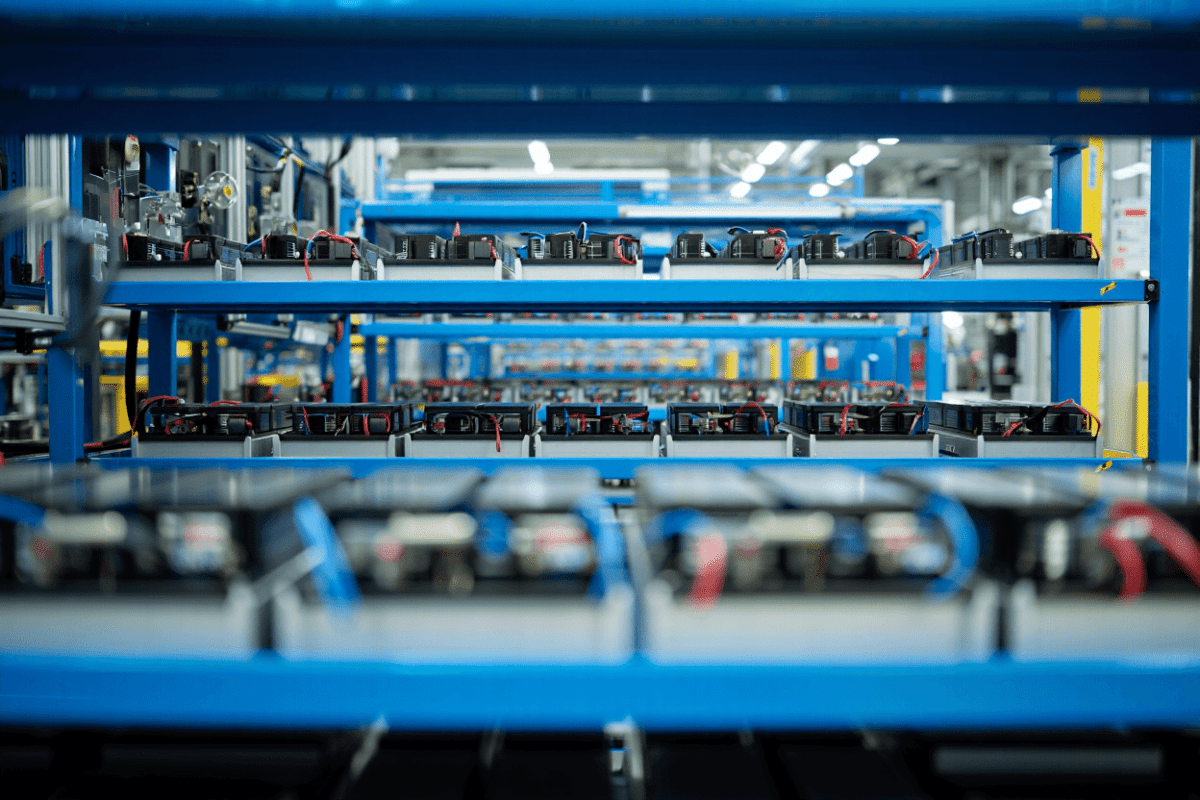
Ford Motor stock closed at $16.65 on May 28, 2026, trading near a four-year high and surging 36% since May following investor enthusiasm for the company’s new Ford Energy battery storage business. The revival marks a dramatic turnaround after Ford endured a $19.5 billion EV writedown in December 2025, positioning the automaker’s energy storage initiative as a potential growth catalyst that could reshape investor perception of the legacy manufacturer.
🔥 Quick Facts
- Ford stock at $16.65, approaching four-year highs in late May 2026
- Ford Energy launched May 12, 2026, with target capacity of 20 GWh annually by late 2027
- EDF Power Solutions deal signed May 18 for 20 GWh over five years starting 2028
- Q1 2026 earnings: $0.66 EPS, beating analyst estimates of $0.18 by 247%
- Morgan Stanley bullish call cites $10 billion opportunity from energy storage business
Why Ford’s Energy Storage Business Sparked a Stock Rally
Ford Energy represents a strategic pivot from the automaker’s costly EV transition struggles. After announcing a $19.5 billion pretax charge related to EV programs in December, Ford shifted focus to battery energy storage systems for utilities and data centers—leveraging decades of manufacturing expertise in a high-margin adjacent market.
The timing proved critical. With demand for grid-scale battery storage accelerating due to AI data center buildout and renewable energy integration, Ford seized an opportunity that requires less capital-intensive R&D than EV development. The DC Block battery energy storage systems produced by Ford Energy target utility-scale projects, positioning the subsidiary alongside established vendors like Tesla Energy and LG Energy.
The EDF Deal and First Customer Validation
On May 18, 2026, Ford Energy secured its first major contract: a five-year framework agreement with EDF power solutions North America for up to 20 GWh of battery storage systems. Starting in 2028, EDF can procure 4 GWh annually, effectively committing to one-fifth of Ford Energy’s planned capacity.
The EDF agreement validates Ford’s manufacturing credentials, as the European energy giant entrusts Ford with critical infrastructure. This represents more than a product deal—it signals operational credibility and grid reliability standards that Ford can meet. Industry deliveries begin in late 2027, providing visibility into commercial execution.
Financial Performance and Analyst Response
Ford Motor posted strong Q1 2026 results on April 29, 2026, with net income of $2.55 billion and adjusted EPS of $0.66—crushing analyst consensus of $0.18. The company raised its 2026 EBIT guidance, buoyed by a $1.3 billion tariff refund and operational improvements.
Just days later, Morgan Stanley’s bullish analysis accelerated momentum. The firm highlighted a potential $10 billion opportunity from Ford Energy, suggesting the business could eventually support recurring revenue streams distinct from traditional automotive cycles. This narrative attracted institutional investors seeking exposure to energy infrastructure themes without direct renewable energy exposure.
| Metric | Q1 2026 Results | Prior Year (Q1 2025) |
| Revenue | $43.3 billion | $40.9 billion |
| Net Income | $2.55 billion | $473 million |
| Adjusted EBIT | $3.5 billion | TBA |
| EPS (Adjusted) | $0.66 | $0.18 (consensus) |
| Stock Price (May 28) | $16.65 | (approx. $12.25) |
The Ford Energy narrative shifted investor focus away from legacy vehicle margins toward emerging revenue opportunities. Analysts recognized that a $2 billion capital allocation to battery storage could generate 25%+ operating margins long-term—substantially higher than traditional automotive production.
“Ford Energy positions the company to participate in one of the fastest-growing segments in power infrastructure. The business model reduces cyclical exposure while offering higher margin profile than traditional vehicle manufacturing.”
— Morgan Stanley Research analysts, May 2026
Manufacturing Capacity and Competitive Positioning
Ford Energy plans to deploy at least 20 GWh of battery storage annually by late 2027, positioning itself as a meaningful player in the utility-scale segment. The company leverages century-old manufacturing infrastructure repurposed for energy storage, reducing ramp-up costs compared to greenfield competitors.
The AI data center expansion trend has accelerated demand for backup power systems and grid stabilization, creating tailwinds for battery manufacturers. Ford’s timing coincides with peak demand cycles, suggesting multiannual growth visibility beyond the initial EDF contract. Utilities are racing to meet renewable integration requirements and infrastructure resilience standards, positioning Ford Energy for multiple customer wins.
What Comes Next for Ford Stock
Near-term catalysts center on manufacturing ramp execution and customer announcements. If Ford secures additional contracts through 2026-2027 comparable to the EDF deal, investor confidence could support continued appreciation. The company has capacity headroom to service multiple utility operators and data center operators, with each contract representing potential 5-10 GWh commitments.
Wall Street consensus currently reflects average price target of $13.56, though recent momentum has pushed the stock above guidance. This divergence indicates market recognition of upside optionality from Ford Energy, even if traditional automotive estimates remain subdued. Management guidance updates in Q2 and Q3 earnings calls will determine whether current valuations prove sustainable.
Can Ford Maintain Its Energy Storage Momentum?
The critical question is whether Ford Energy can execute operationally at scale without disrupting core automotive profitability. The $1.3 billion tariff refund that supported Q1 results may not repeat, requiring organic cash generation to fund energy storage expansion. Manufacturing discipline and delivery timeliness on the EDF contract will determine whether this business becomes a transformative long-term story or a near-term sentiment driver with limited follow-through.
Sources
- Ford Motor Investor Relations – Q1 2026 earnings report and guidance update
- Reuters – Ford Energy launch and EDF partnership coverage
- Bloomberg – Morgan Stanley bullish research call on Ford Energy opportunity
- Yahoo Finance – Recent stock performance and analyst price targets
- EDF Power Solutions – Official announcement of five-year battery storage agreement










