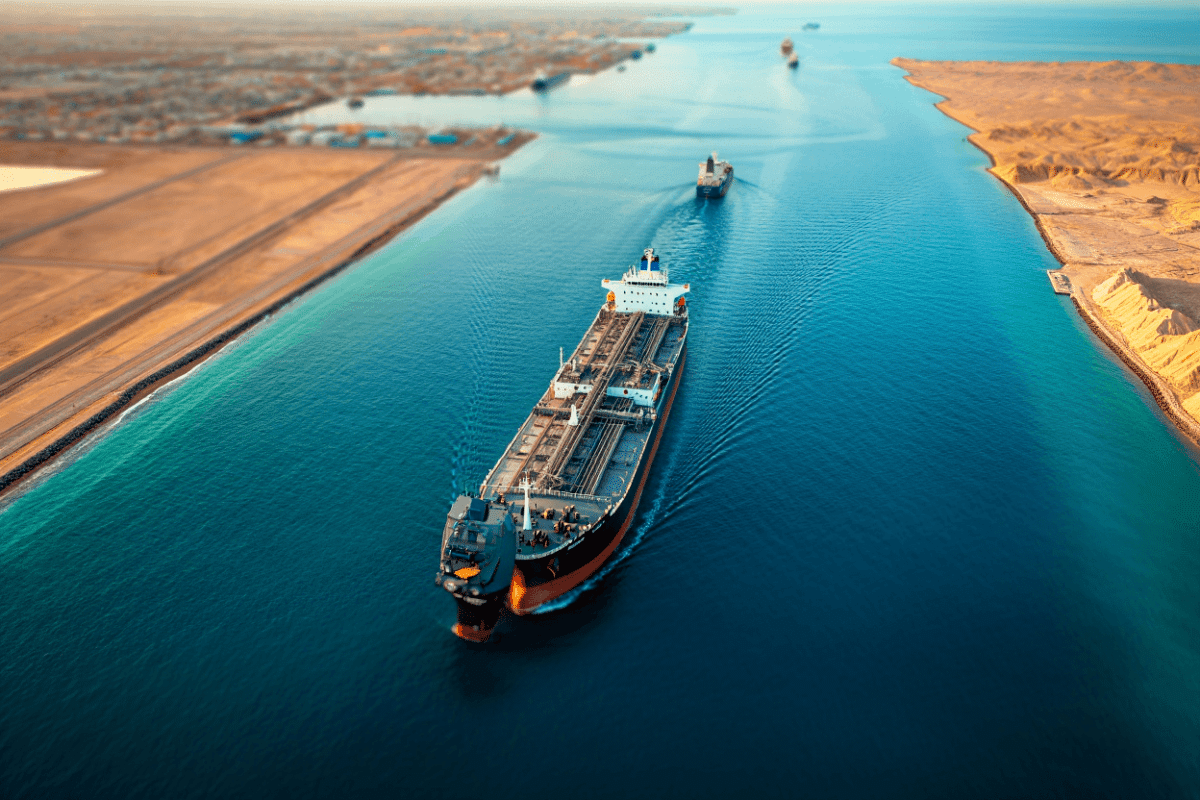
Iran’s Islamic Revolutionary Guard Corps announced that 26 commercial vessels — including oil tankers and container ships — successfully transited the Strait of Hormuz over a 24-hour period on May 20, 2026, marking the latest sign of tentative recovery in one of the world’s most critical energy chokepoints. This coordinated passage, following an initial closure in early March, reflects Iran’s selective management of shipping traffic through a waterway that handles roughly 20% of global daily crude oil exports. The recovery remains fragile, with transit volumes still far below historical norms of 100-129 vessels per day.
🔥 Key Facts
- 26 vessels coordinated through Strait of Hormuz in 24 hours as of May 20, 2026
- Strait carries 20% of global daily oil supply and 20% of liquefied natural gas
- Recovery from March 4 closure when Iran declared the waterway off-limits
- Brent crude trading near $107-110 per barrel amid supply disruption concerns
- Iran enforcing multi-tiered clearance system requiring advance coordination
The Strategic Importance of the Strait of Hormuz
The Strait of Hormuz has served as the lifeblood of global oil markets for decades, connecting the Persian Gulf to international waters and ultimately to energy-dependent markets across Europe, Asia, and North America. This narrow passage — measuring just 21 nautical miles at its widest point — funnels one of the world’s largest concentrations of crude oil exports through a strategically sensitive corridor that geopolitical tensions can disrupt in moments.
Before the current disruption began in late February 2026, the strait handled approximately 20.3 million barrels of crude oil daily, along with significant liquefied natural gas shipments. Any prolonged disruption of this flow sends shockwaves through global energy markets, raising prices and forcing shipping companies to reroute cargo along longer, more expensive routes around South Africa — a process that consumes additional time, fuel, and operational costs.
From Blockade to Tentative Recovery: What Changed
On March 4, 2026, Iran’s Revolutionary Guard Corps declared the strait closed to vessels bound for or originating from the United States, Israel, and allied nations. This announcement triggered a dramatic collapse in shipping traffic. According to geopolitical analysis covering the disruption, daily transit volumes plummeted from normal rates to an average of just six vessels per day in early April. Stranded cargo accumulated rapidly, with over 800 ships reported backed up in and around the waterway by mid-May.
The recent announcements of coordinated transits — 26 vessels on May 20 and reports of up to 35 vessels on May 22 — suggest Iran is now allowing selective passage for nations willing to comply with new clearance protocols. However, shipping industry experts emphasize that these improved numbers still represent roughly one-quarter of pre-crisis daily traffic, indicating the recovery remains incomplete and potentially reversible.
How Iran’s Coordination System Works
Iran has established a multi-tiered clearance process for vessels seeking passage. According to Reuters investigative reporting, the procedure now requires advance coordination with Iranian naval authorities, with certain island checkpoints serving as control points. The system reflects Iran’s attempt to maintain influence over energy exports while avoiding outright disruption that could isolate its economy further.
| Metric | Pre-Crisis (2025) | Worst Disruption (Early April 2026) | Current Recovery (Late May 2026) |
| Daily Vessel Transits | 100-129 vessels | ~6 vessels | ~25-35 vessels |
| Brent Crude Price | $85-95/barrel | $110-120/barrel | $107-110/barrel |
| Stranded Shipping | Normal operations | 800+ vessels backed up | Backlog gradually clearing |
| Insurance Costs | Standard rates | Elevated premiums | Declining but still elevated |
This selective-passage approach reflects a geopolitical calculation: Iran gains leverage over energy markets and international negotiations while avoiding the kind of complete blockade that would accelerate regional conflict or trigger coordinated international response. For shipping companies, the emerging system means navigating diplomatic complexity alongside maritime logistics, adding layers of uncertainty to already volatile operations.
Oil Price Implications and Global Energy Markets
The tentative recovery has provided some relief to crude oil markets. According to Reuters reporting from May 12, as peace talks appeared to gain traction, Brent crude futures climbed 3.42% to settle at $107.77 per barrel, while U.S. West Texas Intermediate closed up 4.19%. This reflects investor confidence that further recovery is possible, though prices remain significantly elevated compared to pre-crisis levels.
The elevated price environment carries real consequences for American consumers. According to recent market analysis, energy prices remain a key factor in broader inflation dynamics. Gasoline prices have remained sticky above $3.50 per gallon in most U.S. markets, with energy sector stocks benefiting from higher crude valuations even as other sectors face growth pressures.
Why This Recovery Is Tentative, Not Permanent
Despite the recent positive announcements, multiple factors suggest caution is warranted. First, the current transit volumes remain at roughly 25-30% of normal capacity. The world’s shipping infrastructure has adapted somewhat — vessel operators have found alternative routes, refined their schedules, and adjusted pricing — but sustained normalization requires confidence in uninterrupted passage. Second, geopolitical tensions remain elevated. The underlying conflict between the United States, Israel, and Iran continues unresolved, with Iran’s recent maneuvers suggesting strategic positioning rather than capitulation.
Third, insurance and shipping-cost volatility persists. Even with improved transit rates, companies operating in the region face elevated insurance premiums and slower vessel movement through congested waters. A sudden policy reversal could spark another dramatic supply contraction. Industry observers note that true normalization requires not just improved transit flows but restored confidence — a commodity in short supply given recent events.
What Happens if the Recovery Stalls?
If the Strait of Hormuz experiences renewed disruption, the economic fallout would be substantial. The International Energy Agency has warned that a sustained closure could push Brent crude above $150 per barrel within weeks, equivalent to roughly $7 per gallon of gasoline at U.S. pumps according to analyst projections. Beyond oil, liquefied natural gas markets would face acute shortages in Europe, Asia, and Japan, where energy-dependent economies rely heavily on Persian Gulf supplies. Global supply chains would face additional pressure as shipping costs spike and delivery times extend dramatically. Inflation would likely accelerate, central banks might tighten monetary policy further, and economic growth could stall across multiple regions.
The tentative recovery thus represents a critical juncture. If Iran allows sustained transit at improved levels, global oil markets could stabilize, geopolitical tensions might ease, and the backlog of stranded cargo would eventually clear. Conversely, a reversal would confirm that the conflict remains unresolved and likely to escalate further.
What Comes Next for Energy Markets and Global Shipping?
Shipping companies, oil traders, and energy investors are closely monitoring both transit announcements and diplomatic signals from Washington, Tehran, and regional actors. Any new transits above the current 25-35 vessels per day would be a positive indicator. Brent crude settling sustainably below $100 per barrel would suggest markets view the recovery as resilient. Conversely, a decline in announced transits or renewed military tensions would quickly reverse recent gains and send prices higher.
The broader lesson from the 2026 Strait of Hormuz disruption is that modern energy markets depend not just on physical supply but on geopolitical stability. A single strategic chokepoint, controlling 20% of global daily oil trade, can disrupt the economies of dozens of nations in hours. The tentative recovery underway suggests that even amid conflict, opportunities for negotiated passage and incremental normalization exist — but only if all parties recognize the mutual costs of prolonged disruption.
Sources
- Al Jazeera – Iran’s announcement of 26-vessel transit confirmation on May 20, 2026
- Reuters – Investigation into Iran’s multi-tiered clearance system and island checkpoints
- CNBC – Oil price tracking and energy market analysis during disruption period
- Bloomberg/Geopolitical Futures – Traffic volume data and historical comparisons
- Institute for the Study of War – Iran military and naval policy analysis
- International Energy Agency (IEA) – Global energy supply impact modeling