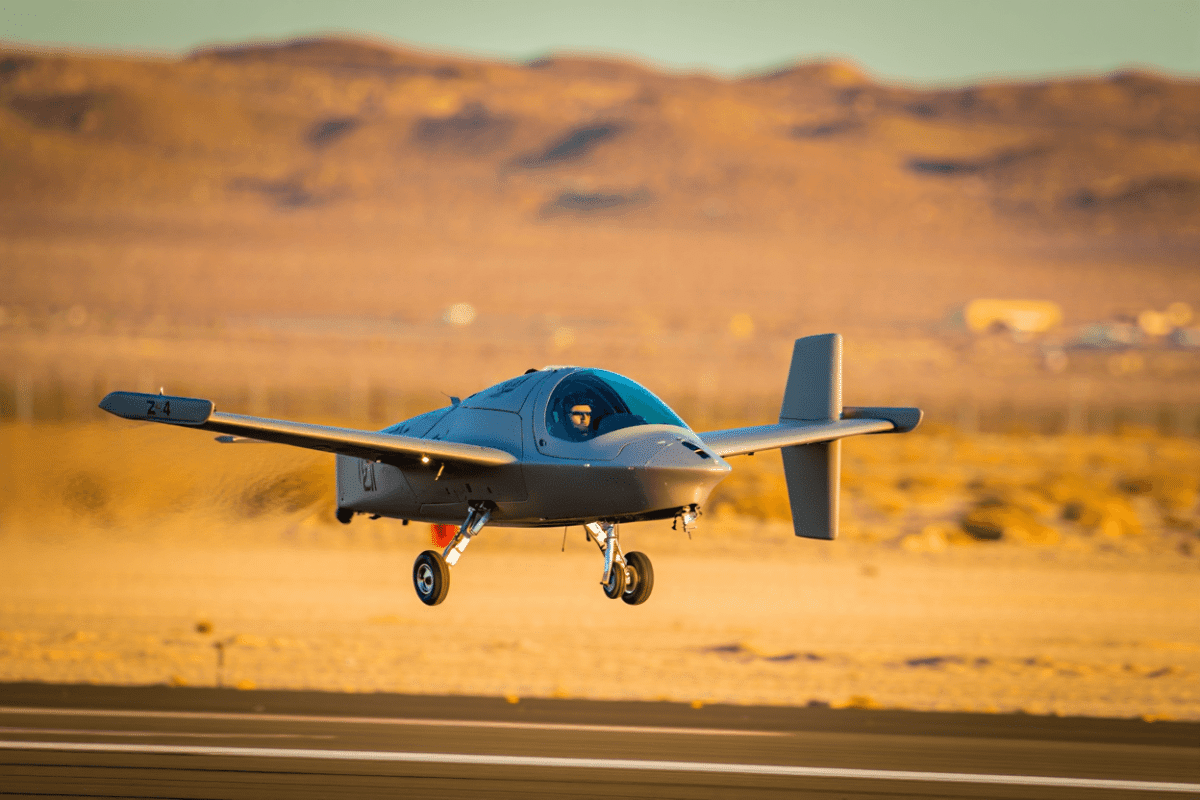
DARPA’s XRQ-73 SHEPARD just made aviation history with a groundbreaking first flight. The experimental hybrid-electric aircraft completed its maiden mission in April at Edwards Air Force Base, marking a major breakthrough for next-generation military reconnaissance. This revolutionary propulsion system could transform how the U.S. military operates unmanned aircraft.
🔥 Quick Facts
- Aircraft Type: Hybrid-electric unmanned flying wing, weighing approximately 1,250 pounds
- First Flight Achievement: Reached 18,000 feet altitude and 288 mph speed in inaugural mission
- Program Partners: DARPA, Northrop Grumman, Scaled Composites, and Air Force Research Laboratory
- Major Milestone: Demonstrates military utility of hybrid-electric propulsion for future operations
A New Era in Military Aviation Takes Flight
DARPA announced May 6 that the XRQ-73 SHEPARD successfully conducted its first hybrid-electric demonstration at Edwards Air Force Base in California. The aircraft, built by Northrop Grumman and flight-tested by Scaled Composites, completed an April 2026 mission that exceeded expectations. The tailless flying wing design achieved 18,000-foot altitude while maintaining remarkable operational efficiency.
According to DARPA, this achievement represents far more than a single test. The flight validates a revolutionary hybrid-electric architecture that will enable entirely new mission capabilities. Lt. Col. Clark McGehee, SHEPARD program manager, emphasized the broader implications for future defense systems and warfighter effectiveness.
Breaking the Electric Barrier: What Makes SHEPARD Different
The XRQ-73 combines a gas turbine engine with advanced electric motors to create a uniquely efficient propulsion system. This hybrid-electric architecture offers three critical advantages over conventional aircraft. First, the system achieves significant fuel efficiency improvements compared to traditional jet propulsion.
Second, reduced emissions make the aircraft ideal for sensitive operations and environmental sustainability goals. Third, the design provides enhanced operational flexibility by allowing pilots to optimize power distribution based on mission needs. The lightweight flying wing structure, approximately 1,250 pounds, further amplifies efficiency.
Flight Test Data and Technical Performance
The maiden flight in April provided stunning performance metrics. The XRQ-73 reached 18,000 feet, achieved speeds of approximately 288 mph, and demonstrated stable autonomous flight characteristics. Dr. Mike McLean, a Scaled Composites test pilot, remotely piloted the aircraft through its critical test envelope.
| Specification | Performance |
| Maximum Altitude | 18,000 feet (5,500 meters) |
| Top Speed | 288 mph (460 km/h, 250 knots) |
| Aircraft Weight | Approximately 1,250 pounds (567 kg) |
| Wing Configuration | Tailless flying wing design (Group 3 UAS) |
| Propulsion Type | Hybrid-electric (turbine plus electric motors) |
The aircraft completed its test flights with exceptional stability. Its quiet electric components combined with the efficient gas turbine provide a capability gap that troubles potential adversaries.
“The architecture proven by the XRQ-73 paves the way for new types of mission systems and delivered effects. We look forward to advancing this technology through the flight test program and delivering new capabilities for our warfighters.”
— Lt. Col. Clark McGehee, SHEPARD Program Manager
SHEPARD Program: Part of DARPA’s X-Prime Innovation Strategy
SHEPARD, or Series Hybrid Electric Propulsion AiRcraft Demonstration, operates under DARPA’s X-Prime program construct. This approach specifically targets emerging technologies while rapidly reducing system-level integration risks. DARPA designed SHEPARD to mature hybrid-electric architectures for future reconnaissance and surveillance missions.
Northrop Grumman led the aircraft’s design and manufacturing, while Scaled Composites contributed critical rapid prototyping and flight testing expertise. The Air Force Research Laboratory provided essential technical guidance and integration support. This multi-agency collaboration accelerated development and ensured military relevance.
What Does SHEPARD Success Mean for the Future of Military Aviation?
The XRQ-73 flight success opens extraordinary possibilities for next-generation aircraft design. Hybrid-electric propulsion enables smaller, quieter, and more efficient unmanned systems. These advantages are critical for operations near near-peer adversaries that possess advanced detection technologies.
Could SHEPARD accelerate the transition away from conventional fuel-dependent aircraft toward a hybrid-electric future? The evidence suggests yes. DARPA plans to continue extensive flight testing and push hybrid-electric technology toward operational deployment. Future variants may feature enhanced payloads, extended endurance, and simplified maintenance requirements.
Sources
- DARPA – Official announcement of XRQ-73 SHEPARD first flight and hybrid-electric demonstration
- Northrop Grumman – Technical details on aircraft design and SHEPARD collaboration
- Scaled Composites – Flight test execution and pilot information