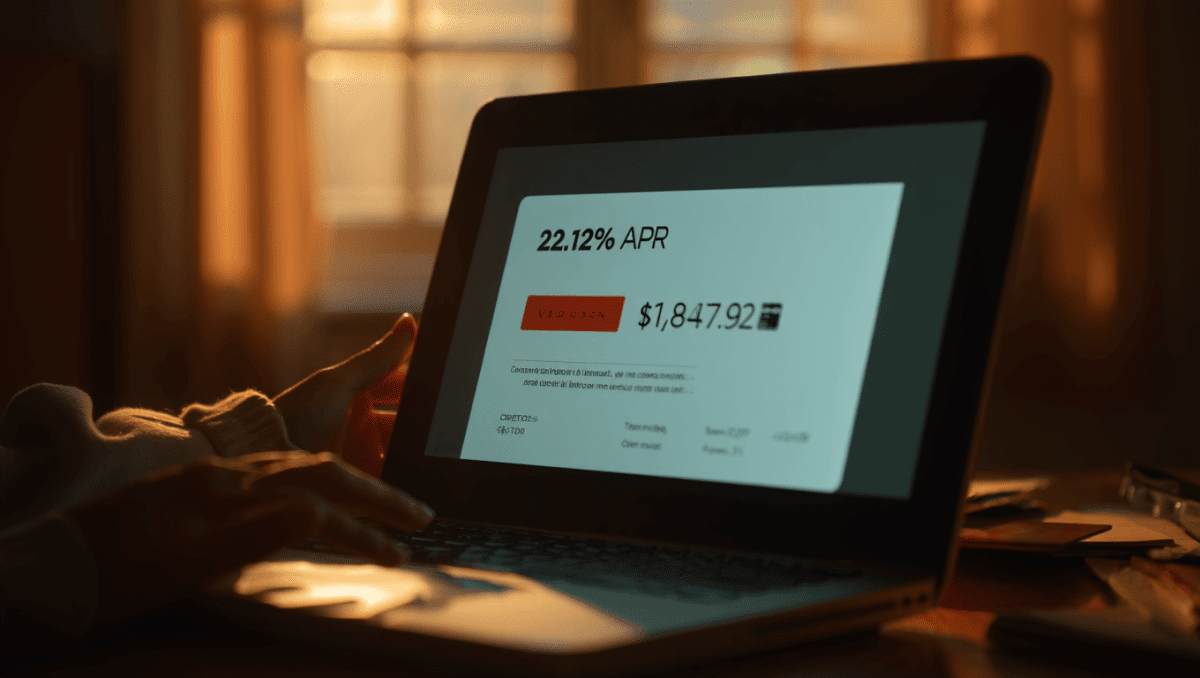
Credit card interest rates just hit 22.12% average. Meanwhile, savings rates remain unmoved despite economic shifts. Here’s what this widening gap means for your wallet.
🔥 Quick Facts
- Average Credit Card APR: 22.12% for new offers as of May 2026, steady from prior month
- Existing Accounts: 21% average APR, slightly lower than new cardholders
- Savings Account Rate: High-yield accounts offer 4.03% to 5.00% APY, essentially flat
- Rate Gap: The 17-point spread between borrowing and savings creates a growing wealth divide
The 22.12% Barrier: A New Lending Era
Credit card rates have hit their latest milestone in May 2026. WalletHub’s latest report shows the average rate for new credit card offers holding steady at 22.12%, unchanged from the previous month.
This marks a shift in lending psychology. Cardholders applying for new accounts face rates nearly identical to April, suggesting lenders have plateau’d their pricing strategy. However, consumers carrying balances on existing accounts pay a marginally better 21% APR.
Why Savings Rates Won’t Budge
The Federal Reserve’s steady hand on monetary policy means savings accounts remain in limbo. High-yield savings accounts continue offering between 4.03% and 5.00% APY depending on the institution.
According to Fortune and Bankrate data from mid-May, these rates have essentially flatlined. Earlier reductions in the federal funds rate haven’t translated to downward pressure on savings yields, as online banks compete fiercely to maintain their customer base.
Understanding the Debt Spiral
| Metric | Current Rate | Impact |
| New Card APR | 22.12% | Increases monthly payment burden |
| Existing Account APR | 21.00% | Slightly better for cardholders |
| High-Yield Savings | 4.03-5.00% | Inadequate against borrowing costs |
| Rate Spread | 17+ points | Discourages saving, encourages debt |
The gap between credit costs and savings yields creates a troubling incentive structure. A consumer with a $5,000 balance on a card at 22% APR pays roughly $91 monthly in interest alone, while $5,000 in savings earns merely $17 to $21 monthly at prevailing rates.
“When credit card interest rates increase by 1 percentage point, consumers reduce their credit card spending by 8.7 percent. Higher rates create meaningful behavioral shifts.”
— Boston Federal Reserve, Economic Research Publication
Who Bears the Heaviest Burden
Americans carrying five-figure balances jumped from 23% in 2025 to 29% in 2026, according to recent surveys. These cardholders bleed money through interest charges, paying thousands annually just to maintain current debt levels.
The 22.12% average obscures individual variations. Store cards spike to 25-32%, while premium cards for excellent credit dip to 19-24%. Someone with fair credit faces rates 5-8 points higher than the mean.
What Comes Next in This Rate Environment
The Federal Reserve has signaled no immediate rate cuts are planned. Savings account competition between online banks and credit unions continues, but structural factors limit upward movement. Credit card issuers show no urgency to lower rates when consumers demonstrate willingness to pay.
Will the 22.12% plateau shift in the coming months, or will we see further creep upward? Factors including inflation data, consumer spending patterns, and Fed communication will determine the path forward. Until then, the battle between borrowing and saving remains decidedly lopsided.
Sources
- WalletHub – Current Credit Card Interest Rates and Credit Card Landscape Report, May 2026
- Federal Reserve Board – Consumer Credit Report (G.19), March 2026 data release
- Boston Federal Reserve – How Interest Rate Changes Affect Credit Card Spending Analysis, March 2026