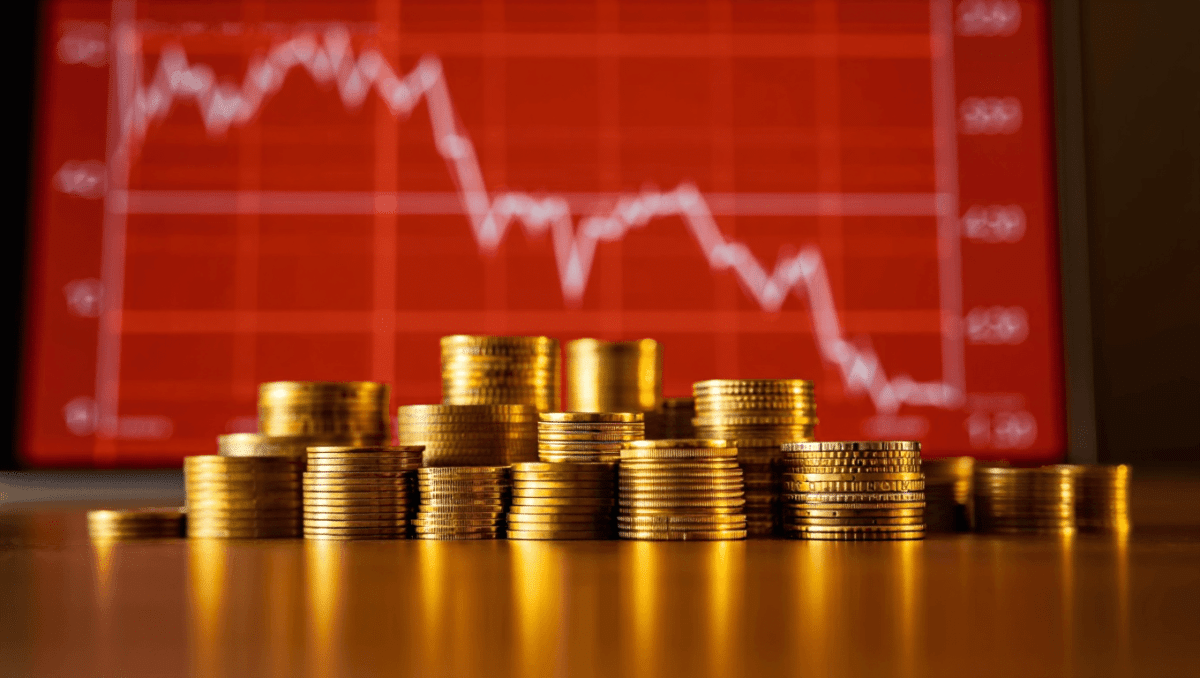
Gold just tumbled to $4,688 per ounce, marking another retreat as rising Treasury yields continue to pressure precious metal investors. The decline, down 0.8% Wednesday morning, reveals a critical shift in market sentiment that could reshape investment strategies through 2026.
🔥 Quick Facts
- Current Price: $4,688 per ounce as of May 13, 2026, 9:05 a.m. ET
- Daily Decline: Down $19 (0.8%) from May 12 closing, continuing second consecutive day of losses
- Trigger: Inflation data at 3.8% reduced expectations for Fed rate cuts this year
- Year Target: JP Morgan forecasts Q4 2026 at $5,055 oz, Goldman Sachs projects $5,400 by year-end
Higher Yields Signal End of Gold’s Rapid Ascent
Treasury yields spiked on Wednesday following stronger-than-expected inflation readings, making bonds and money market funds increasingly attractive to investors. When yields rise, non-yielding assets like gold become less competitive in investment portfolios. According to Reuters, inflation concerns have weighed heavily on expectations for interest rate cuts, shifting market dynamics overnight.
The real yield on bonds directly impacts gold demand since precious metals offer no coupon income or dividends. Investors face a simple choice: hold gold earning zero percent, or lock in higher returns through fixed income. This dynamic has pressured prices from their January peak of $5,594 per ounce, representing a brutal 16% decline in just four months.
Inflation Surprise Crushes Rate-Cut Optimism
Markets had positioned for eventual Federal Reserve rate cuts later in 2026, a scenario that would have kept yields low and gold demand strong. However, Wednesday’s 3.8% inflation print disrupted that narrative entirely. Economic Times reported that spot gold fell 0.4% to $4,694.59 per ounce following the data release, as traders repriced expectations for looser monetary policy.
The timing proves critical: with geopolitical tensions in the Middle East and trade policy uncertainty under discussion, investors expected inflation to moderate, creating a goldilocks scenario for precious metals. Instead, persistent inflation signals potential higher-for-longer interest rates, directly contradicting gold’s bullish thesis.
Market Data: Gold Performance vs. Forecasts
| Metric | Current Value |
| Spot Price Today | $4,688 per oz |
| May 12 Close | $4,707 per oz |
| January 2026 Peak | $5,594 per oz |
| JP Morgan Q4 Target | $5,055 per oz |
| Goldman Sachs Year Target | $5,400 per oz |
“Gold is often viewed as a hedge against inflation, but higher interest rates tend to pressure the non-yielding metal.”
— Reuters Market Analysis, May 13, 2026
Central Bank Demand and Safe-Haven Appeal Still Matter
Despite current headwinds, the long-term case for gold remains intact according to major financial institutions. Central banks continue accumulating gold at record pace, viewing precious metals as reserve assets independent of any single currency’s strength. JP Morgan’s bullish 2026 forecast reflects this structural demand from official sector buyers who aren’t swayed by quarterly yield shifts.
The World Gold Council reported Q1 2026 demand reached 1,231 tonnes, representing 2% year-over-year growth despite the price decline. This resilience in physical demand suggests institutions view current levels as buying opportunities ahead of expected monetary easing late in the year. Geopolitical risks in the Middle East and ongoing trade tensions continue underwriting safe-haven demand for the precious metal.
Are Current Prices Setting Up a Buying Opportunity for 2026?
The gap between current spot prices of $4,688 and consensus year-end forecasts above $5,000 represents approximately 7-15% upside potential if predictions hold. Analysts at Goldman Sachs, JP Morgan, and Morningstar all maintain bullish longer-term outlooks, suggesting current pullbacks may represent tactical accumulation zones rather than secular trend reversals.
However, investors must recognize a critical risk: if the Federal Reserve maintains elevated rates throughout 2026 and inflation remains above target, gold could struggle to recover toward previous peaks. The metal faces a narrow path where rates need to stay high enough to avoid systemic risks, yet low enough that alternatives to gold become less attractive. Market participants watching the next Fed decision and monthly inflation reports will largely determine May’s weakness into a buying opportunity or the start of a longer consolidation period.
Sources
- Fortune – Gold price tracking for May 13, 2026 at 9:05 a.m. ET
- Reuters – Gold extends decline as inflation concerns weigh on rate cut expectations
- Economic Times – Gold prices fall following U.S. inflation data release