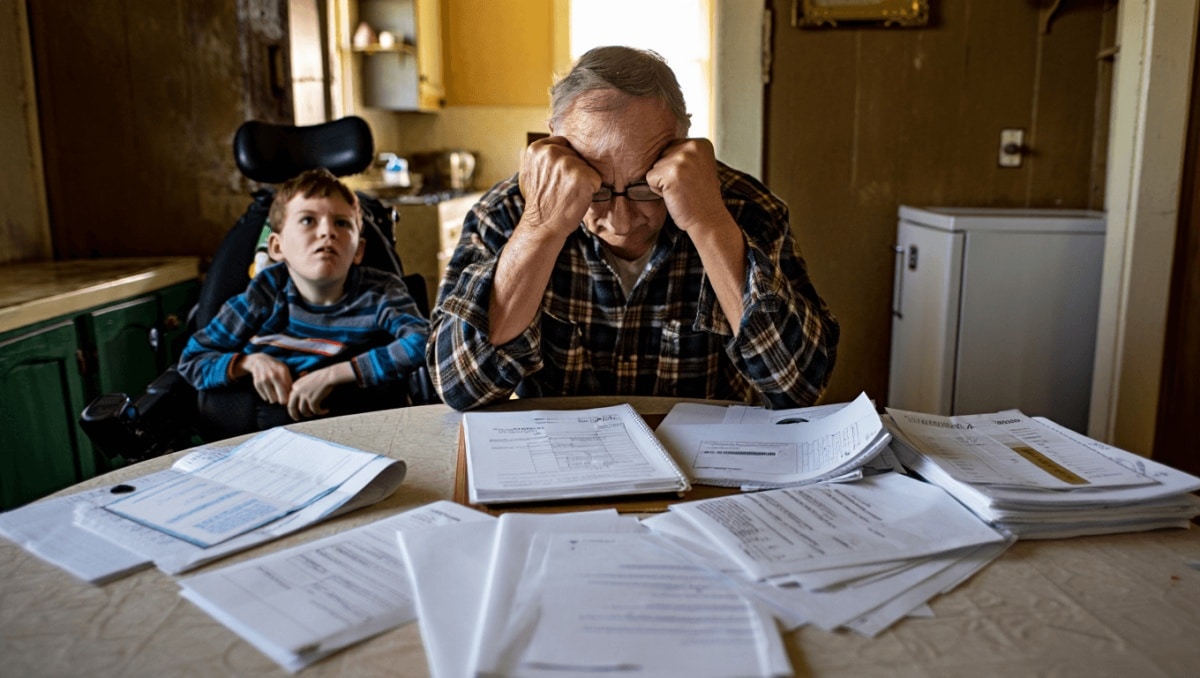
A 71-year-old grandfather in central Illinois is quietly doing what many families increasingly must: stepping into a parenting role late in life. Martin Odum and his wife have taken full-time care of their grandson, Noah, who was born with spina bifida, juggling retirement income and disability benefits to keep the household afloat while encouraging Noah’s athletic and academic progress.
From retirement to round‑the‑clock caregiving
Odum and his wife live in Seneca, Illinois, in the same mobile home they’ve occupied for decades. After a 30‑year career as an electrician and a second stint in maintenance work, he expected retirement to mean more free time—not another full‑time caregiving role.
The couple has been married for more than half a century, and family responsibility has followed them across generations. They previously helped raise a granddaughter who is now a 28‑year‑old nurse; five years ago they welcomed Noah into their home when he was in middle school.
Legal guardianship, not formal adoption
Noah’s placement began informally and later included temporary guardianship paperwork signed by his father. Odum says they view “temporary” as effectively permanent: they plan for Noah to finish high school and start junior college next year rather than pursue a formal adoption now.
- Location: Seneca, central Illinois
- Caregivers: Martin (71) and his 74‑year‑old wife
- Child: Noah, born with spina bifida, turning 17 in May
- Support: Noah receives disability benefits and military insurance through his stepmother; grandparents draw Social Security and a small pension
- Activities: State champion in wheelchair shot put and discus; multiple golds in adaptive sports
Sports, school and a push for opportunity
Getting Noah involved in extracurriculars became a priority. He joined his high school’s track team for wheelchair shot put and discus and began participating in adaptive sports programs. That investment has paid off: Noah won the state wheelchair division in shot put and discus and has collected gold medals in archery and air rifle as well.
Those achievements matter beyond trophies. Odum hopes that success in athletics could translate into scholarships or other pathways to independence. At the same time, Noah has become more engaged academically and in the arts — he appears in school musicals and says his grades have improved.
Why it matters now
Stories like this reflect two pressing realities: older adults are increasingly acting as primary caregivers, and families are relying on complex mixes of public disability benefits, military insurance, pensions, and Social Security to cover basic needs. For Odum’s household, that patchwork keeps Noah’s medical and educational needs met but leaves little room for financial breathing room.
Money, benefits and daily life
Odum credits benefits with preventing deeper hardship. Noah’s disability payments and his military‑related coverage reduce out‑of‑pocket medical costs, while the grandparents’ Social Security checks and a modest pension cover everyday expenses.
Even so, resources are tight. Odum describes budgeting to meet Noah’s needs and seeking grants to help pay for adaptive sports. Respite is scarce: the couple gets only about a week a year off, and when help is needed, their daughter steps in.
A young person’s view
Noah recalls a difficult early middle‑school transition but says high school has felt more welcoming. He talks about friends, teachers, and creative outlets, and he has ambitions: he plans to study to become a veterinarian because he’s always loved animals.
He praises his grandparents for their support. “They gave up a lot,” he told the reporter, describing how they attend his meets and performances and treat him with respect. That personal encouragement, he says, has made a big difference.
Where the family wants more help
Odum says systems in Illinois offer assistance, but he believes families raising grandchildren—especially when a child has disabilities—need stronger supports. He has grown more vocal about advocating for people with disabilities as he sees gaps in attention and services.
“There should be more help for people like us,” he says, noting that caretaking at his age was not something he expected to face but that he and his wife are committed to giving Noah the opportunities they can.
For now, their approach is pragmatic: make the benefits work, pursue grants for sports, and push for the opportunities that could carry Noah into adulthood with greater independence.