
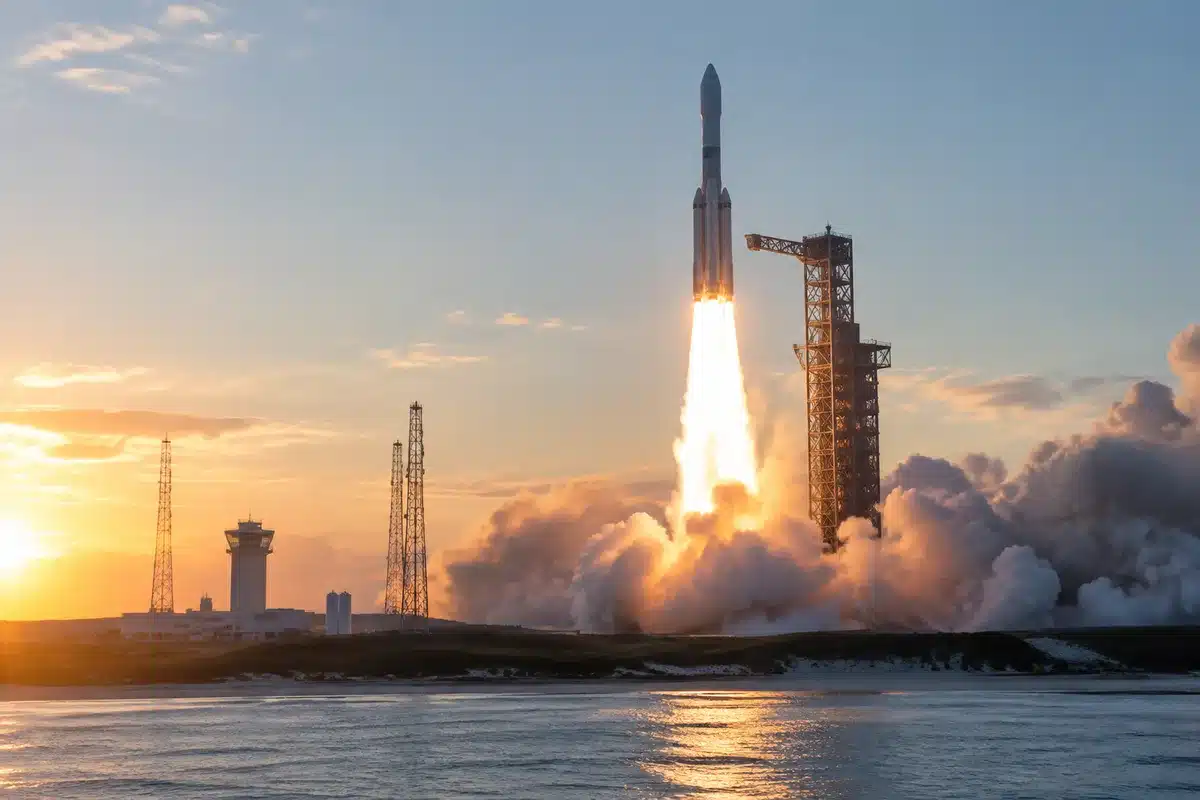
SpaceX launch Flight 14 reached low Earth orbit on Sept. 28, 2026, when Starship’s upper stage separated and deployed 26 third‑generation Starlink satellites, according to contemporaneous flight coverage and SpaceX flight information.
On the test mission, the Starship stack lifted from Starbase, Texas, and after stage separation the upper stage — called Ship — completed an orbital burn and released 26 Starlink V3 satellites, sources say. Coverage notes that one of Ship’s six Raptor vacuum engines shut down early but remaining engines compensated so the vehicle reached orbit and finished payload deployment.

The flight did not prove full operational reusability: reports say the booster performed a controlled splashdown in the Gulf of Mexico after relighting some engines, while the upper stage cut its planned mission short and splashed down in the northern Pacific after a demanding reentry. Analysts and observers described the flight as a milestone for capacity — a single Starship launched the payload equivalent of many smaller Falcon 9 missions — while noting additional flights will be required to demonstrate routine booster recovery and rapid turnaround.
SpaceX launch observers highlighted what the test was designed to trial: the V3 Starlink deployment from a large upper stage, Ship’s heat‑shield and reentry profile, and the performance of multiple Raptor engines in stacked burns. The flight showed Starship can loft heavier, next‑generation satellites in larger batches, a capability that SpaceX has said will change how the company replenishes and expands Starlink capacity.

What the flight proved and what remains
Coverage and the flight page indicate the mission proved Starship’s payload scale by placing 26 V3 units into orbit and getting them contacted for on‑orbit checkout, but it fell short of proving every recovery objective. Observers cautioned that the satellites must still raise and confirm operational orbits before carrying customer traffic, and that repeated, routine booster catch-and‑reuse has not yet been demonstrated.
The mission’s mixed outcome is the sort of operational learning SpaceX expects during an experimental test program: engineers collect telemetry from the anomalous engine shutdown and the upper‑stage reentry to refine hardware and procedures for future flights that will aim for pad recovery of the booster and longer on‑orbit Ship operations.
For investors and customers, the flight matters because a successful Starship that routinely returns to the pad would reduce per‑launch costs by enabling much larger payloads per mission — a business implication analysts flagged when the launch date and filings were first publicized.
Sources
- ECIKS.org — reported that Flight 14 reached orbit on Sept. 28 and deployed 26 Starlink V3 satellites, and summarized engine shutdowns and on‑orbit checkout.
- IndyStar / EIN Presswire — press release noting liftoff time, that Ship reached low‑Earth orbit, deployed 26 Starlink satellites, and that the booster splashed down in the Gulf and the upper stage later splashed down in the Pacific.
- Yahoo News (video) — video coverage of Starship’s first orbital flight test and summary of the mission milestones.