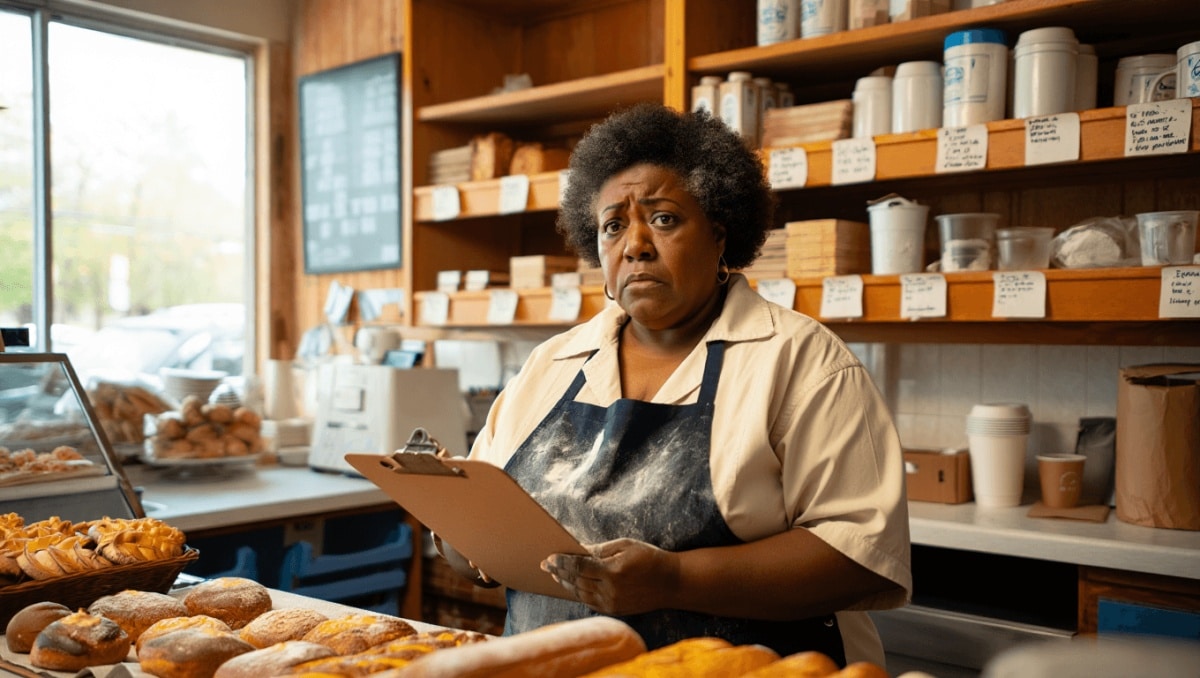
Katrina Golden turned a hobby into a livelihood after leaving federal service in 2019, but recent economic shifts have squeezed the Augusta, Georgia, bakery and coffee shop she runs with her family. Rising supply costs tied to tariff-driven price spikes and local demand softness in 2025 forced her to raise prices, trim staffing, and rethink growth plans — changes that echo across small businesses nationwide.
This as-told-to essay is based on a conversation with Katrina Golden, 56, founder and CEO of Lil Mama’s Sweets and Treats in Augusta. The account has been edited for clarity and length.
From home kitchen to a hospital contract
Golden began selling baked goods after retiring from government work, expanding from her kitchen into a physical presence that includes a concession at the Veterans Affairs medical center and online sales. What started as a family effort — with her husband handling logistics and their children helping bake and package — has evolved into a small team of employees and a dual operation: a bakery plus a coffee shop.
Through 2024 the business grew steadily: festival appearances and a VA contract brought steady foot traffic. But by early 2025, momentum slowed. “People started pulling back,” Golden said, noting the city’s military connections and the way household income uncertainty drives tighter spending. That contraction arrived at the same time she faced rising costs from suppliers.
Tariffs and the hidden cost increase
Golden points to a chain reaction: higher prices for imported disposables and increased costs for commodities that flow through the local supply chain. Even when official tariffs were rolled back, the price increases persisted because wholesalers and small suppliers were still selling at the higher rates they had paid.
Examples she gave include locally sourced eggs becoming more expensive after feed costs rose, and a nearby coffee roaster passing through higher bean costs. Because her operation buys staples in bulk — butter, sugar, flour, milk — small percentage increases add up fast.
- Input costs: Butter, sugar, flour and eggs rose, many due to upstream tariff or feed-cost effects.
- Supplies: Disposable cups and utensils — often imported — climbed in price, squeezing margins on low-cost items.
- Lag effect: Even after tariffs were removed, retailers and wholesalers continued to charge higher prices, delaying relief for small buyers.
Hard choices on staffing and hours
For Golden, higher costs meant hard operational trade-offs. She is now baking most days herself, working 12- to 14-hour shifts because she cannot afford to keep previous staffing levels at the bakery. At the coffee shop she kept two employees but cut back on the hours she can staff the bakery.
Planning became nearly impossible when tariff policy oscillated. “Whiplash” — the on-again, off-again nature of trade policy — made it difficult to forecast supply price points, so hiring seasonal help or expanding shifts felt risky. Golden said she did not want to hire only to have to let someone go weeks later if margins deteriorated.
Raising prices, but not everywhere
To stay afloat, Golden increased prices on products sold through her website. Her VA hospital contract, however, limits how much she can raise prices at that location because the service must remain affordable for veterans and hospital visitors. Even so, sales there remain lower than before.
Whether customers will accept the higher online prices is still uncertain. Golden described the current period as “a wild ride” for small-business owners, driven by a mix of consumer caution and persistent cost pressures.
Short-term survival, longer-term plans
Despite the squeeze, Golden does not expect to close her business immediately. She is hopeful that as economic conditions stabilize, demand will recover enough to rehire and restore some hours. To build resilience, she’s exploring retail distribution: getting products on grocery shelves could diversify revenue and reduce reliance on foot traffic.
Golden’s timeline for that next step is tentative — she aims for retail placement in late 2026 or early 2027 — but it underscores a broader lesson for small operators: finding predictable channels of revenue matters when input costs are volatile.
Why this matters now: Small local businesses are especially vulnerable to policy-driven cost swings. Even temporary tariffs can have lasting effects when price increases cascade down supply chains and become the new baseline. For consumers and policymakers, the situation highlights how trade policy can shape everyday choices — from hiring decisions to whether a cup of coffee costs more.
Golden remains driven by the craft. “Baking is my passion,” she said. The decisions she’s making — trimming hours, passing some costs to customers, and seeking retail partners — reflect how small business owners adapt when economic conditions change faster than their ability to plan.