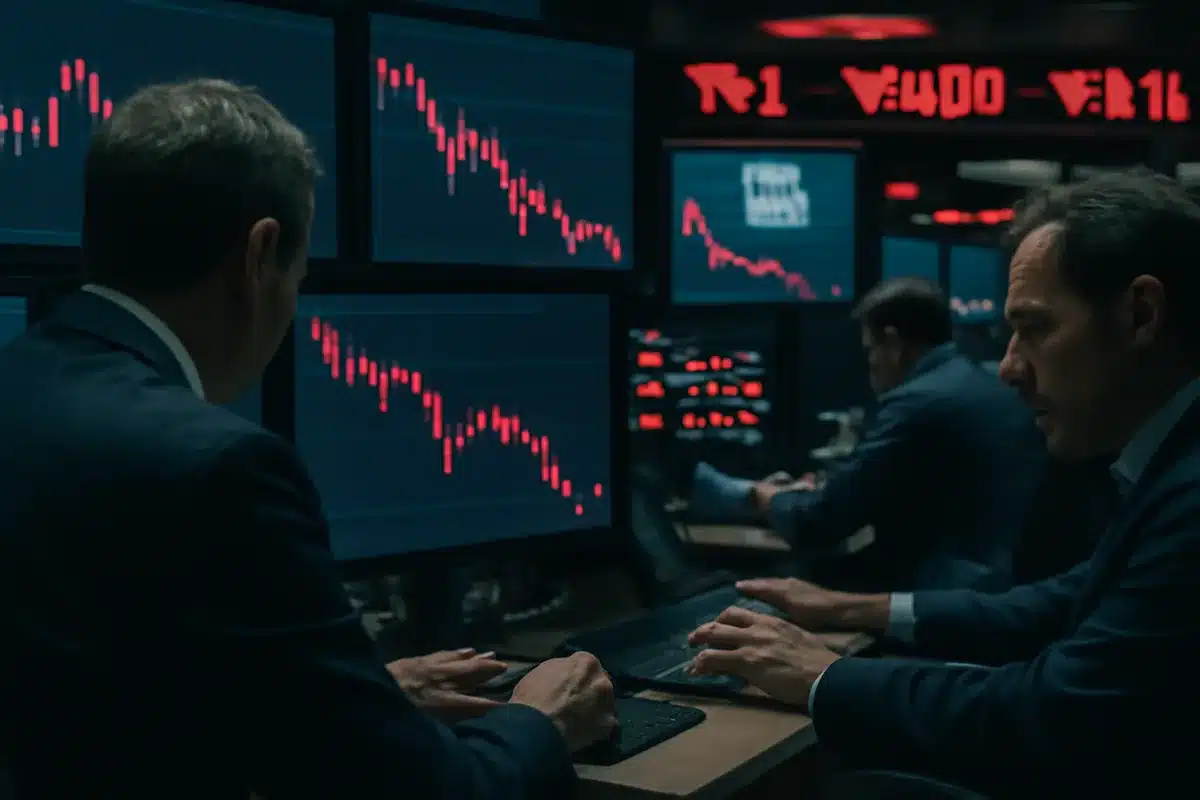
The Dow Jones Industrial Average fell 272 points on Tuesday as strong jobs data from earlier in the week revived concerns about higher interest rates. The blue-chip index closed at 53,413.60, down 0.5%, after the August employment report showed the U.S. economy added 162,000 jobs—nearly triple what economists expected.
The August jobs report, released Friday, September 4, significantly exceeded forecasts of roughly 53,000 to 56,000 job additions. This stronger-than-expected labor market performance triggered a sharp shift in market sentiment, with traders and investors now pricing in a much higher probability of a Federal Reserve rate hike at the central bank’s mid-September meeting.
Expectations for a September Fed rate hike jumped to approximately 60 to 70 percent following the jobs report, up from around 40 percent just days earlier. UBS, the investment bank, forecasts the Federal Reserve will raise interest rates by 25 basis points each in September and December 2026, according to a Reuters report from September 7. Higher interest rates typically pressure stock valuations because they increase borrowing costs for companies and make bonds more attractive relative to equities.
Wall Street’s concern reflects a paradox: while a strong labor market normally signals economic health, it complicates the Federal Reserve’s balancing act between supporting job growth and controlling inflation. The stronger jobs market could pressure the Fed to raise rates sooner rather than later, even as some officials have characterized wage growth as subdued on inflation measures. Treasury yields spiked following the jobs report, adding to selling pressure in equities.
The Dow’s decline on Tuesday extended a pattern that began immediately after the jobs report. On Friday, September 4, the Dow fell 0.5 percent, the S&P 500 dropped 0.4 percent, and the Nasdaq Composite declined 0.3 percent, all in response to the upside jobs surprise. The disconnect between positive economic data and stock market weakness underscores how sensitive equity investors have become to the prospect of higher borrowing costs in the near term.
Investors are now awaiting additional economic data, including an inflation report, that could further clarify the Fed’s path forward. The Federal Reserve’s policy committee is scheduled to meet September 15-16, when officials will decide whether to proceed with a rate increase. Market pricing suggests the labor market strength has made a rate hike a serious possibility rather than a long-shot scenario.
Sources
- Zacks Investment Research — Dow Jones closing data for September 8, 2026
- Reuters — UBS forecast of two Fed rate hikes in 2026 and strong August jobs report details
- Wall Street Journal — August jobs report showing 162,000 jobs added versus economist expectations
- Yahoo Finance — Market reaction and rate hike odds following the jobs report
- Investopedia — Market declines on September 4 across major indexes