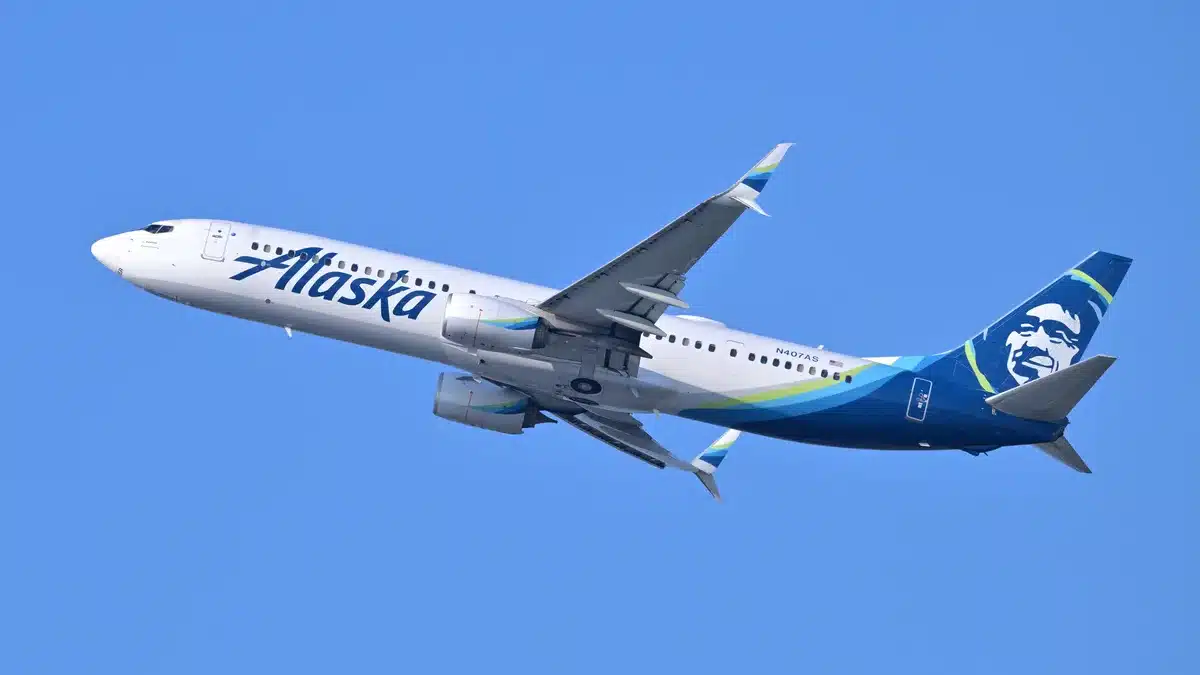
An Alaska Airlines Boeing 737 diverted to Fresno, California, on Sunday evening after the aircraft rapidly descended from 40,000 feet due to a mechanical issue, according to reporting from KOMO News and aviation tracking outlets. Flight 671, carrying passengers from Santa Ana to Seattle, descended to approximately 10,000 feet within minutes after reaching cruising altitude, prompting the flight crew to declare an emergency and request vectors to the nearest airport.
The 26-year-old Boeing 737-700 aircraft, registered N612AS, took off from John Wayne Airport in Santa Ana at approximately 9:08 p.m. PDT on September 6, 2026. Shortly after the plane stabilized at cruising altitude, the pilots initiated the rapid descent, a standard emergency procedure for cabin pressurization failures or other critical mechanical anomalies. The aircraft landed safely on Runway 29L at Fresno Yosemite International Airport roughly one hour after departure, according to AIRLIVE.
Alaska Airlines stated that “Flight 671 was diverted to Fresno (FAT) due to an indication of a mechanical issue,” and confirmed that “the aircraft landed safely and there was no emergency on landing.” The airline said it planned to resume the flight with a different aircraft on Monday.
Emergency descents from high altitude are performed when pilots must reach breathable air quickly. According to aviation safety guidance, the standard procedure involves reducing lift and increasing drag to achieve the maximum descent rate while maintaining aircraft control. When cabin pressurization is lost, the cabin altitude rises rapidly, and oxygen levels drop to unsafe levels. Pilots must descend to 10,000 feet or lower, where the outside air pressure and oxygen content allow passengers and crew to breathe without supplemental oxygen.
A comparable incident occurred in June 2025, when a Spring Airlines Japan Boeing 737-800 experienced a sudden cabin pressurization failure while cruising from Shanghai to Tokyo. That aircraft descended from 36,000 feet to approximately 10,000 feet in just 10 minutes, according to reporting from Simple Flying and aviation-safety.net. The plane diverted safely to Osaka Kansai Airport with 191 passengers and crew aboard, and Japan’s Ministry of Transport reported no injuries, according to AIRLIVE and aviation-safety.net.
Maintenance teams at Fresno are now evaluating the Alaska Airlines 737-700 to determine the exact cause of the technical failure before the aircraft is cleared to return to service. The incident marks another rapid emergency descent among commercial carriers, though both this event and the Spring Airlines precedent resulted in safe landings without passenger injuries.
Sources
- KOMO News — flight details, Alaska Airlines statement, airport diversion confirmation
- AIRLIVE — aircraft registration, descent profile, landing details, Spring Airlines precedent information
- Travel and Tour World — Spring Airlines Japan incident date and descent details
- Simple Flying — Spring Airlines Japan pressurization incident descent rate and passenger response
- Aviation-Safety.net — Spring Airlines Japan incident details, passenger and crew count, Ministry of Transport findings