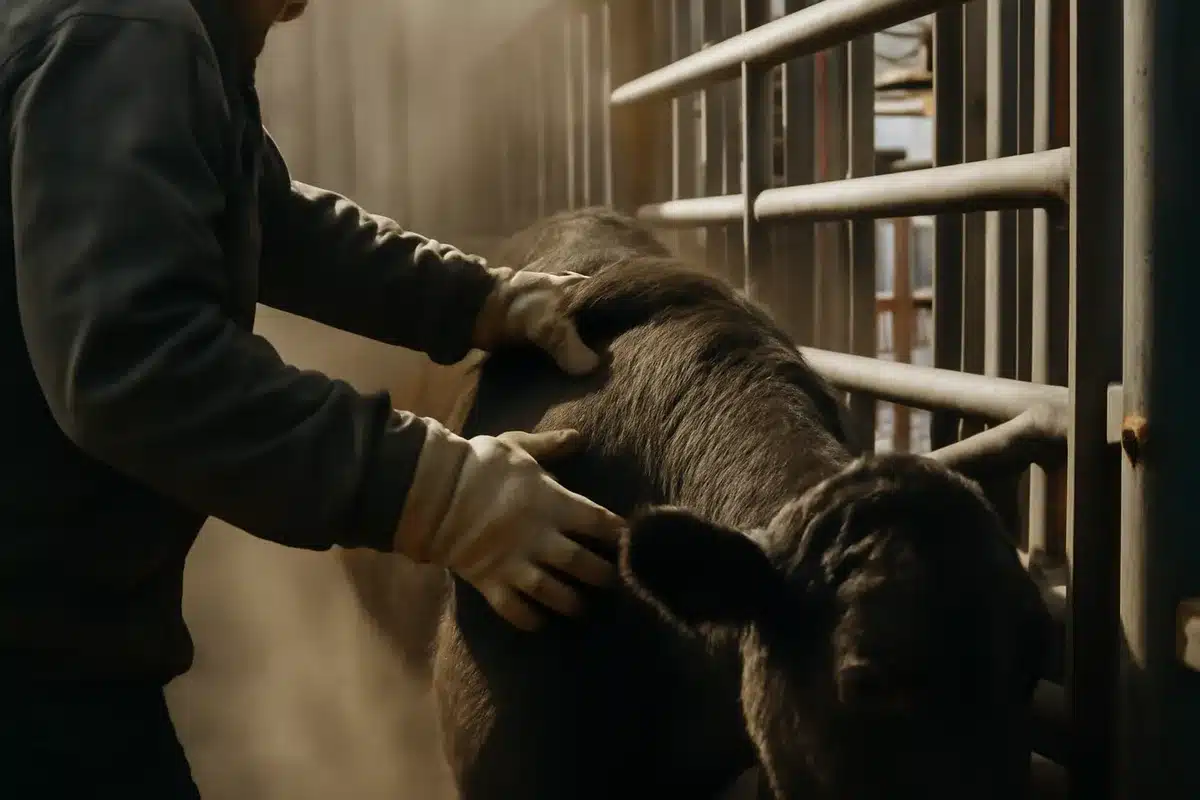
President Trump is moving to ease cattle processing regulations, authorizing legal documents on August 28 to give farmers and ranchers “the right to process their own food” as part of a broader effort to address beef industry consolidation and rising prices.
The announcement follows months of the administration’s focus on cattle industry challenges. Trump has cited what he calls a “nasty monopoly” controlled by major meatpacking companies and pointed to the U.S. cattle herd sitting at a 75-year low as justification for regulatory changes.

Agriculture Secretary Brooke Rollins announced the Ranchers First Initiative on August 31, detailing a sweeping package of actions to rebuild the beef herd and support ranchers. The initiative includes expanded access to federal lending for small and mid-sized meat processors, a guaranteed loan program to help establish processor cooperatives, and support for regional processing capacity as some facilities face closure. Rollins stated the administration would “cut the red tape that has squeezed small and independent operators” while demanding “transparency in a marketplace that has been consolidated and foreign-owned for far too long.”
Under current federal law, ranchers can process livestock under a custom exemption for personal use, but the resulting meat must be labeled “Not for Sale.” Meat sold commercially must be inspected and passed by federal inspectors. The administration signaled additional regulatory changes are coming, with Rollins indicating plans to waive processing requirements and expand ranchers’ ability to sell across state lines.
The move addresses a long-standing complaint from ranchers about the beef industry’s structure. According to the White House, the U.S. herd has fallen to its lowest level in 75 years due to drought, wildfire conditions, and restrictions on live animal imports from Mexico tied to disease prevention. The Department of Agriculture forecasts beef output will fall approximately 4 percent from 2025 levels this year, putting pressure on domestic beef prices.

The administration has also taken parallel action on beef imports. In August, Trump increased the temporary quota for lean beef trimmings by 300,000 metric tons for 2026, allocated in three 30-day tranches beginning September 1. The White House stated this is intended to increase ground beef supply and help lower prices for consumers.
The proposal faces pushback from food safety advocates. The Meat Institute warned that “allowing uninspected or inadequately inspected meat into the marketplace would put consumers at risk and undermine the food safety system that protects millions of Americans every day.” Industry groups have emphasized that federal and state inspection requirements exist to ensure meat sold to families is safe and properly labeled.
Cattle industry groups have expressed mixed reactions. Some ranchers support expanded processing options, while others have raised concerns about food safety standards. The South Dakota Cattlemen’s Association stated that “food safety is not red tape,” warning against loosening federal meat inspection standards.
The broader Ranchers First Initiative also includes new risk management tools for heifer retention, support for beginning and veteran farmers and ranchers, and a push to prioritize American beef in federal procurement across prisons, hospitals, and other institutions. The USDA separately announced expanded lending and support through its Strengthening Processing for U.S. Ranchers (SPUR) program, which provides up to $500 million to independent and regional beef slaughter facilities.
The administration’s approach reflects a shift in cattle industry policy. The U.S. beef processing sector has consolidated significantly in recent decades, with a small number of large companies controlling much of the market. Ranchers have long complained that consolidation limits their options for bringing cattle to market and affects prices they receive.
Sources
- White House — Presidential proclamation on further ensuring affordable beef, August 26, 2026, and statements on processing rules authorization
- USDA — Secretary Rollins’ announcement of Ranchers First Initiative on August 31, 2026, and details on SPUR program and support measures
- Meat Institute — Statement on food safety concerns regarding uninspected meat and federal inspection requirements
- Reuters — Reporting on Trump’s pledge to allow ranchers to process cattle and break up meatpacking consolidation
- Quality Assurance & Food Safety Magazine — Analysis of food safety implications and regulatory questions around the proposal