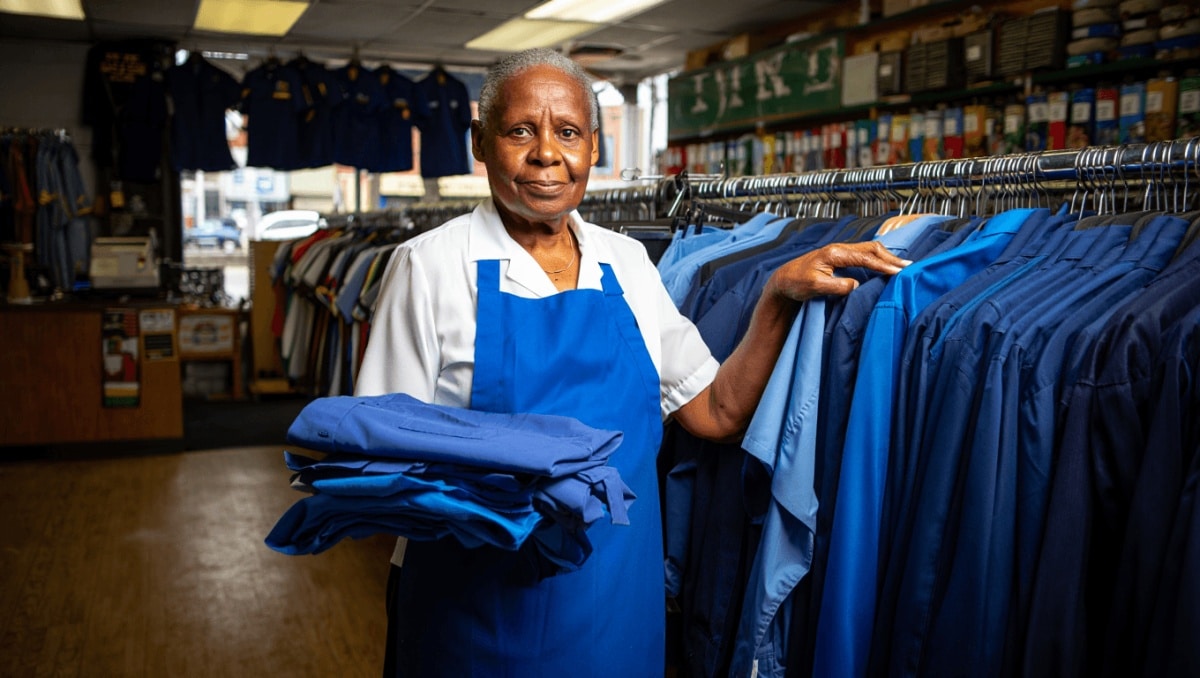
This first-person account comes from Susan Freeman, 72, of Utica, New York, who paused her career for a decade to care for her mother and now works part time at a family-owned uniform shop. Her story illustrates a growing financial squeeze for older Americans who leave paid work to provide long-term care—and why that trade-off matters now as the job market shifts and retirement costs rise.
Choosing family over a steady promotion
Susan’s working life began in the early 1970s in bank collections and clerical roles, followed by a stint handling medical claims at a major insurer. She later helped run a family business, then returned to that insurance job. When her father died in 1999 and her mother’s needs grew, Susan stepped away from the office rather than place her mother in outside care.
That decision carried concrete consequences: she missed out on a potential supervisory promotion and the pension that would have followed. For years she prioritized caregiving over career advancement, a pattern familiar to many informal caregivers.
Years of unpaid care and tight finances
From the early 2000s, Susan’s life revolved around tending to her mother, who used a wheelchair and needed help at all hours. Daily routines included bathing, laundry, and frequent outings because her mother wanted to leave the house every day.
There were brief attempts to share responsibility—family members hired short shifts of assistance—but most days Susan was the primary presence. She says she felt unable to trust others with her mother’s care, and that sense of obligation kept her out of steady employment.
Small benefits, mounting pressures
After separating from her husband for several years, Susan relied on modest disability payments and was covered by state insurance through Medicare for a time. She tried running a small pizzeria with her husband between caregiving spells, but they sold the business after her mother had a stroke in 2004.
Her mother moved to nursing care in 2015 and died in 2019. Today, Susan works four days a week at the sister-run uniform store her mother helped start. The hours are manageable and family-run: her sister now handles most decisions and lets Susan take breaks when needed. Still, she reports limited savings, a small mortgage, and ongoing medical needs—including recommended back surgery.
- Length of caregiving: More than a decade of primary care before mother entered nursing homes.
- Lost earnings: Missed promotion and pension opportunities after leaving full-time work.
- Current work: Part-time at a family shop, four days a week; limited ability to re-enter a technical job market.
- Financial supports: Small disability checks in past years; Medicare coverage until 2009; no substantial retirement savings.
Susan keeps her credit score high and helps her children and grandchildren when she can, but she worries about “playing catch-up” in retirement. She also notes that the modern job market—now heavily influenced by automation and technical skills—feels inaccessible for someone re-entering work at her age.
What her experience signals
Her situation highlights a few broader tensions: the economic cost of unpaid caregiving, limited eligibility for some caregiver pay programs, and the practical difficulty older adults face when trying to return to employment. For many, the decision to leave the workforce to care for a family member has long-term effects on income, benefits, and health care access.
For readers, Susan’s account underscores two immediate realities. First, caregiving can protect a loved one’s dignity but often reduces a caregiver’s financial security. Second, as labor markets evolve, older workers without recent, specialized training may find it hard to secure higher-paying roles later in life.
Her closing thought is straightforward: she’s grateful for family ties and proud of keeping her mother clean and cared for, but she believes society should create more pathways for older adults to earn enough to support themselves while continuing to help family—without sacrificing decades of retirement security.