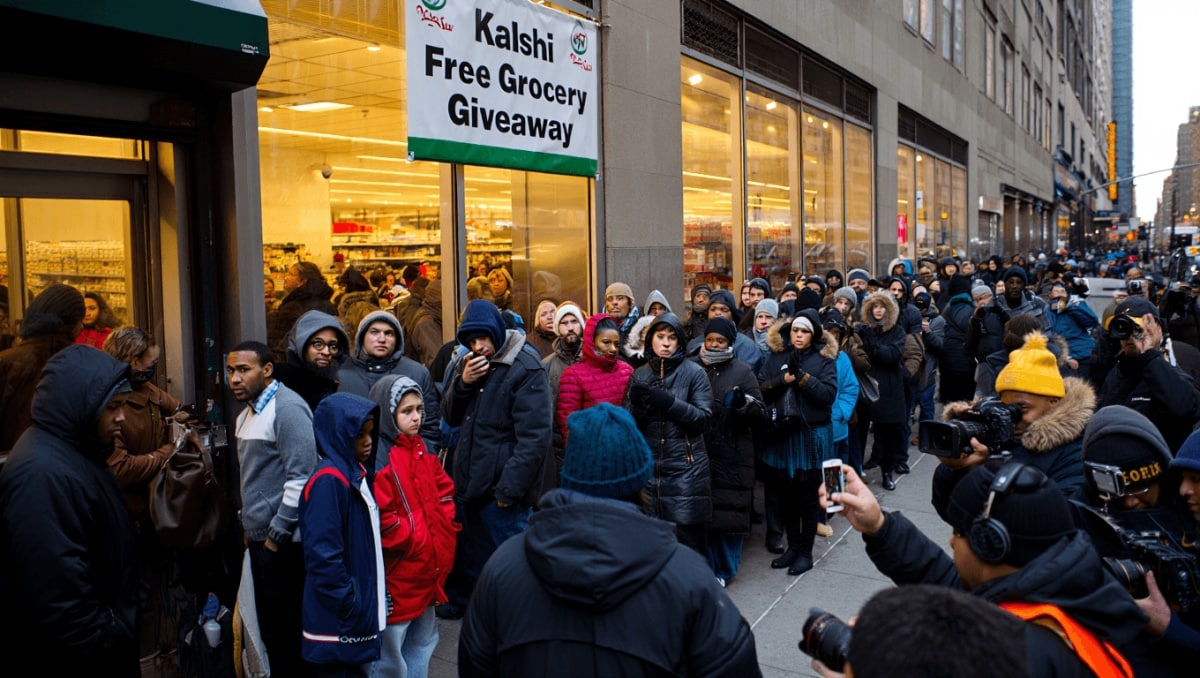
A tech startup handed out $50 in grocery credit at a Manhattan store this week — and hundreds of New Yorkers braved freezing temperatures to claim it. The stunt drew attention, cameras and long queues, but it also revealed limits to the company’s reach and raised fresh questions about marketing tactics amid rising food costs.
I stood in the line outside Westside Market during a bitter afternoon and watched people, bundled against the wind, move slowly toward the storefront. Many had never heard of Kalshi — the San Francisco-based prediction-market platform behind the giveaway — and showed up simply because free groceries mattered more than brand messaging.
What happened at Westside Market
The event promised a maximum of $50 in credit for shoppers who registered on-site. Staff wearing understated caps circulated through the crowd handing out hot coffee and QR codes that linked to the store’s app; scanning the code could add the credit without waiting in line. A handful of influencers filmed the scene, while most attendees kept their focus on the practical: stretching $50 across an expensive neighborhood grocery.
- Wait times: Many people reported standing in line for an hour or longer in sub-freezing conditions.
- Promotion value: $50 loaded to Westside Market accounts via the store’s app or at checkout.
- Audience awareness: Most recipients were unaware of Kalshi or the concept of prediction markets.
- Store choice: Westside Market’s already-high prices meant $50 went further in some categories than others — meat and premade meals were popular picks.
On-the-ground impressions
Inside, the store was calmer than the sidewalk suggested. Staff appeared to keep the interior orderly while the exterior bore the bustle. Shoppers rationed their credit carefully: produce was less targeted than prepared food and protein, and drink aisles were notably untouched.
Branding was minimal. I counted only a few posters tucked away near the back aisles; for many participants the interaction was about immediate relief rather than the sponsor’s identity. Several people declined to scan the QR code to move their spot in line, preferring the certainty of standing there until their chance at the register.
Footage and social posts circulated quickly online, suggesting the stunt earned far more attention on social platforms than it did in direct brand recognition among beneficiaries.
Why this matters now
Promotional events like this sit at the intersection of tech marketing and a real, everyday problem: affordability. For companies trying to raise awareness — including those in the relatively niche world of prediction markets — handing out goods can generate impressions and content. But the people who show up for help may not become engaged users; they may simply take the assistance and move on.
At a broader level, the episode underscores two tensions shaping current conversations:
- Marketing reach versus message retention — was the goal to produce viral content or to onboard new customers?
- Brand visibility versus optics — staging giveaways at a premium-priced grocer may undercut messages about addressing food insecurity.
What to watch next
Kalshi is operating in a space where rivals and critics alike are watching how consumer-facing promotions translate into long-term engagement. If the company’s aim is to introduce new audiences to prediction markets, it will need follow-up strategies that convert one-time beneficiaries into informed users.
For New Yorkers and others tracking affordability, the event is a reminder that short-term relief — whether $50 or a bag of groceries — does not substitute for broader policy or market solutions to rising food costs.
On a practical note: if similar promotions appear in your area, expect large crowds, limited branding on-site, and a choice to make at the register about how best to stretch any credit you receive.