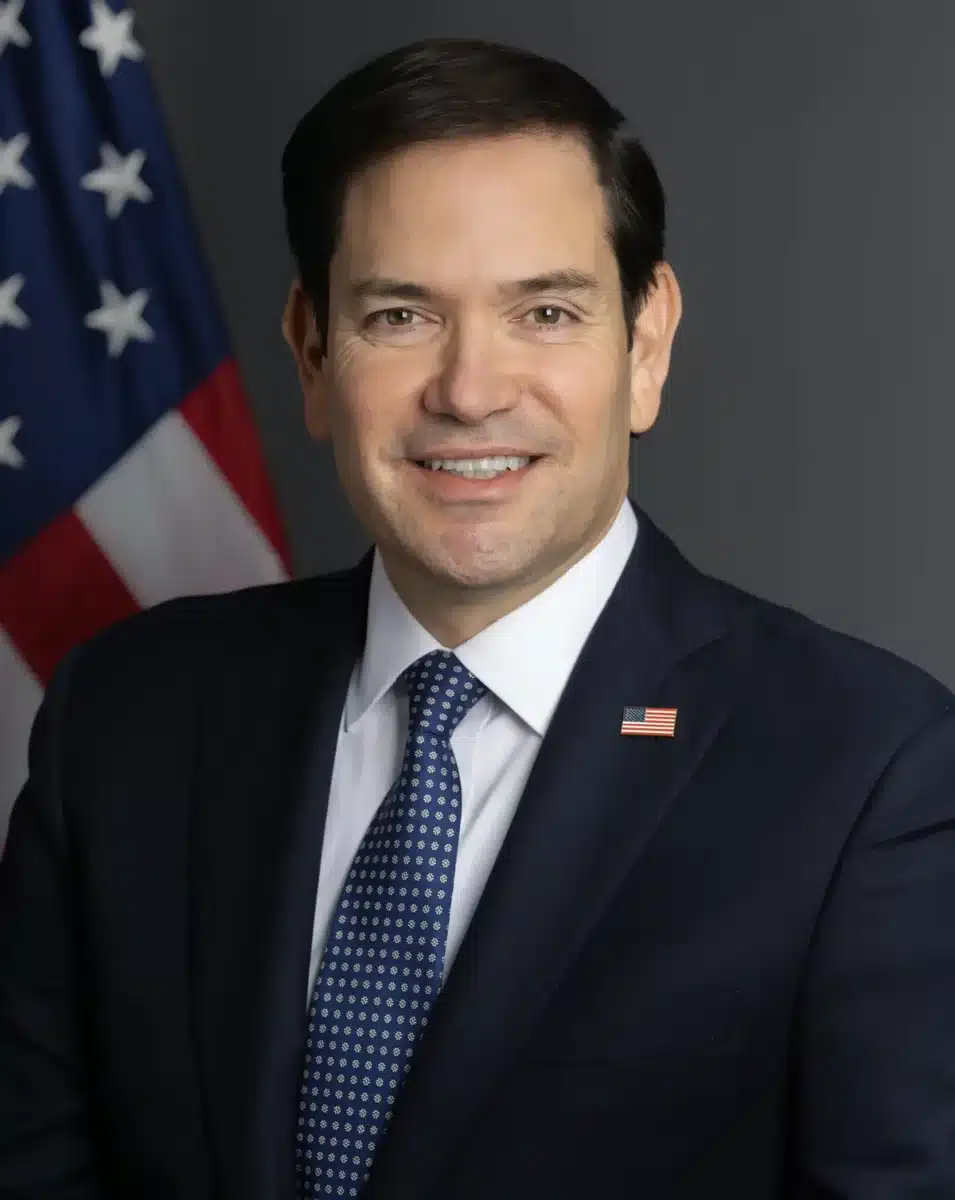
U.S. Secretary of State Marco Rubio met with Mexican Foreign Secretary Roberto Velasco in Washington on August 26, 2026, to advance cooperation on shared regional priorities including immigration, drug trafficking, and security threats.
In a readout from the State Department, Rubio called for decisive action to end illegal immigration, stop the trafficking of fentanyl and other illicit drugs into the United States, and dismantle foreign terrorist organizations and cartels while depriving them of arms. The meeting reflected the administration’s focus on addressing transnational challenges that affect both nations.

The discussion underscored ongoing efforts to combat drug trafficking, a central concern for U.S. policymakers. According to reports following the meeting, Mexico expelled 29 major cartel figures to the United States, demonstrating active cooperation on security matters. The U.S. Embassy reported in May 2026 that border seizures by U.S. authorities had dropped by 50 percent while seizures in Mexico increased significantly, reflecting a shift in enforcement strategy aimed at stopping drugs before they reach U.S. territory.
Mexico’s delegation emphasized the importance of the bilateral partnership while stressing respect for sovereignty and territorial integrity. Velasco reiterated that Mexico’s cooperation with the United States is grounded in mutual respect, signaling that while both nations share security interests, Mexico maintains its independent authority over internal matters.
The meeting took place amid broader U.S.-Mexico trade negotiations. In July 2026, the United States imposed a 10 percent tariff on Mexican imports, effective July 24, with exemptions for USMCA-compliant goods. The two countries are engaged in the first joint review of the U.S.-Mexico-Canada Agreement, with negotiations ongoing over vehicle content requirements and other trade terms. Mexico has sought to maintain tariff-free access while proposing ways to deepen North American manufacturing partnerships.

The State Department noted that Rubio’s meeting with Velasco builds on a series of high-level diplomatic engagements between the two nations. In January 2026, Rubio and Mexico’s then-Foreign Secretary Juan Ramón de la Fuente agreed to convene a Security Ministerial in Washington, marking an escalation in bilateral security coordination. According to a Brookings Institution analysis in March 2026, Rubio has repeatedly stated that bilateral security cooperation is at unprecedented levels, though experts continue to identify areas where cooperation could be strengthened further.
The bilateral relationship reflects the Trump administration’s emphasis on addressing what it views as urgent threats emanating from Mexico. While the U.S. has focused on immigration enforcement and cartel disruption, Mexico has sought to balance these demands with its own institutional priorities and constitutional limits on foreign military action within its borders. The August 26 meeting represented an effort to navigate these competing interests while advancing shared security objectives.
Sources
- U.S. State Department — official readout of Rubio’s meeting with Velasco on August 26, 2026, detailing the agenda and Rubio’s stated priorities
- Mexico News Daily — reporting on Velasco’s remarks emphasizing sovereignty and territorial integrity during the meeting
- U.S. Embassy Mexico — May 2026 report on seizure statistics and bilateral security cooperation outcomes
- Reuters — coverage of the August 26, 2026 bilateral meeting and cartel figure expulsions
- USTR and U.S. State Department — documentation of USMCA review negotiations and July 2026 tariff implementation
- Brookings Institution — March 2026 analysis of U.S.-Mexico security cooperation levels and bilateral relations