Hillary Clinton called the Democratic Party’s current approach to young voters a “healthy experiment,” endorsing the party’s openness to democratic socialist candidates on August 24, 2026, as younger Democrats increasingly punish establishment figures for economic hardship and political stagnation.
“The Democratic Party right now is, I think, going through a kind of experiment, like, who can actually respond particularly to young people’s very real concerns about where they are at this point in their lives and what kind of future do they have for themselves,” Clinton said during remarks in which she explicitly endorsed the party’s ideological flexibility. “And I think that’s healthy.”
Clinton’s comment reflects a dramatic shift in Democratic primary politics. Democratic socialist candidates have defeated moderate, establishment-backed incumbents in multiple races across the country in recent months, signaling a fundamental realignment as young voters express frustration with traditional party leadership. A Reuters and Ipsos poll conducted last month found that nearly two in five Democrats prefer a democratic socialist over a more traditional candidate, with only 30 percent of party members between 18 and 34 saying they would vote for a regular Democrat.

Young Democrats cite the high cost of living, housing affordability, and student debt as drivers of their shift toward candidates promising more radical economic change. The party’s more active voters have also demanded that congressional Democrats fight harder to restrict Trump’s powers, but legislative efforts have so far failed to produce meaningful results. Gen-Z voters pulled back support for Democrats in the 2024 elections, which Republicans swept to take control of Congress and the White House—a loss that has forced the party to reckon with its messaging and candidate selection.
The Brookings Institution noted in a recent report that the high-profile wins by democratic socialist candidates, fueled by young, educated voters, represent a warning to the Democratic establishment. “They signal that unhappiness with the Democratic establishment and, in the post-Biden world, opposition to elderly officeholders can be leveraged by young, charismatic DSA candidates—and reflect an impatience with party leadership that transcends ideology,” the researchers wrote.

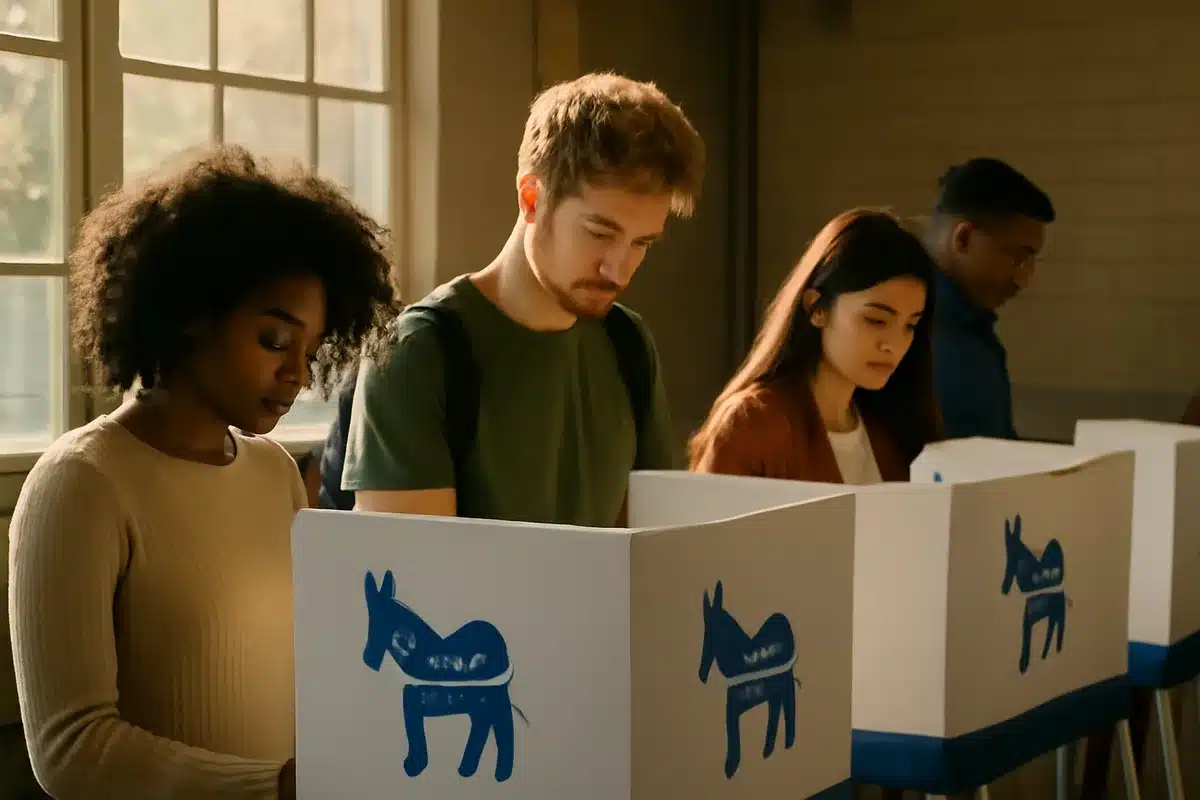
More moderate members of the party have allowed democratic socialist candidates, many of whom reside in deep-blue areas, to promote their policies with limited opposition as the party weighs how to retain the critical young vote ahead of the 2026 midterms. This permissive approach—what Clinton termed an “experiment”—marks a departure from past Democratic strategy, in which the establishment moved more forcefully to block insurgent candidates from gaining ground.
The 2026 midterm elections, scheduled for November 3, will determine control of the U.S. House of Representatives and the Senate. The Democratic Party’s shift toward progressive candidates in 2026 primaries reflects both the rise of democratic socialism among young voters and the party’s calculation that appeasing this base is necessary for turnout. Young Democrats who are likely to vote show strong support for the party overall—68 percent are extremely likely to vote compared to 49 percent of young Republicans—but their enthusiasm depends on whether the party addresses their material concerns.
Sources
- Fox News — Hillary Clinton’s August 25, 2026 video commentary calling the Democratic Party’s approach to young voters a “healthy experiment.”
- KATU News — August 25, 2026 reporting on young Democrats’ support for socialism and Clinton’s remarks, including Reuters/Ipsos poll data and Brookings Institution analysis.
- Tufts CIRCLE — May 21, 2026 research on youth voter engagement and Democratic turnout likelihood in 2026.