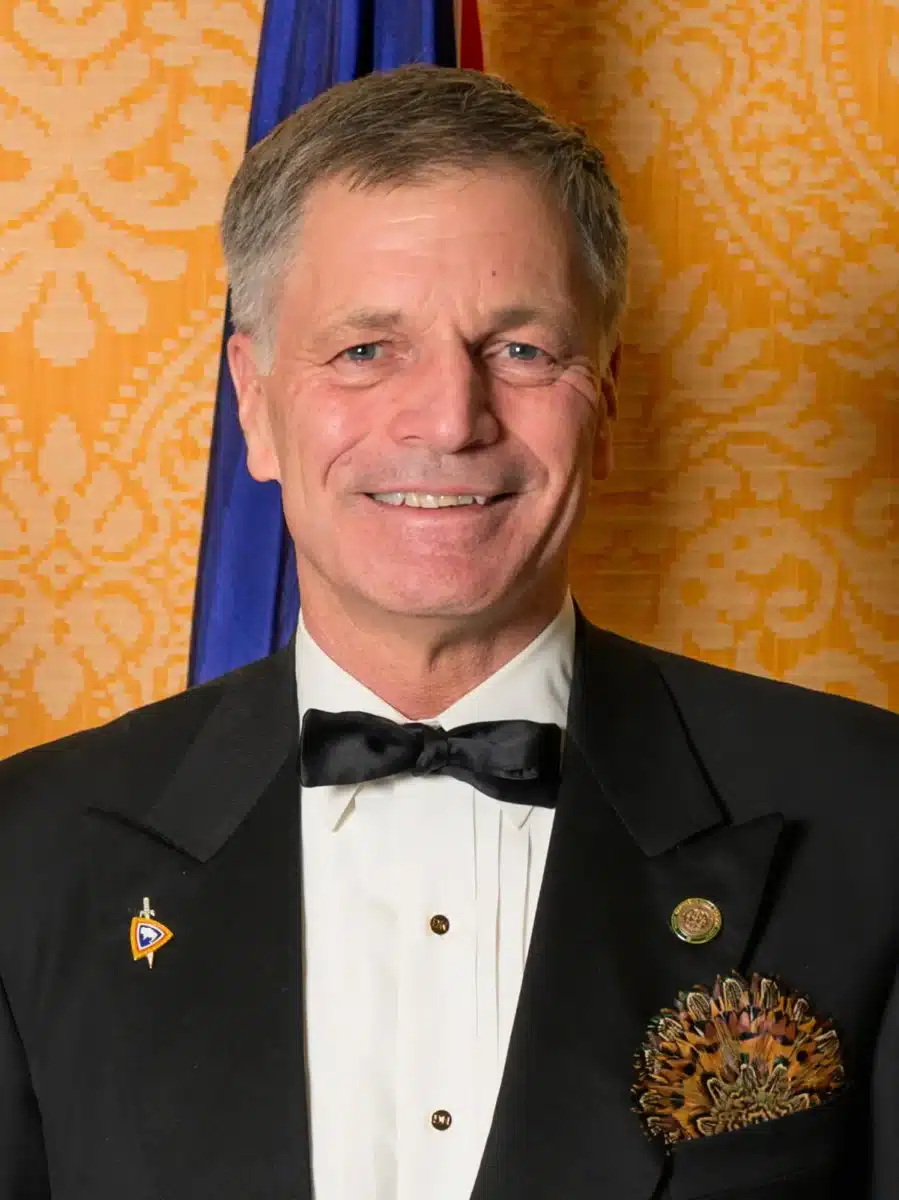
Wyoming Gov. Mark Gordon asked the state attorney general to investigate what he described as “aggressive” and “irregular” conduct by federal election monitors who observed the state’s primary election last week, raising concerns about the scope of their authority under federal law.
Two Department of Justice attorneys were deployed to Laramie County on August 20 as part of a monitoring initiative announced by the DOJ’s Civil Rights Division on election day. Gordon said at a state canvassing board meeting on August 27 that the monitors’ behavior “seemed to exceed what the authority that Congress had given them was.”
Laramie County Clerk Debra Lee described the federal monitors’ visit as “a poorly managed exercise” that showed “complete disregard for our state laws and administration of our elections.” Lee said the monitors arrived during busy voting periods and asked questions she believed fell outside the scope of federal voting rights laws, including inquiries about the nature and timing of poll worker training, how election equipment was acquired, and requests to examine the county’s tabulators.
Lee also said the monitors informed her they intended to interview voters “to assess compliance with federal civil rights and voting rights law,” but she denied that request, noting that Wyoming law does not allow such interviews in polling places. A DOJ official later told Lee that the decision to deploy monitors to Wyoming was made on short notice, and an email notification to her office may have gone to the wrong address.
The incident reflects a broader expansion of federal election monitoring under the Trump administration. Last week, the DOJ announced it plans to deploy approximately 1,000 monitors nationwide for November’s midterm elections—a historic number for a Republican administration. In comparison, the Biden administration’s DOJ sent 289 monitors during the 2022 midterms and 714 during the 2024 presidential election, according to reports cited by voting rights experts.
Harmeet Dhillon, who leads the DOJ’s Civil Rights Division, told Bloomberg News that the 1,000-monitor deployment would be “probably going to be a historic number for a Republican administration.” However, voting rights experts and former DOJ officials expressed skepticism about whether the goal is realistic or concerning.
Justin Levitt, a professor at Loyola Law School who has worked on voting rights issues at the DOJ and White House, said he doubted the department would reach 1,000 monitors. “Even if they did, that wouldn’t be so different from the number in prior years; that’s a national number suitable for observing but not nearly enough to disrupt,” Levitt said. “Local election officials can, and will, toss anyone who makes trouble.”
A former DOJ official, speaking on condition of anonymity, said that while the department has sent hundreds of monitors to polling places during each federal election for decades, “DoJ may try to send 1,000 monitors into the field this November, but they probably won’t be able to coordinate a deployment of that size.” Even if logistically successful, the official said, “1,000 DoJ monitors will only give us more videos of lawyers standing around with clipboards.”
Gordon said he was not objecting to federal observers in principle, but rather to their conduct and the scope of their authority. He noted that Wyoming, which voted overwhelmingly for Trump in 2024, seemed an unlikely target for federal scrutiny. “I’m really shocked,” Gordon said. “I mean this is the state that went overwhelmingly for Trump more than any other state.”
The U.S. Attorney for Wyoming, Darin Smith, defended the monitoring effort in a statement. “Voters deserve absolute confidence that their ballots are secure and their voices are heard without interference,” Smith said. “We are working alongside local officials to ensure every lawful vote is protected.”
Election officials in other states who have hosted federal monitors said they experienced no disruptions. Minnesota Secretary of State Steve Simon said federal monitors during his state’s August primaries were “very straightforward” about their movements and “there were no major disruptions or obstructions.” Election officials in Arizona and California also reported no concerns with prior monitoring efforts.
Sources
- The Hill — Governor Gordon’s statements at the state canvassing board meeting and his description of the monitors’ behavior as “aggressive” and “irregular”
- Wyoming News — Detailed account of Debra Lee’s concerns about the monitors’ questions and conduct, Gordon’s comments at the canvassing board meeting, and context on the DOJ’s monitoring initiative
- Cowboy State Daily — Gordon’s extended interview describing his concerns, Lee’s full statement, and historical context on prior DOJ monitoring under Biden
- The Guardian — Expert commentary from Justin Levitt and former DOJ officials, comparison of monitor deployments across administrations (289 in 2022, 714 in 2024, 1,000 planned for 2026), and reporting on election officials’ experiences in Minnesota, Arizona, and California
- DataForSEO/Justice Department press releases — Confirmation of the DOJ’s August 18 announcement of monitoring in Wyoming and Florida primaries, and the plan to deploy 1,000 monitors for November midterms