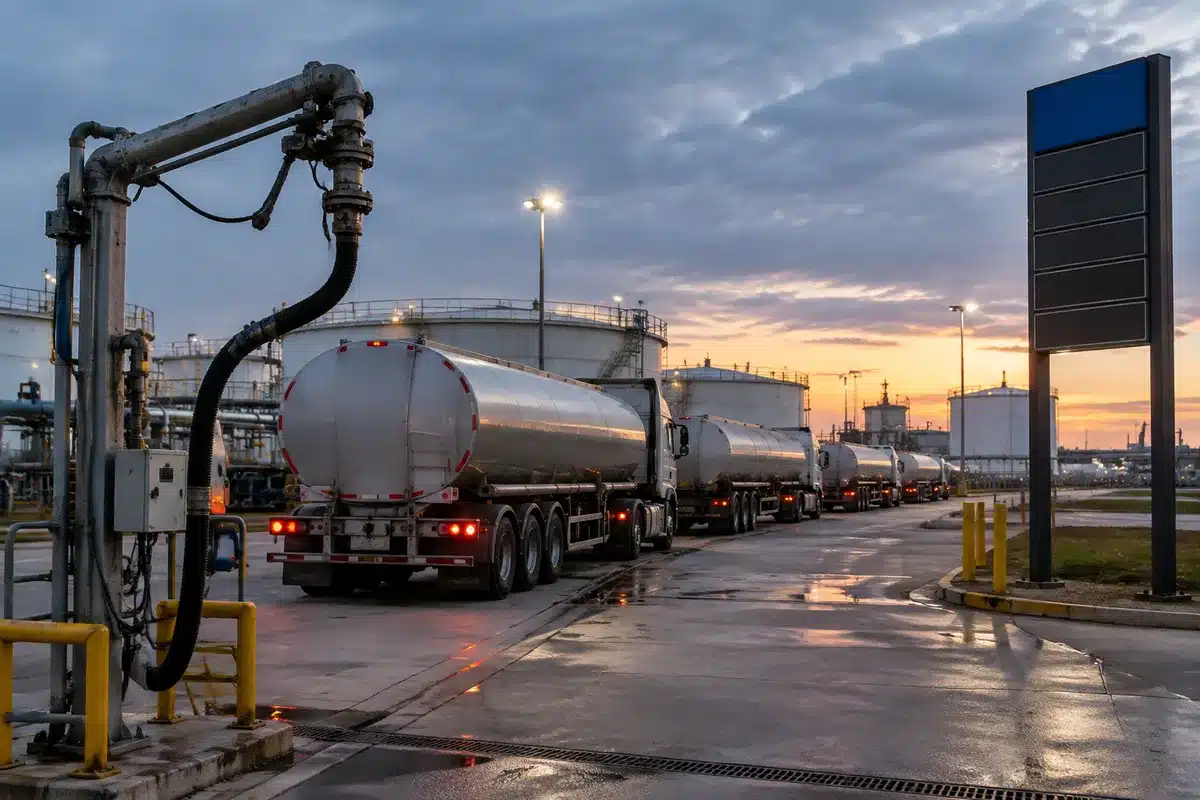
A Dallas County jury awarded a $604 million verdict against freight broker C.H. Robinson on July 23, 2026, for a fatal 2021 truck crash, marking the largest judgment ever rendered against an operating transportation company and one of the largest truck accident verdicts in Texas history. The verdict, secured by Arnold & Itkin attorney Roland Christensen, stems from a March 25, 2021 collision on Interstate 20 in Warren County, Mississippi, that killed three people and injured two others in a six-vehicle pileup.
The crash occurred when an 18-wheeler operated by Lupus Superior driver Gorgonio Gonzalez struck stopped traffic on the interstate. Jennifer Lipe, Benjamin Brewer, and Rhoderick Coleman burned to death in their vehicles after the impact ignited a multi-vehicle fire. Two other motorists, Rodney Hawkins and Gabrielle Broussard, suffered serious injuries.

The jury found all three defendants negligent, apportioning 45% responsibility to driver Gonzalez, 32% to Lupus Superior, and 23% to C.H. Robinson. However, the jury also determined that Gonzalez was acting as a borrowed employee of C.H. Robinson, making the freight broker vicariously liable for 68% of the total $604 million verdict.
Arnold & Itkin’s legal team argued that C.H. Robinson bore responsibility for negligent hiring. The jury heard that Lupus Superior had carried Federal Motor Carrier Safety Administration (FMCSA) safety alerts for unsafe driving and hours-of-service violations for more than a year before the collision. On the day of the crash, the driver falsified his logs, drove off course in the middle of the night, and violated hours-of-service rules—conduct matching the safety alerts on record. Just hours before the collision, the driver told both C.H. Robinson and Lupus Superior he was too sick to continue driving, but C.H. Robinson failed to reschedule the delivery, according to court proceedings.
“C.H. Robinson refused to accept any responsibility for hiring a motor carrier with a long history of safety alerts, alerts that turned into reality when three people burned to death and others were injured,” Christensen said in a statement.

The verdict arrives on the heels of a watershed moment for freight broker liability. In May 2026, the U.S. Supreme Court issued a unanimous 9-0 decision in Montgomery v. Caribe Transport II, ruling that federal law does not shield freight brokers from state-law negligent-hiring claims. The decision eliminated broad FAAAA (Federal Aviation Administration Authorization Act) preemption protections that had long protected brokers from such liability. The Lipe case is believed to be the first major jury verdict to test the new legal landscape established by that Supreme Court ruling.
C.H. Robinson strongly disputes the verdict. Chief Legal Officer Dorothy Capers stated the company will immediately appeal, asserting that the carrier held a Satisfactory FMCSA rating—the highest federal safety classification—when C.H. Robinson selected it, and had safely delivered nearly 270 loads for the company’s customers. The rating remained Satisfactory even after a federal review following the accident. “C.H. Robinson should not be held liable and did not act negligently,” Capers said. “The carrier is an independent motor carrier, and the driver worked for them. C.H. Robinson does not employ drivers.”
The verdict has sent shockwaves through the freight brokerage industry. Brokers handle at least one-third of all for-hire truckload freight in the United States, meaning at least one-third of all accident-related lawsuits statistically involve a broker. Legal observers have noted that the $604 million judgment signals the beginning of a sustained wave of broker-targeted litigation, with plaintiff attorneys now viewing brokers as defendants with substantial insurance resources. The verdict raises critical questions about what constitutes “reasonable care” in carrier selection, particularly given that Lupus Superior held the federal government’s highest safety rating at the time of the accident.
The case underscores a fundamental tension in the trucking industry. Brokers have historically been incentivized to minimize costs by selecting the cheapest available carriers, which often means smaller operators with less robust safety compliance infrastructure. The Supreme Court’s Montgomery decision and verdicts like the one against C.H. Robinson are forcing brokers to reassess their vetting practices and shift toward larger, more established carriers with stronger insurance coverage—a change that could reshape carrier economics and supply chain costs nationwide.
Sources
- Arnold & Itkin — verdict amount, jury findings on fault allocation, attorney statements, and details on FMCSA safety alerts and driver conduct
- C.H. Robinson official statement — company’s response, appeal announcement, and position on carrier selection and FMCSA rating
- FreightWaves — context on broker liability exposure, industry implications, and incentive structures in freight brokerage
- The Trucker — background on the March 2021 crash, victim identities, and details of the collision
- Multiple legal and industry sources — confirmation that the verdict is the largest against an operating transportation company and one of the largest truck accident verdicts in Texas history