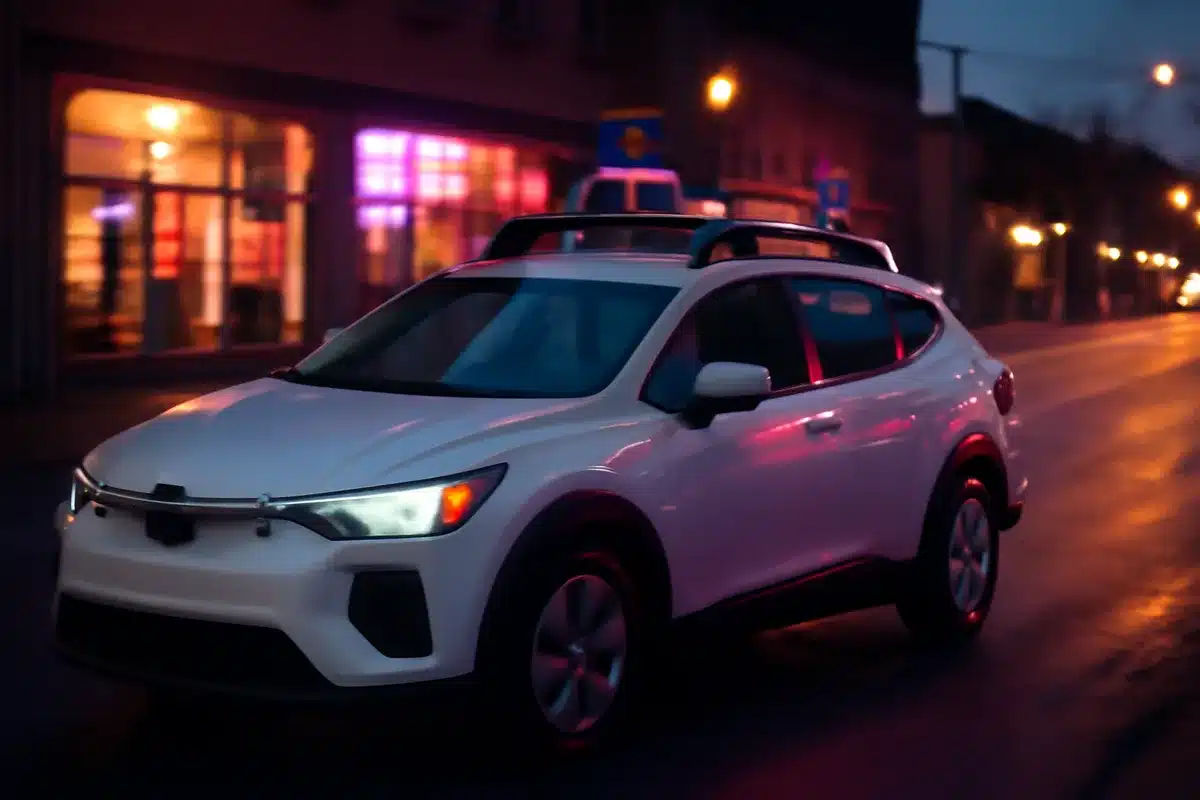
Tesla stock surged 5.14% on August 24, 2026, closing at $362.86 as investors reacted to Nevada’s approval for the company to deploy up to 5,000 commercial robotaxis in Clark County, which includes Las Vegas. The Nevada Transportation Authority unanimously approved the permit on August 20, marking a major regulatory milestone for Tesla’s autonomous vehicle ambitions.
The approval came alongside broader Nevada robotaxi permits granted to Waymo and Uber, allowing up to 8,000 self-driving vehicles total to operate commercially in the state over the next 12 months. Tesla’s share of the authorization—5,000 vehicles—was the largest among the three companies. However, Tesla representatives acknowledged they would likely deploy far fewer vehicles initially; Eric Earley, Tesla’s Cybercab chief engineer, told regulators the company would be “extremely happy and satisfied if we could get ourselves up to 2,500, maybe a bit higher” within the first year.
The stock gain reflects investor optimism about Tesla’s shift toward recurring-revenue models through robotaxi services. Rather than selling vehicles as one-time transactions, robotaxis represent a potential software and service business that could eventually support higher operating margins. Tesla currently operates only 232 robotaxis across Texas, California, and Florida, putting it well behind Waymo, which has deployed 3,871 vehicles across six states.
The Nevada approval comes as Tesla grapples with near-term profitability pressures. The company reported Q2 2026 results showing record vehicle deliveries of 480,126 units globally, up 25% year over year, yet delivered adjusted earnings per share of $0.33 versus a consensus estimate of $0.54. Operating margin compressed to 1.4% in the quarter, reflecting price cuts and heavy investment spending.
Capital expenditures tell the deeper story. Tesla’s Q2 2026 capex surged 142% year over year to $5.8 billion, and the company guided that full-year 2026 capex would exceed $25 billion—more than double historical levels. This spending is earmarked for robotaxis, humanoid robots, semiconductor fabrication, and AI compute infrastructure. Tesla recorded negative free cash flow of $1.1 billion in Q2, a direct result of the capex surge.
J.P. Morgan analyst Rajat Gupta, who rates Tesla at neutral, said the Nevada approval validates Tesla’s robotaxi scaling approach. “Robotaxi scaling appears well positioned, with the limited Cybercab test fleet continuing to validate the technology,” Gupta noted in an August 18 client note. He also highlighted that Tesla is limiting further Model Y additions to its robotaxi fleet, signaling confidence in the Cybercab’s near-term scalability.
Tesla CEO Elon Musk has emphasized the deliberate pace of rollout. “We’re going as fast as humanly possible in scaling robotaxi, but while trying to ensure that we do not harm anyone at all and ideally do not even run over a pet,” Musk told investors last month. This cautious approach contrasts with investor expectations for faster deployment, yet the Nevada approval suggests regulators are comfortable with Tesla’s safety record in early operations.
The regulatory milestone also coincides with Tesla’s plans to launch its purpose-built Cybercab in Austin, Texas. The vehicle entered production in late April 2026 and is set to replace Model Y crossovers in the robotaxi fleet. Beyond robotaxis, Tesla is preparing to disclose details of its European launch for the electric Semi truck, another potential growth avenue in commercial transport.
For investors, the 5% stock gain reflects a temporary shift in focus from near-term margin compression to long-term optionality. The Nevada approval provides a concrete metric for tracking robotaxi progress: if Tesla can demonstrate high utilization, strong safety performance, and solid unit economics at the 5,000-vehicle scale, the case for expanding to other US states and international markets strengthens. The challenge remains converting record vehicle deliveries and heavy capex into sustainable profit growth that lifts operating margin well above the current 1.4% level.
Sources
- Ad-hoc News — Tesla stock surge details, Q2 2026 earnings metrics, capex guidance, and analyst commentary on robotaxi significance
- TechCrunch — Nevada Transportation Authority robotaxi permit approval, Tesla’s 5,000-vehicle allocation, and competitive context with Waymo and Uber
- Morningstar/MarketWatch — Stock price reaction, Tesla’s robotaxi deployment plans, Cybercab launch timeline, and J.P. Morgan analyst commentary