Update (Aug 25): President Trump's proposed fiscal 2027 budget eliminates a long-standing congressional prohibition against wild horse and burro slaughter and cuts funding for the Wild Horse and Burro Program from $142 million to $106.8 million, setting the stage for potential killing of tens of thousands of animals.
A New York Times investigation published August 20 found that the Bureau of Land Management has sold approximately 3,700 wild horses in 2025—more than double the previous year—through a legal loophole that strips federally protected animals of their safeguards and clears a pathway to slaughter. Some horses were sold for as little as $25 each to livestock traders who later resold them for commercial slaughter, despite a federal law enacted in 1971 intended to protect these animals as “living symbols of the nation’s freedom.”
It is illegal to slaughter wild horses in the United States, but the loophole allows the government to sell mustangs on the cheap to private buyers, effectively removing their protected status once the transaction is complete. The investigation tracked how Ohio livestock trader Brandon Jones, who appeared in the wild horse market in spring 2025, became the Bureau of Land Management’s largest buyer, acquiring roughly 500 horses. According to the Times, Jones then sold many of these animals to slaughter, with some transported across the border to Canada for processing.
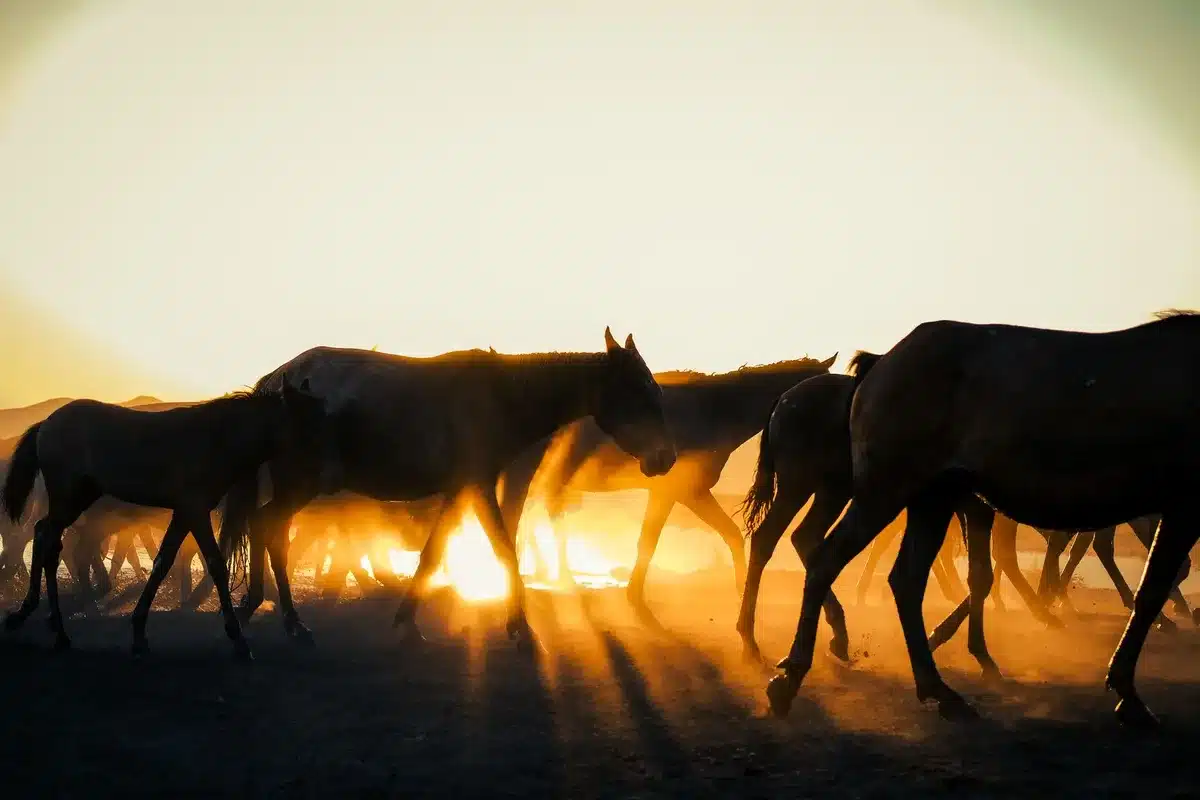
The Bureau of Land Management manages the wild horse population under the Wild Free-Roaming Horses and Burros Act of 1971, which declared wild mustangs “living symbols of the nation’s freedom and pioneer heritage.” Today, approximately 73,000 wild horses roam federal public lands, while another 58,000 are housed in government holding facilities at an annual cost of roughly $100 million. The agency has long faced pressure to reduce the population, citing overpopulation and environmental damage to rangelands.
The sales surge coincides with the Trump administration’s budget proposals. President Trump’s proposed fiscal year 2027 budget cuts the Wild Horse and Burro Program’s funding and eliminates a crucial prohibition against horse slaughter that has been in place for years. Congress has previously blocked similar efforts to remove the ban, but the recent investigation suggests the loophole is already being exploited even without formal policy changes.
Animal welfare advocates argue that the sales terms encourage “kill buyers”—livestock traders who specialize in acquiring animals destined for slaughter. The Times investigation found that the BLM awarded a bulk sales contract to Jones, with taxpayer-subsidized delivery of the horses. Once the animals change hands, the government has limited ability to track where they end up or whether they are slaughtered.
The BLM maintains on its website that “it has been and remains the policy of the BLM not to sell or send any wild horses or burros to slaughter,” and that buyers must sign agreements not to slaughter horses or knowingly sell them to anyone intending to do so. However, critics argue that the agency has insufficient enforcement mechanisms to prevent violations of these agreements once animals are sold.
Sources
- The New York Times — investigation revealing 3,700 wild horses sold in 2025, Brandon Jones as major buyer, and the legal loophole enabling sales to slaughter
- Newsweek — wild horse sales surge under Trump, BLM holding 58,000 horses at annual cost of $100 million
- The Humane World — Trump’s FY27 budget eliminating slaughter prohibition and cutting Wild Horse and Burro Program funding
- Equus Magazine — federal law prohibiting use of taxpayer funds for sales resulting in commercial slaughter
- Bureau of Land Management official website — BLM policy statement on protecting wild horses, program history under 1971 Act