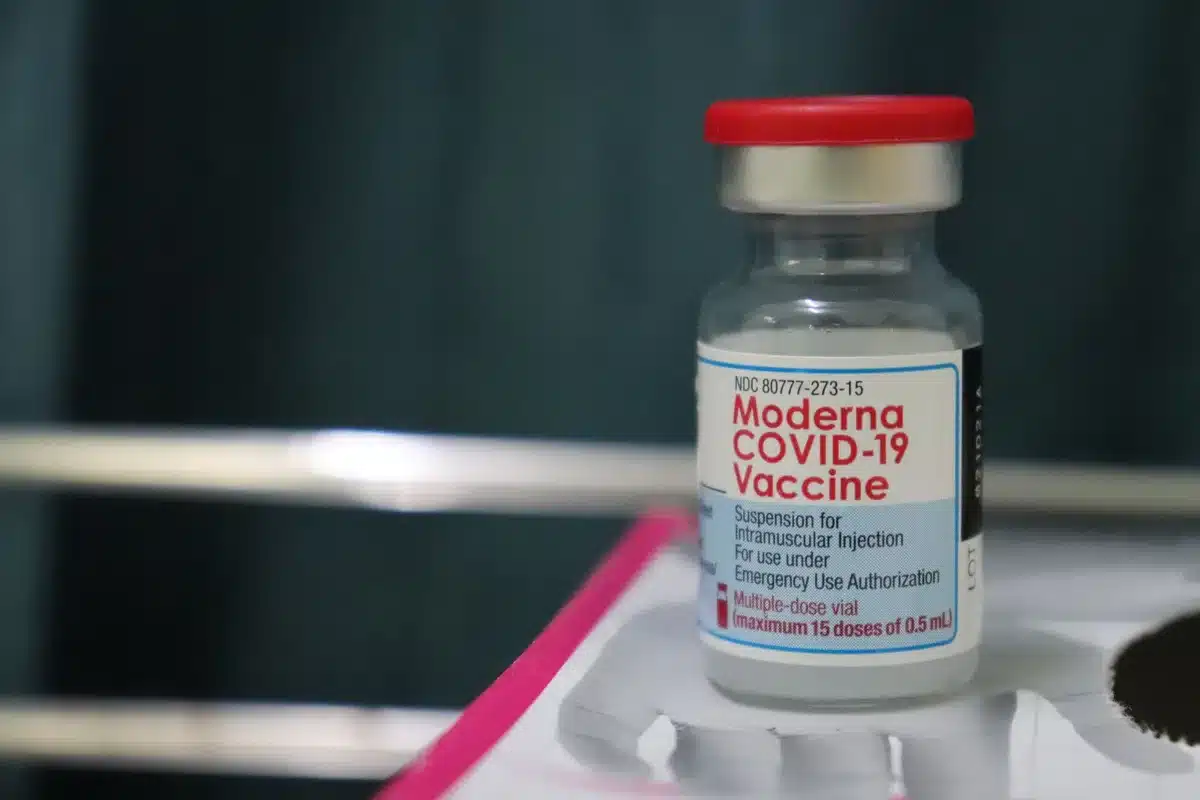
The FDA approved Moderna’s mRNA-based influenza vaccine for adults 50 and older on August 5, marking the first flu shot using messenger RNA technology to reach the U.S. market. The vaccine, marketed as mFlusiva (mRNA-1010), will be available for the 2026-27 respiratory illness season and represents Moderna’s fourth approved vaccine.
In a Phase 3 trial of 40,703 adults across 301 sites in 11 countries, mFlusiva demonstrated a relative vaccine efficacy of 26.6% compared with standard-dose flu shots. Among the 20,179 participants who received mFlusiva, 2.0% contracted influenza during the 2024-25 Northern Hemisphere flu season, versus 2.8% of 20,124 standard-dose recipients. The vaccine showed consistent efficacy across three circulating flu strains: 29.6% against influenza A/H1N1, 22.2% against A/H3N2, and 29.1% against B/Victoria, according to CIDRAP’s analysis of the trial data published in the New England Journal of Medicine.
Among adults 65 and older—a group at higher risk for severe flu complications—the relative vaccine efficacy reached 27.4%. Recipients also sought medical care for flu-related symptoms at lower rates: 80 mFlusiva vaccinees compared with 120 standard-dose recipients, translating to a 33.7% reduction in healthcare visits.
The mRNA approach offers a practical advantage over traditional egg-based production: it can be updated more quickly to match circulating flu strains each season. Egg-based manufacturing can introduce mutations that reduce how closely the vaccine matches the season’s dominant strains, potentially lowering effectiveness. This flexibility positions mRNA vaccines as a tool to improve annual flu protection, particularly for older adults who typically have weaker immune responses to standard-dose shots.
Side effects were more common with mFlusiva than with standard vaccine. Injection-site pain occurred in 65.8% of mRNA recipients compared with 29.8% of standard-dose recipients. Fatigue, headache, and muscle aches were also more frequent. However, serious adverse events were uncommon and occurred at similar rates in both groups—2.2% in the mRNA group and 1.9% in the standard-dose group.
A Regulatory Reversal
The approval marks a dramatic reversal after regulatory turbulence earlier this year. In February 2026, Vinay Prasad, the FDA’s head of biologics at the time, issued a rare “refusal-to-file” notice, declining to review Moderna’s application based on the available data. Two weeks later, after Moderna publicly disclosed the FDA’s decision and expressed displeasure, the agency reversed course and agreed to conduct a full review with an August 5 decision deadline. Prasad left the FDA at the end of April.
The February refusal came amid broader regulatory uncertainty surrounding mRNA vaccines, particularly following criticism from Robert F. Kennedy Jr., who, as Health and Human Services Secretary, has been openly critical of the technology. In 2025, Kennedy formally asked the FDA to pull mRNA COVID-19 vaccines off the market, claiming data did not support their use. The approval of mFlusiva signals that clinical evidence ultimately prevailed in the regulatory process.
The flu is estimated to cause as many as 5 million severe illnesses and up to 650,000 deaths annually worldwide, with older adults facing disproportionate risk. The approval of Moderna’s mRNA flu vaccine adds a new option to the enhanced vaccines—adjuvanted, high-dose, and recombinant formulations—already recommended for adults 50 and older. Moderna expects to have mFlusiva available before the fall flu season begins.
Sources
- CIDRAP (University of Minnesota) — Phase 3 trial results, vaccine efficacy data, mechanism of mRNA technology advantage, and regulatory history
- STAT News — FDA approval date, regulatory reversal details, Prasad’s departure, and Kennedy context
- Reuters, NBC News, CNN, Time, U.S. News & World Report — FDA approval confirmation and vaccine availability for 2026-27 season
- Pharmacy Times, Healthcare Dive, AJMC — Approval details and trial efficacy figures