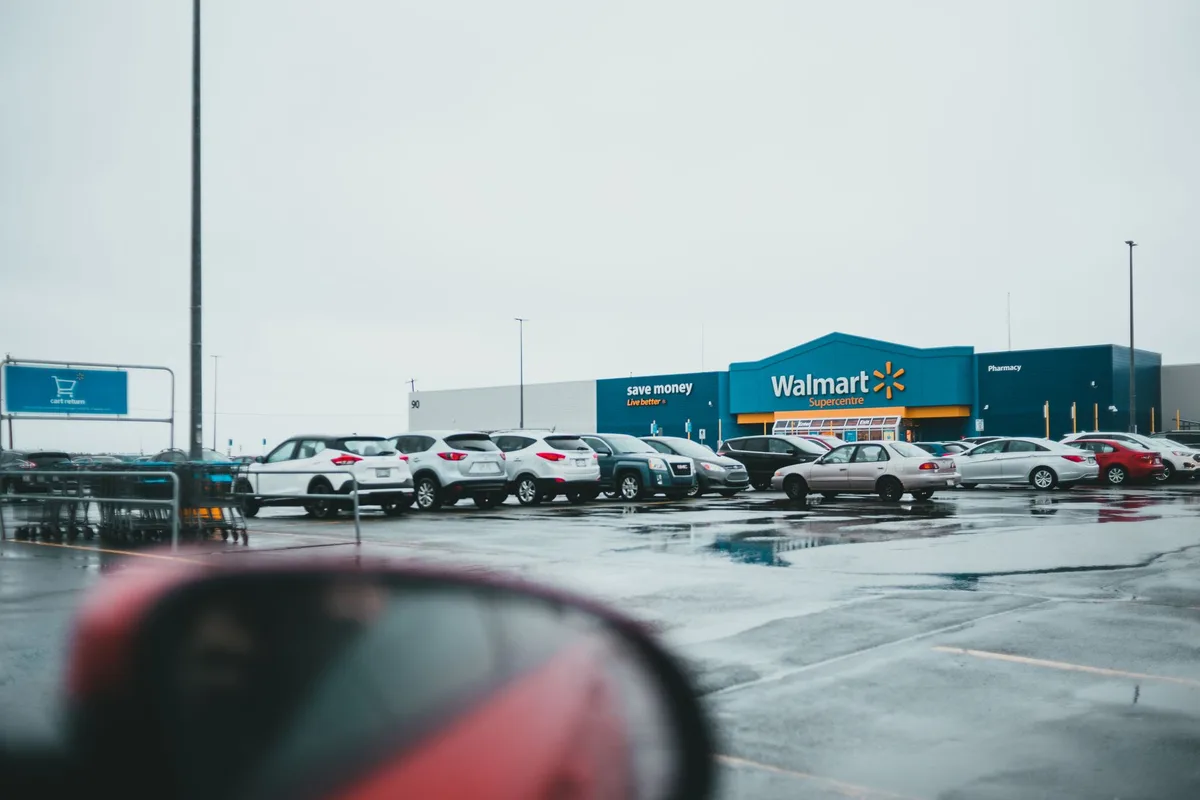
Walmart stock fell 9% to a nine-month low on Thursday after the retail giant reported its slowest US comparable sales growth in six years, signaling that American consumers are pulling back spending amid rising fuel and food costs.
The company reported US comparable sales growth of 2.6% for the second quarter, well short of Wall Street’s expectation of 3.7% to 3.8%. This marks the first time in at least five years that Walmart’s same-store sales have missed analyst expectations, underscoring the rarity of the stumble for a retailer known for consistently beating forecasts and raising guidance.
Despite beating earnings estimates—reporting adjusted earnings per share of $0.81 versus the $0.74 forecast—and raising its full-year net sales guidance to 4% to 5% growth, investors were unmoved by the broader signals the earnings sent about consumer resilience. The stock shed more than $80 billion in market value, its biggest single-day decline since May 2022, according to Reuters.
The slowdown reflects mounting pressure on American households. Average spending per transaction grew just 1.1%, down sharply from 3.1% a year earlier. Store traffic growth slowed to 1.5% in the latest three months from 3% in the first quarter. Walmart’s pharmacy business also took a hit, with lower prices negotiated under federal drug-pricing programs dragging comparable sales down by 0.8 percentage points.
Walmart signaled that consumers are making trade-offs as fuel costs remain elevated. The company now expects an additional $2 billion in fuel-related costs above prior forecasts. CFO John David Rainey told analysts that when fuel prices exceed $4 per gallon, there appears to be a psychological impact on spending behavior.
The earnings report arrives as broader retail data points to consumer strain. US retail sales fell unexpectedly in July—the first decline in nine months—and economists have grown increasingly concerned about the sustainability of consumer spending, which accounts for roughly two-thirds of economic growth. Goldman Sachs analysts warned that real consumer spending growth could slow to as low as 1% in the second half of 2026, according to a recent client note cited by Business Insider.
Walmart’s position as a bellwether for consumer health amplified the market’s reaction. “For the consumer economy, this is like Nvidia posting a slowdown,” Brian Jacobsen, chief economic strategist at Annex Wealth Management, said in remarks reported by Reuters. “Walmart has been winning the trade-down trade, but that tailwind may be fading.”
Management sought to reassure investors that price rollbacks announced Wednesday—covering 11,000 products and funded partly by $2.9 billion in tariff refunds—would drive demand recovery. Walmart’s e-commerce sales jumped 24%, and its high-margin advertising business grew 43%, offering some bright spots. CEO John Furner urged patience, saying unit sales gains would translate to market share gains over time.
Analysts remain divided on whether Walmart can weather the slowdown. UBS analyst Michael Lasser told Reuters the earnings print should reignite debate about valuation but said the bank “remains bullish.” Others, like Dan Sheehan, director of portfolio management at Telos Family Office, acknowledged the company’s solid overall performance while cautioning that “the consumer is under pressure.”
Sources
- Reuters — confirmed 9% stock decline, 2.6% comparable sales growth, fuel cost guidance, tariff refunds, e-commerce growth, analyst commentary
- Business Insider — reported stock drop, comparable sales miss, spending per transaction decline, consumer pressure signals, Goldman Sachs outlook
- Wall Street Journal — verified 2.6% comparable sales figure and six-year slowdown
- Yahoo Finance — confirmed stock decline percentage and comparable sales expectations miss
- Investing.com — verified adjusted EPS beat of $0.81 vs. $0.74 forecast