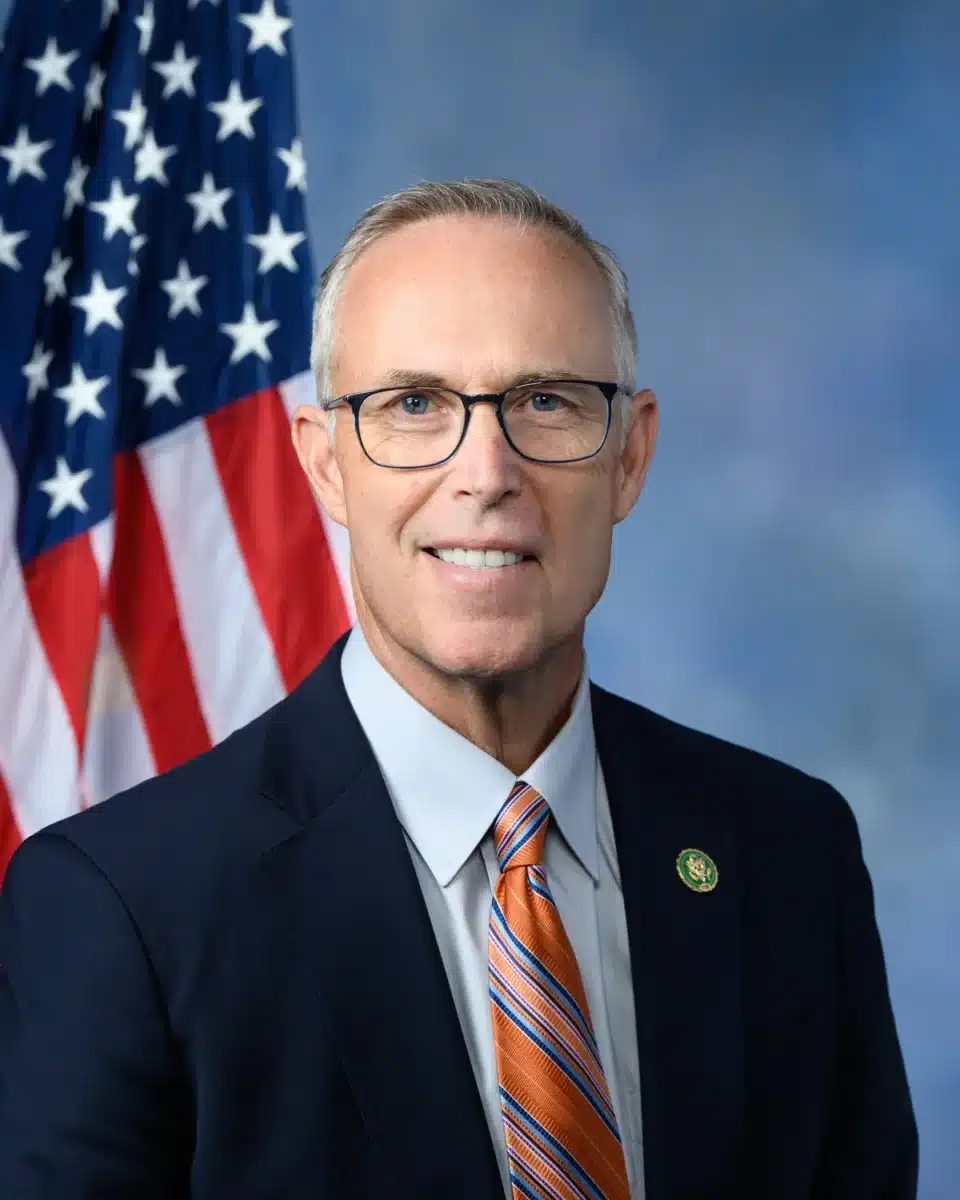
Rep. Jared Huffman released his book “No Prophets: The Fight to Save Democracy from Christian Nationalism” this week, arguing that Christian nationalism has become America’s most dangerous political movement and poses an urgent threat to democracy. The California Democrat, who co-chairs the Congressional Freethought Caucus, contends in the new work that Christian nationalists aim to establish a theocratic system where only Christians hold public office, fundamentally incompatible with democratic governance.
Huffman, the only openly nonreligious member of Congress, came out publicly in 2017 as a “nonbeliever”—only the second member of Congress in modern times to do so. In his book, he draws on his firsthand observations from inside Congress, including witnessing the January 6 insurrection, which he describes as a Christian coup orchestrated by faith leaders and religious extremists. He argues that the religious symbols, worship rituals, and prophetic declarations by pastors on the Capitol steps reveal how deeply Christian nationalism was woven into that day’s violence.
Christian nationalism, according to Huffman’s analysis, represents a fusion of conservative Christian identity with Republican politics, rooted in the false historical claim that the United States was founded exclusively as a Christian nation. Sociologists and political analysts define it as the belief that Christians deserve privileged legal and institutional status in American society. The movement encompasses multiple factions, including independent charismatic evangelicals, which Huffman identifies as the dominant force within what he calls “mega Christian nationalism”—far more militant and explicitly theocratic than earlier iterations like the 1980s Moral Majority.
Huffman traces Christian nationalism’s evolution through decades of American politics. The Moral Majority movement of the 1980s relied on Cold War anti-communism as its unifying force, he explains. When the Soviet Union collapsed and Bill Clinton won the 1992 election, that movement fractured. From its pieces emerged a more radical ideology. The militia movements of the 1990s, he notes, foreshadowed today’s Christian nationalist movement, which he argues is explicitly anti-democratic and intent on dismantling democratic systems rather than operating within them.
The congressman’s warnings align with recent institutional recognition of Christian nationalism as a threat. In July 2026, the Presbyterian Church (U.S.A.) voted overwhelmingly—459 to 25—to declare Christian nationalism a theological error incompatible with the teachings of Jesus Christ. The denomination’s General Assembly also approved a constitutional amendment rejecting the ideology and its practices in all forms, marking a significant denominational stance against the movement.

Huffman’s public stance on religion has made him unusual in American politics. He grew up in the Reorganized Church of Jesus Christ of Latter-day Saints (now called Community of Christ) in Independence, Missouri, and was ordained into that church’s priesthood as a young man. He abandoned religious belief in his early twenties while studying at UC Santa Barbara, eventually embracing humanism—a secular ethical framework grounded in reason, evidence, and human moral obligation rather than supernatural belief. For decades, he kept his nonreligious views private before deciding in 2017 to speak openly about his lack of God belief, a move he says became urgent given the political rise of Christian nationalism under the Trump administration.
The Congressional Freethought Caucus, which Huffman co-founded with Rep. Jamie Raskin in 2018, now includes 37 members dedicated to protecting the separation of church and state and promoting sound public policy based on reason and science. Huffman notes that he has gained company in recent years: two new freshman members of Congress have openly identified as non-religious, suggesting a slow shift in how politicians discuss faith and secularity. Still, he remains the most prominent openly nontheistic voice in Congress, a position he uses to warn about Christian nationalism’s reach into government institutions, the military, and the judiciary.
Sources
- KQED Forum — Interview with Rep. Jared Huffman on Christian nationalism, his book “No Prophets,” and the January 6 insurrection; August 17-18, 2026
- San Francisco Chronicle — Jared Huffman’s new book makes the case that Christian nationalism poses an urgent threat to democracy; July 28, 2026
- Washington Post — Rep. Jared Huffman came out publicly in 2017 as a “nonbeliever,” only the second member of Congress in modern times to do so; August 19, 2026
- Presbyterian Outlook — Presbyterian Church (U.S.A.) labels white Christian nationalism a theological error; July 1, 2026
- Rep. Huffman’s official website — Congressional Freethought Caucus membership and initiatives; 2026
- Los Angeles Times — Profile of Rep. Huffman’s nonreligious status and Congressional Freethought Caucus leadership; July 9, 2026