Major Jason Watson, an active-duty U.S. Air Force officer, was ordered into pretrial confinement on August 18, 2026, nearly seven weeks after his arrest on the Capitol steps for calling for President Trump’s impeachment, according to the Air Force and CNN. Watson is currently detained at a county facility in Maryland on a military hold.
The Air Force said the confinement order was based on “probable cause to support allegations of continued misconduct,” though the specific charges remain unclear. Watson’s attorney, Chris Mutimer, suggested the timing is significant—the detention came just days after Watson appeared on CNN to criticize the president, calling Trump’s actions “flagrantly violating the Constitution.”
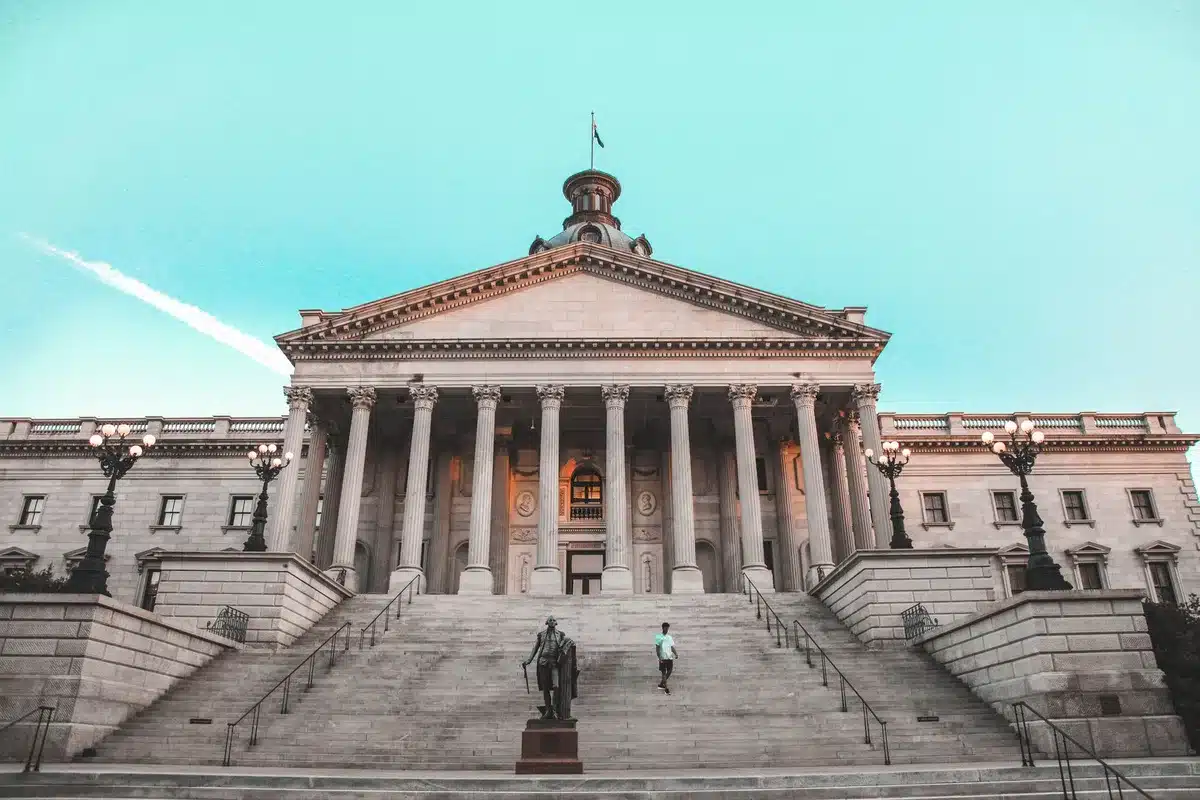
Watson was initially arrested on July 1 after speaking at a news conference organized by the Removal Coalition near the Capitol steps. Capitol Police said members of the public cannot demonstrate on the House steps without being accompanied by a member of Congress; Watson had been escorted there by a member who then left the area. He was charged with crowding, obstructing, and incommoding—a violation of D.C. Code § 22-1307—but had not faced charges tied to his speech itself.
The arrest raised immediate legal questions because Watson wore his Air Force uniform during the protest. Military regulations prohibit wearing a uniform while participating in political activities. More significantly, Article 88 of the Uniform Code of Military Justice (UCMJ) makes it a crime for commissioned officers to use “contemptuous words” against the president, vice president, Congress, or other top officials. The statute does not apply to enlisted service members, only officers.
In his CNN interview on August 18, Watson said he was willing to accept the price of his dissent. “We just have to be willing to accept that we can change what is happening in our country if we’re just willing to pay a price for it,” he told Erin Burnett. “So all that I could do was ask myself what’s the highest price that I’m willing to pay. And this is what I ultimately came up with.”
The Air Force acknowledged the broader context in a statement: “Public dissent within active-duty military ranks is rare as service members are required to follow orders in accordance with the Uniform Code of Military Justice.” The service also noted that Watson’s statements “do not reflect the views or policies of the Department of the Air Force.” Following his July arrest, Watson was restricted to Joint Base Anacostia-Bolling and placed under investigation on multiple UCMJ articles.
Pretrial confinement in military law is distinct from civilian bail. Military commanders have authority to order pretrial confinement when probable cause supports allegations, and the confinement is reviewed under Rule for Courts-Martial 305. The Air Force stated Watson would be “afforded all rights” under that rule as his confinement is reviewed. Pretrial confinement is meant to be a last resort, used when commanders determine a service member poses a flight risk or danger, but military justice experts have documented wide variation in how the authority is applied.
The case highlights the tension between military discipline and free speech. Article 88 has long been controversial among military law scholars and civil liberties advocates, who argue it may chill legitimate political speech by officers. Yet the statute remains in force, and the Air Force’s investigation into Watson’s conduct—spanning both the uniform violation and potential contemptuous speech—reflects the military’s authority to police officer conduct both on and off duty.
Sources
- CNN — reported Watson’s pretrial confinement order on August 19, 2026, his July 1 arrest, his CNN interview, and his attorney’s statement on timing
- Air Force Public Information Officer — provided statement on pretrial confinement, UCMJ compliance, and lack of reflection of Air Force views
- U.S. Code Title 10, Section 888 — Article 88 of the Uniform Code of Military Justice text and scope
- Military Times — reported July 2 arrest, Capitol Police rules on demonstrations, and Watson’s restriction to Joint Base Anacostia-Bolling
- NBC News — reported Watson’s arrest in uniform and his criticism of Trump’s Iran and Venezuela actions
- Justice Security — discussed Article 88 as a punitive UCMJ provision and its application to commissioned officers