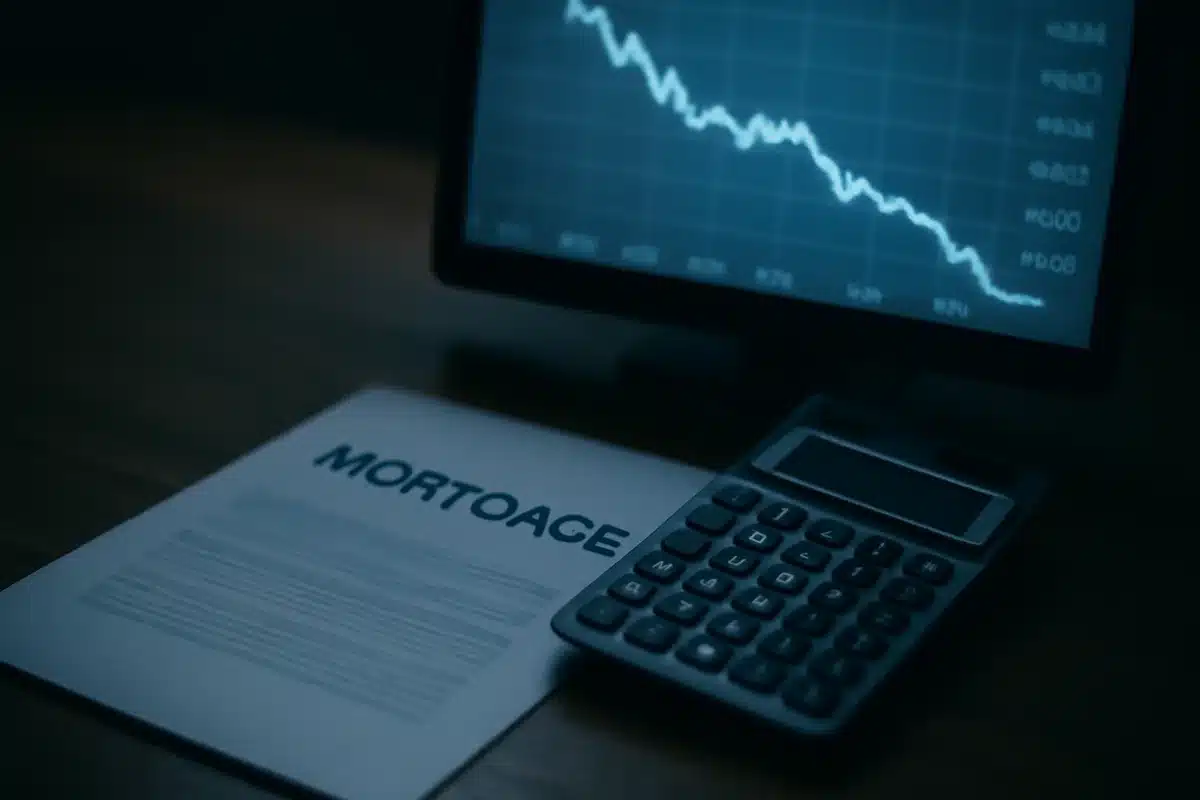
The average 30-year fixed mortgage interest rate fell to 6.54% on August 15, 2026, marking a meaningful decline for homebuyers as market expectations shifted on inflation. The rate dropped 11 basis points from the previous day, according to daily rate data, while the 15-year fixed rate fell even more sharply to 5.86%.
Mortgage rates do not respond directly to Federal Reserve policy decisions, but rather track Treasury yields, which move based on inflation expectations and economic data. The Fed held its federal funds rate steady in the 3.5%-3.75% range at its late-July meeting, a decision made by the Federal Open Market Committee in a 9-3 vote on July 29, 2026.
The recent decline in mortgage rates coincided with softer inflation readings. In August, Treasury yields fell after data showed consumer inflation cooling and wholesale inflation coming in weaker than expected. The 10-year Treasury yield, which most directly influences fixed-rate mortgage pricing, fell more than 4 basis points to 4.645% following the inflation report. When bond investors expect inflation to remain under control, longer-term yields decline, and mortgage rates often benefit.
The drop to 6.54% followed a period of elevated rates. Earlier in 2026, mortgage rates had climbed above 6.7% amid inflation concerns and geopolitical tensions, including an ongoing conflict in Iran that pushed oil prices higher. The recent easing of oil prices and signs of slowing inflation have created room for rates to move lower, though they remain well above pandemic-era lows.
By August 19, 2026, the 30-year rate had ticked back up slightly to 6.714%, reflecting the volatility that borrowers continue to face. Mortgage rates have continued to edge up and down in recent weeks as investors weigh employment data, economic growth, and expectations for Fed policy through year-end. Experts predict mortgage rates will remain relatively stable if inflation stays contained, though any renewed price pressures could quickly reverse recent gains.
For homebuyers and refinancers, shopping among multiple lenders remains important. Freddie Mac research shows that borrowers who apply with multiple lenders can save between $600 and $1,200 annually compared to those who do not, making comparison shopping especially valuable in a higher-rate environment.
Sources
- Nadlan Capital Group — the 30-year fixed rate fell to 6.54% on August 15, 2026, down 11 basis points from Friday
- Fortune — the 30-year fixed rate was 6.714% on August 19, 2026, up from the prior day
- CNBC — the 10-year Treasury yield fell to 4.645% after softer inflation data on August 13, 2026
- Federal Reserve — the FOMC held the federal funds rate at 3.5%-3.75% in a 9-3 vote on July 29, 2026
- CNN — three regional presidents dissented from the July 29 Fed decision to hold rates steady