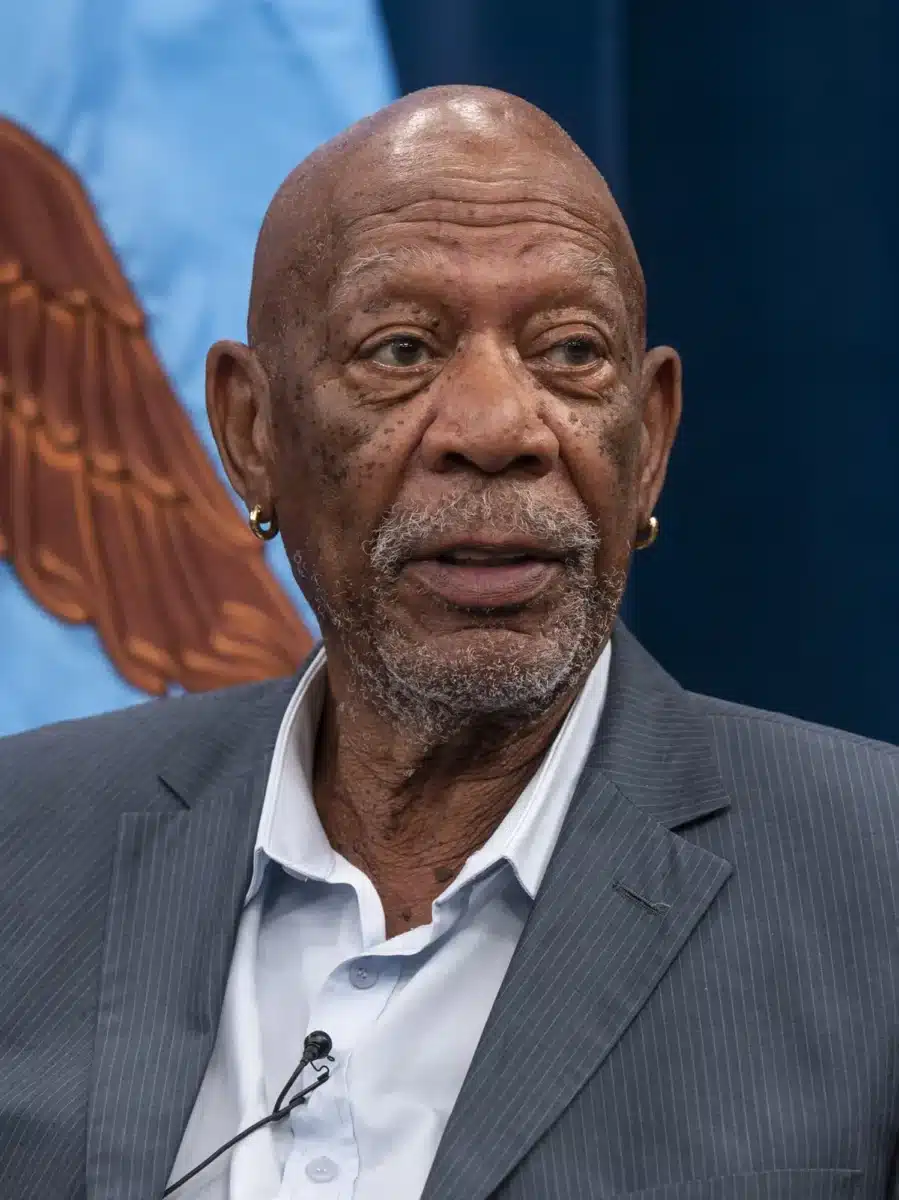
China’s best-known comedian, Guo Degang, is under investigation after he improvised altered lyrics to a famous communist revolutionary song during a performance in Wuhan on July 24, changing one line to reference the Forbidden City in what authorities say violated performance regulations.
During a Peking opera show, Guo performed the 1956 song “Playing My Beloved Pipa,” which captures the spirit of communist guerrilla forces fighting the Japanese during the Sino-Japanese war. The original lyrics read: “The sun is about to set in the west; all is quiet on Weishan lake.” Instead, Guo sang: “All is quiet in the Forbidden City,” the sprawling palace complex in Beijing that has long served as a seat of power and carries political sensitivity in China.
Following a complaint filed with the city’s Culture and Tourism Bureau, Wuhan authorities opened a formal investigation on August 11. The bureau confirmed to CNN that the performance itself had received required permits, but Guo’s improvised lyrics were not included in the materials submitted for prior approval, potentially violating China’s Regulations on the Administration of Commercial Performances.
The song Guo altered holds symbolic weight in Chinese culture. It was featured in the 1956 war film “Railway Guerrilla” and in 2019 was one of 100 songs chosen to celebrate the 70th anniversary of the founding of the People’s Republic of China. A complainant told authorities that Guo had “not only distorted and vulgarized a classic revolutionary work, but also violated public morals and accepted standards of conduct,” according to a screenshot of the letter published by state-affiliated media thePaper.
The investigation has already disrupted Guo’s schedule. A 10th-anniversary tour performance by the Qilin Opera Society scheduled for August 15 in Xi’an was cancelled, and a Deyun Society comedy performance scheduled for the following day was postponed. A worker from Xi’an Chanba Poly Grand Theater told CNN: “There is no date or plan for a possible return. Ticket holders will be refunded automatically.”
Guo is credited with reviving traditional Chinese crosstalk comedy, a form known as xiangsheng. He founded Deyun Society, which has become one of China’s most commercially successful entertainment troupes, and also established the Qilin theatre company to promote lesser-known traditional Chinese art forms. The news of his investigation became one of the most discussed topics on Chinese social media, sparking debate over where authorities should draw the line between theatrical improvisation and regulatory compliance.
Guo’s case reflects a broader pattern of comedians facing severe penalties in China for jokes that authorities deem inappropriate. In May 2023, stand-up comedian Li Haoshi was fined 14.7 million yuan (approximately $2 million) after using a phrase associated with the People’s Liberation Army when telling a story about two stray dogs. Li apologized but was banned from performing indefinitely and has not been seen in public since, according to CNN reporting. In 2022, another comedian, Li Bo, was fined 50,000 yuan (about $7,400) for joking about the Covid-19 pandemic lockdown in Shanghai and teasing teenagers.
Performers in China face increasingly limited space for artistic expression as the ruling communist party steps up its ideological drive to align media, celebrities, and online content with what state officials describe as “Xi Jinping’s Thought.” The Wuhan bureau has not announced a timeline for concluding its investigation into Guo.
Sources
- CNN — confirmed the investigation’s status, Guo’s altered lyrics, the cancelled performances, and precedent cases of Li Haoshi and Li Bo
- CP24 — provided details on the song’s historical significance and the complaint filed with Wuhan authorities
- Vision Times — supplied information on the July 24 performance date, the complaint details, and social media debate over the investigation
- Reuters — reported Li Haoshi’s $2 million fine in May 2023