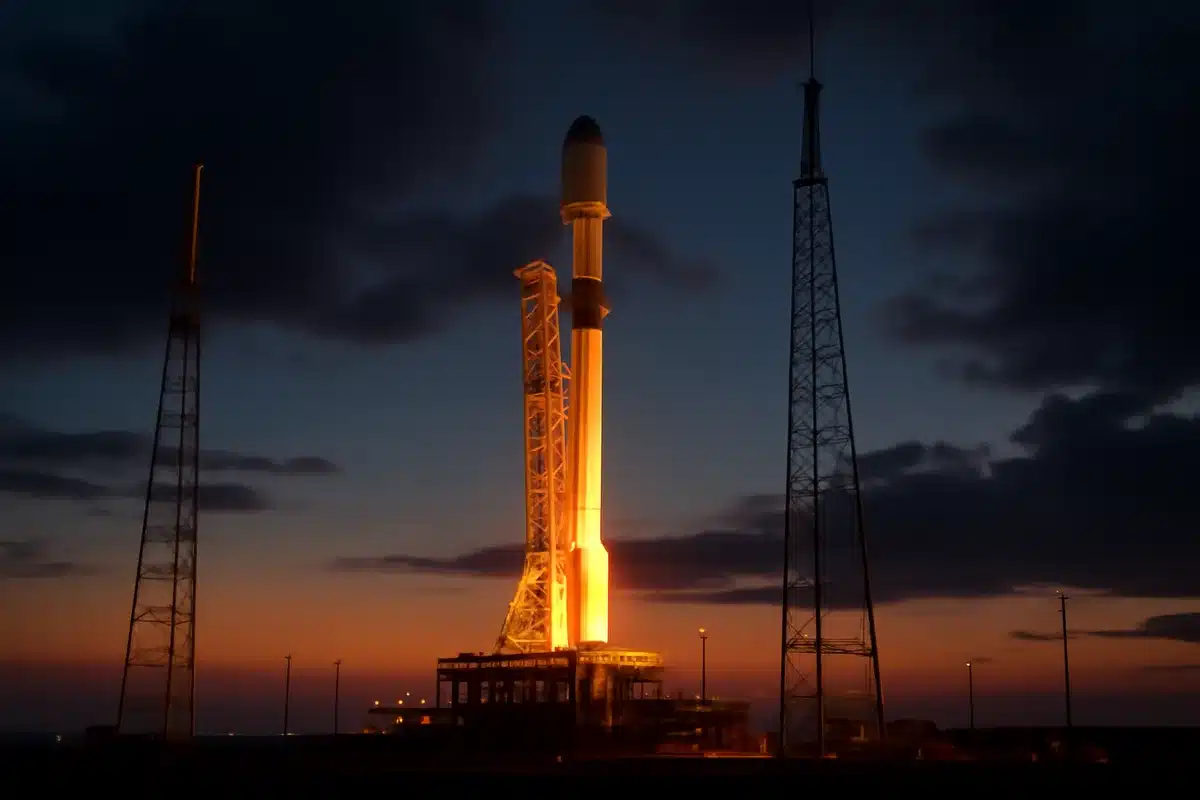
SpaceX is launching a Falcon 9 rocket with 9 Globalstar 2-R replacement satellites from Space Launch Complex 40 in Florida on August 15, 2026, during a 15-minute window opening at 9:12 p.m. ET. The mission represents the first batch of new second-generation satellites that will refresh Globalstar’s low Earth orbit constellation.
Globalstar contracted with Canada-based MDA Space in 2022 to build 17 new second-generation refresh satellites for a total of $327 million, with an option for nine additional units. The company signed a launch services agreement with SpaceX in July 2025 to deploy the first nine of those replacement satellites, targeting 2026 for liftoff.
Globalstar’s existing constellation operates in low Earth orbit at an altitude of about 1,410 kilometers, inclined at 52 degrees, providing mobile satellite services across the globe. The company’s network enables satellite voice communications, two-way data transmission, asset tracking, and emergency messaging services that reach over 80 percent of Earth’s surface—critical for remote regions and maritime operations where terrestrial networks cannot reach.
The timing of this launch comes as Globalstar undergoes significant corporate change. In April 2026, Amazon announced a definitive merger agreement to acquire Globalstar, valuing the transaction at approximately $90 per share in a mix of cash and Amazon stock. The acquisition is expected to close in 2027, subject to regulatory approval and Globalstar achieving certain operational milestones with its replacement satellite constellation.
Expanding Connectivity for Amazon Leo
Under the acquisition agreement, Amazon plans to integrate Globalstar’s satellite operations, spectrum licenses, and infrastructure into its Amazon Leo low Earth orbit network. Amazon Leo, which Amazon is building to deliver broadband internet to underserved areas, will combine Globalstar’s existing and new satellite fleet with Amazon’s planned direct-to-device (D2D) satellite system launching in 2028.
The merger also includes a partnership with Apple. Amazon and Apple signed an agreement for Amazon Leo to power satellite services for iPhone and Apple Watch models, continuing support for features like Emergency SOS via satellite, messaging, and roadside assistance. Globalstar currently operates these services on behalf of Apple, and the new arrangement ensures continuity while expanding capabilities through Amazon’s expanded satellite infrastructure.
Building the Next-Generation Constellation
The Globalstar 2-R Launch 1 mission represents a critical step in the company’s constellation refresh. Globalstar’s second-generation constellation will ultimately consist of 25 operational satellites, with additional spares, replacing and augmenting the company’s aging fleet. The new satellites, built with advanced capabilities by MDA Space, are designed to improve data throughput and service reliability across Globalstar’s global footprint.
Following this August 15 launch, Globalstar has additional SpaceX missions planned to complete the constellation deployment. The company previously launched replacement satellites in May 2026 as part of its HIBLEO-4 replenishment program, with further launches scheduled to deploy the remaining units before the Amazon acquisition closes.
Sources
- SpaceX — official launch details, countdown timeline, and mission parameters for Globalstar 2-R Launch 1
- Amazon Press Center — merger agreement announcement, transaction terms, and Amazon Leo integration plans
- Globalstar Investor Relations — launch services agreement with SpaceX and satellite constellation specifications
- Space News — Globalstar’s MDA contract for 17 new second-generation satellites and FCC constellation approval
- Next Spaceflight — technical specifications for Globalstar 2-R constellation and orbit details