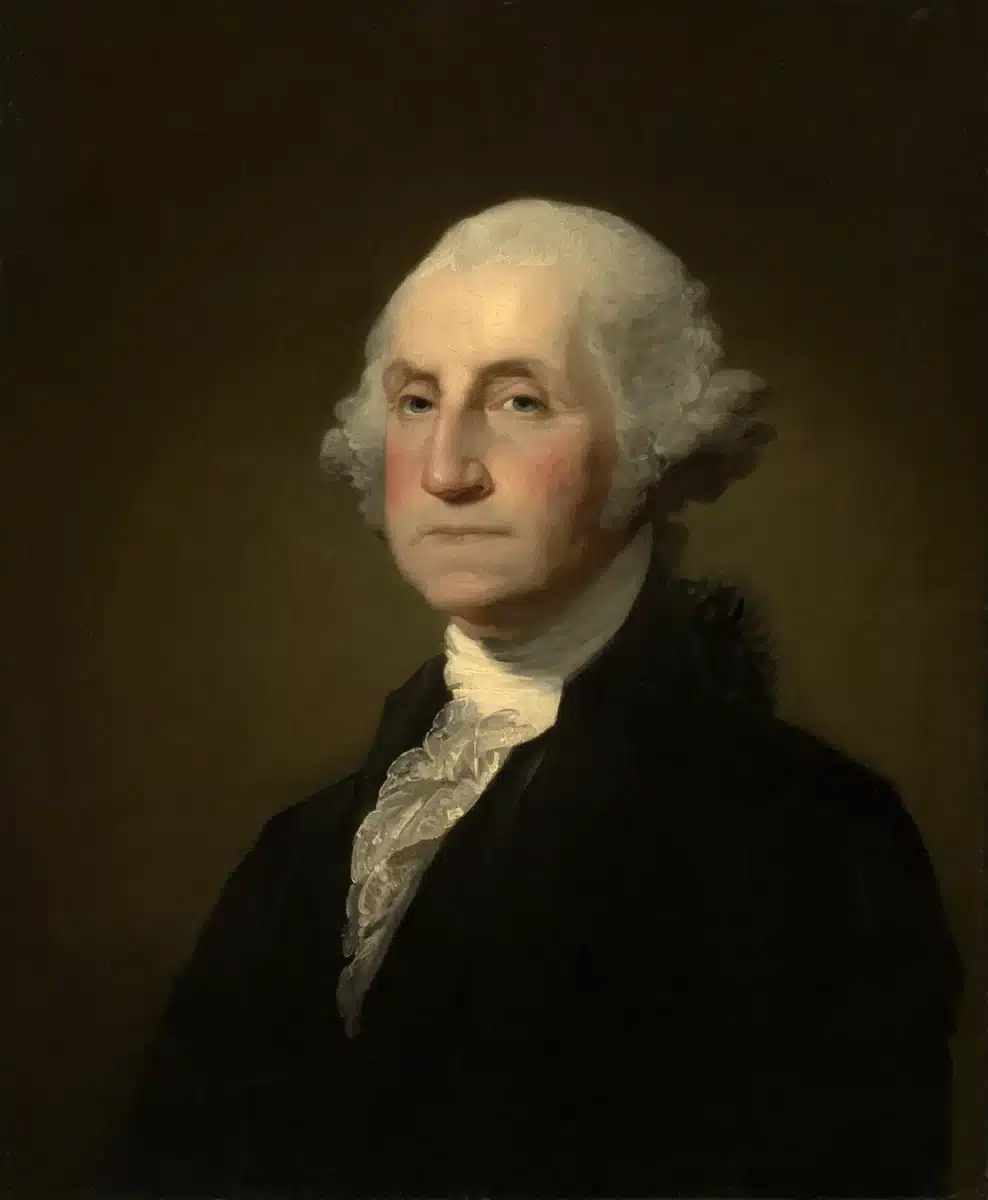
On August 15, 1776, a flotilla of British ships arrived on Staten Island, New York, carrying more than 8,600 German troops—the first major contingent of Hessian soldiers to reach the American Colonies and a turning point in the Revolutionary War that George Washington would soon face.
The Hessians were not mercenaries in the strict sense, according to Smithsonian reporting. Rather, they were soldiers on loan from German rulers who received cash subsidies from Britain in exchange for their service. Some had volunteered, others were drafted, and still others were pressed into service. The term “Hessian” itself was a misnomer—while many came from the principalities of Hesse-Cassel and Hesse-Hanau, Britain had signed subsidy treaties with six German territories to supply troops for the war.
Unlike their British allies, known as redcoats, the Hessians typically wore blue or green coats and sometimes tall, pointy brass headgear called miter caps, making them instantly recognizable. The Atlantic crossing had been brutal. One conscript, Johann Gottfried Seume, described soldiers packed so tightly in bunks that they could only lie on their sides, rotating on command. The food was rotten—bacon with black stripes, bread infested with worms. By the time the ships reached New York after more than three months at sea, the men were exhausted.
British commander William Howe wasted no time. On August 22, just a week after the Hessians disembarked, British and German troops crossed the bay between Staten Island and Long Island to begin amphibious landings. By August 27, they had assembled roughly 20,000 troops—15,000 British and 5,000 Germans—and attacked Washington’s Continental Army at the Battle of Long Island. The Americans were vastly outnumbered, suffering about 300 deaths and 1,100 captured, while the British and German side lost just over 60 killed.
Both the British and the Germans had expected the war to end quickly with the Hessians’ arrival. Historian Friederike Baer, author of *Hessians: German Soldiers in the American Revolutionary War*, noted that “none of the soldiers that went to America in 1776 anticipated that the war would last more than a year or two.” That assumption proved catastrophically wrong. The war would drag on for another seven years, ending with the Treaty of Paris in September 1783. By then, approximately 30,000 German soldiers had been called to serve, and thousands had died in combat or from disease.

Before the Hessians even set foot on American soil, the Continental Congress had moved to undermine them. On August 14—one day before their arrival—Congress passed a resolution promising that any Hessian who deserted and switched sides would be protected in religious freedom and granted 50 acres of land. George Washington had printed copies smuggled into the Germans’ camp. Two weeks later, a committee including John Adams, Benjamin Franklin, and Thomas Jefferson upped the stakes, offering German officers between 100 and 1,000 acres depending on rank. But initially, few accepted. As historian Edward J. Lowell wrote in 1884, colonists on Staten Island lived as comfortably as German country gentlemen, making the rebellion seem inexplicable to many of the hired soldiers.
The arrival of foreign troops also galvanized American sentiment against the Crown. When the Declaration of Independence was adopted on July 4, 1776—more than a month before the Hessians landed—the document included a grievance about the king “transporting large armies of foreign mercenaries to complete the works of death, desolation and tyranny.” Founding father John Jay, initially reluctant to support independence, was converted to the patriot cause by the deployment of German troops. “Why are the mercenaries of Germany transported near 4,000 miles to plunder your houses, ravish your wives and daughters?” Jay wrote in a widely circulated address.
The Hessians’ arrival marked the beginning of a brutal campaign in New York. After their victory at Long Island, Washington’s army was forced to retreat across the East River into Manhattan, then northward through a series of defeats. The British and German troops occupied New York City and would not be driven out until 1783—the final year of the war. Though the Hessians had been expected to deliver a swift British victory, they instead became entangled in a grinding seven-year conflict that would reshape the map of North America and, ultimately, end in American independence.
Sources
- Smithsonian Magazine — detailed account of the Hessian arrival on August 15, 1776, their composition, the Atlantic crossing, strategic expectations, and the broader seven-year war; includes historian Friederike Baer’s analysis and contemporary accounts
- American Battlefield Trust — information on Hessian troops and their role in the Revolutionary War, including the Battle of Long Island
- George Washington’s Mount Vernon — details on the Battle of Long Island, American casualties, and the New York Campaign
- National Archives and Library of Congress sources — Continental Congress resolution of August 14, 1776, and John Jay’s address