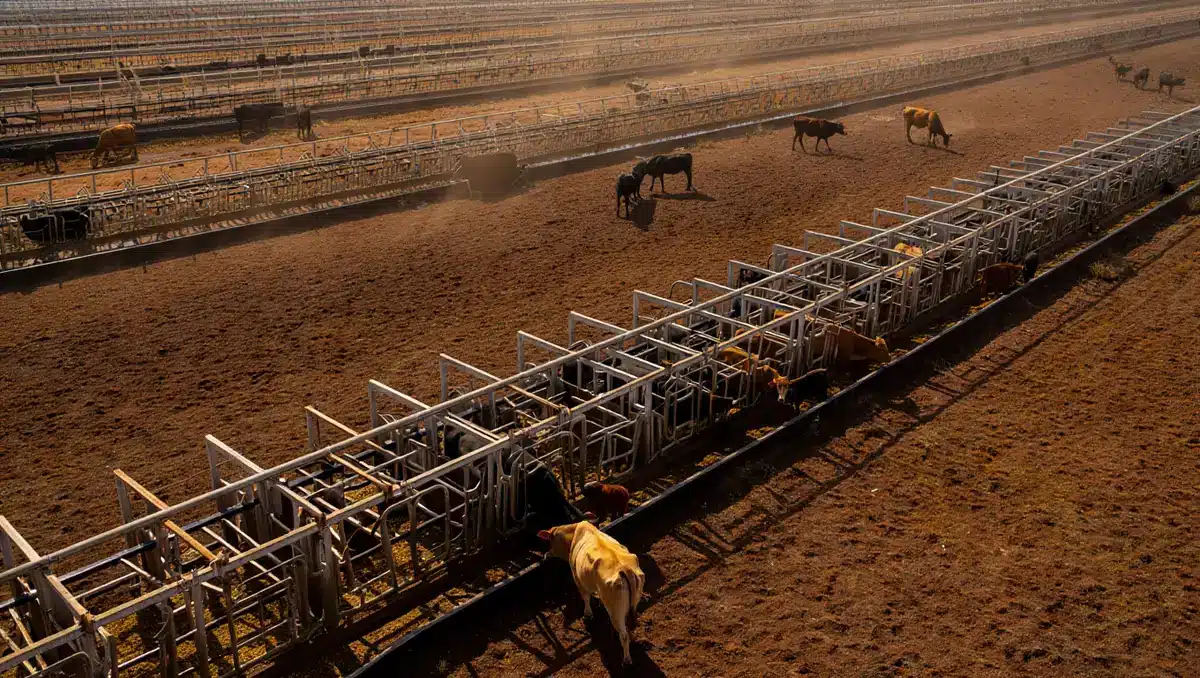
Tyson Foods is restructuring its beef operations, closing plants in Joslin, Illinois, and Eagle Mountain, Utah, to create a more efficient network as the U.S. cattle supply hits a 75-year low. The company announced the closures on August 13, 2026, as part of a strategic shift to anchor its beef business around three facilities in Dakota City, Nebraska; Holcomb, Kansas; and Amarillo, Texas.
The restructuring reflects deepening challenges in the beef industry. The U.S. cattle herd has shrunk to 86.2 million head as of January 2026, the lowest level since 1951, according to USDA data. Drought, rising operational costs, and reduced heifer retention have driven the decline, creating one of the most historic cattle shortages the country has experienced.
Tyson’s beef division is bearing the brunt of the crisis. The company now expects a beef operating loss of up to $650 million for fiscal 2026, up from a prior forecast of $500 million, according to an August 3 earnings report. High cattle prices, driven by limited supply, have squeezed margins despite the company’s efforts to cut capacity and reduce costs.
The closures are not Tyson’s first major restructuring. In January 2026, the company permanently closed its beef processing plant in Lexington, Nebraska, eliminating 3,200 jobs in a town of 11,000 people. That facility had processed up to 5,000 head of cattle per day. The Nebraska closure signaled a structural shift in the beef packing industry rather than a temporary disruption, according to industry observers.
Tyson’s move reflects broader industry pressures. According to NPR reporting on cattle supply, rising operating costs—including diesel fuel, equipment parts, and fertilizer—have made it difficult for farmers and ranchers to maintain herds. The median U.S. farmer is 58 years old, and younger people face steep barriers to entry in agriculture, leading to consolidation and fewer operations overall. The USDA reported a roughly 17% decline in cattle operations between 2017 and 2022, dropping from 882,692 to 732,123.
The company said it will pursue the sale of its Pasco, Washington beef facility and ramp back up a second shift at Amarillo as cattle supplies allow. Tyson stated it recognizes the impact on team members and communities, pledging to help workers apply for positions at other facilities. The restructuring aims to maintain similar cattle harvesting levels across a more strategically positioned and modern network.
Analysts have noted that meatpacking consolidation compounds ranchers’ challenges. Just four companies—JBS, Cargill, Tyson Foods, and National Beef—account for more than 80% of U.S. cattle-processing capacity, according to USDA data. This concentration gives packers significant pricing power, while cattle producers face volatile markets and rising input costs.
Sources
- Tyson Foods — official announcement of beef network restructuring, facility closures, and strategic realignment (August 13, 2026)
- Reuters — Tyson’s revised profit forecast and beef operating loss projections (August 3, 2026)
- NPR — detailed analysis of U.S. cattle herd decline to 75-year low, causes including drought and rising costs, farmer consolidation trends, and meatpacking industry concentration (May 29, 2026)
- USDA — cattle inventory data (January 2026) and industry concentration statistics
- Michigan Farm News — context on Tyson’s Lexington, Nebraska plant closure and its significance (November 24, 2025)