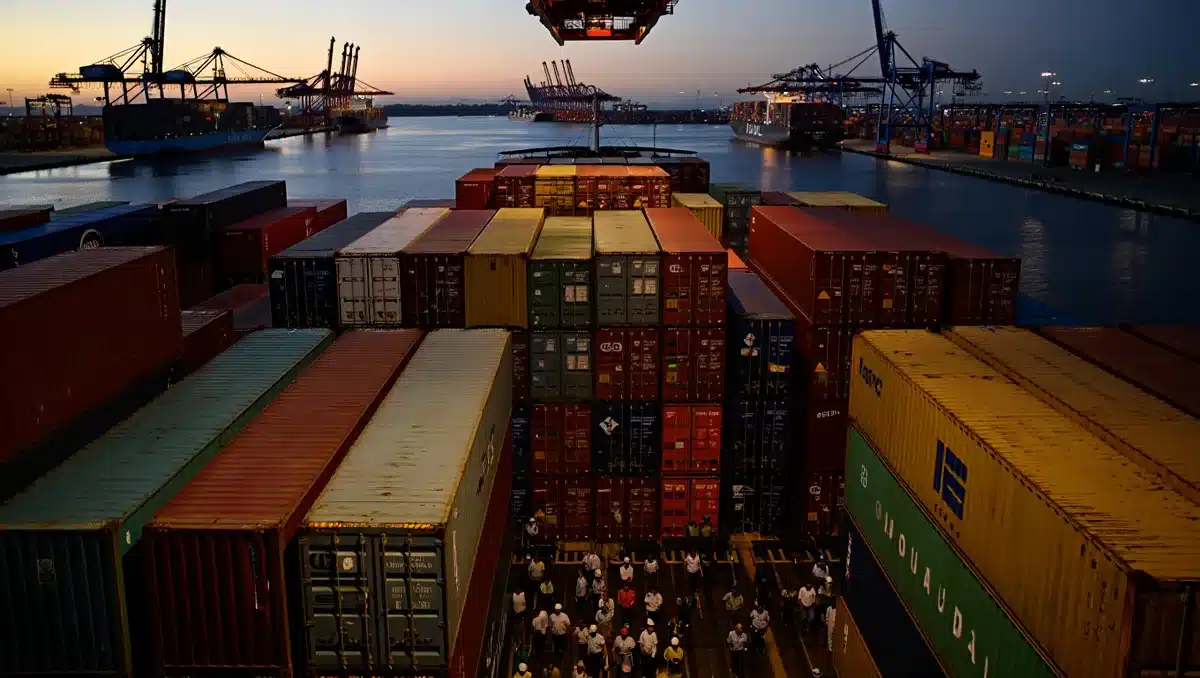
The Trump administration on Thursday accused Chinese exporters of routing goods through more than 40 countries to evade U.S. tariffs, releasing a White House report that documents what officials call the “Great Transshipment Scam” and estimates annual tariff revenue losses of $19 billion to $26 billion.
White House trade adviser Peter Navarro said in the report that “for years, the great transshipment scam has let Communist China launder its exports through more than 40 countries.” The practice involves sending goods from China to lower-tariff jurisdictions where they undergo minimal processing, relabeling, or repackaging before entering the U.S. market under false country-of-origin claims.
The White House report, released by the Office of Trade and Manufacturing Policy, identifies major trading partners including Mexico, Canada, the European Union, India, Japan, and South Korea as participants in China’s “shadow transshipment network.” Smaller nations including Vietnam, Indonesia, Malaysia, Thailand, and Brazil are also named, along with countries across Africa, Latin America, Central Asia, and the Middle East that offer specialized advantages such as cheap labor, weak customs enforcement, or strategic port access.
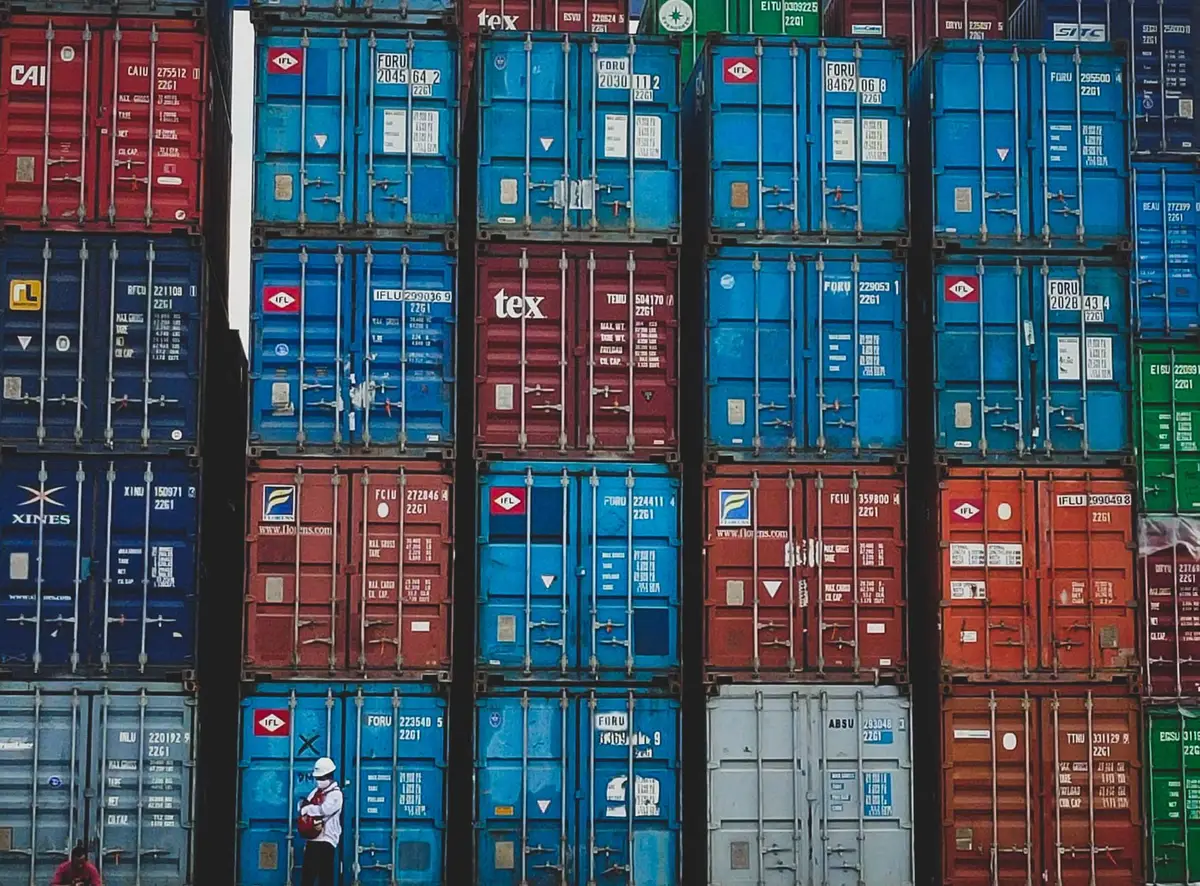
According to the report, AI supply chain firm Exiger estimated approximately $75 billion in illegally transshipped goods between February 2025 and February 2026. The Washington Post reported that the White House characterized this as a loss of “tens of billions of dollars” in tariff revenue, with merchandise worth roughly $75 billion skirting Trump’s tariff wall annually.
The transshipment network operates through two main channels. Production-side nodes perform light assembly, finishing, testing, packaging, or labeling before export to the United States. Logistics-side nodes provide routing, consolidation, warehousing, re-invoicing, relabeling, or new export documentation. The White House report notes that distinguishing between legitimate manufacturing and fraudulent origin-shifting practices is complex, especially when imports are made from components manufactured in multiple countries.
The practice accelerated after President Trump imposed tariffs on Chinese goods in his first term beginning in 2018. As China’s direct share of U.S. goods imports declined, the combined share supplied by identified transshipment countries increased significantly. The report links foreign transshipment-risk corridors to U.S. industrial regions producing similar goods, including electrical equipment, integrated circuits, pumps, compressors, plastics, aluminum products, and motor components.

AI-Powered Detection System
To combat the practice, the Trump administration is developing an AI-powered system called the “Detective Border” that would support U.S. Customs and Border Protection. According to the White House report, the system would integrate shipment data, routing histories, product classifications, ownership relationships, production-capacity indicators, anomaly detection, and computer vision analysis to identify high-risk shipments and distinguish legitimate nearshoring from illegal pass-through trade.
The system is designed to analyze packaging patterns, X-ray imaging at ports, and other analytical tools to detect mismatches between declared contents and actual cargo. Peter Navarro told Bloomberg Television that the initiative serves as “basically a warning to the world — don’t try to cheat America.” The White House report notes that CBP has already increased enforcement activity, with shipments identified with post-release discrepancies rising 245 percent and associated revenue assessments increasing 169 percent in the 526-day period after Trump’s inauguration.
The administration paired its tariff expansion with new enforcement measures, including Executive Order 14411, which strengthens customs enforcement by addressing importer accountability, bonding requirements, ownership disclosure, and trade transparency. Trade agreements reached with nations including Vietnam and Indonesia also include provisions designed to prevent agreement benefits from accruing substantially to third countries through transshipment.
Sources
- The White House Office of Trade and Manufacturing Policy — released “The Great Transshipment Scam” report on August 13, 2026, documenting the scope, methods, and estimated costs of illegal transshipment through 40+ countries.
- The Washington Post — reported on the White House announcement, Peter Navarro’s statements, and the estimate that merchandise worth roughly $75 billion skirts Trump’s tariff wall annually.
- Fortune — covered the “Detective Border” AI system, the Exiger estimate of $75 billion in illegally transshipped goods, and the specific countries named as enablers of China’s transshipment network.
- AP News — reported on the revenue loss estimates of $19 billion to $26 billion annually and provided context on how the practice began following Trump’s 2018 tariffs.