
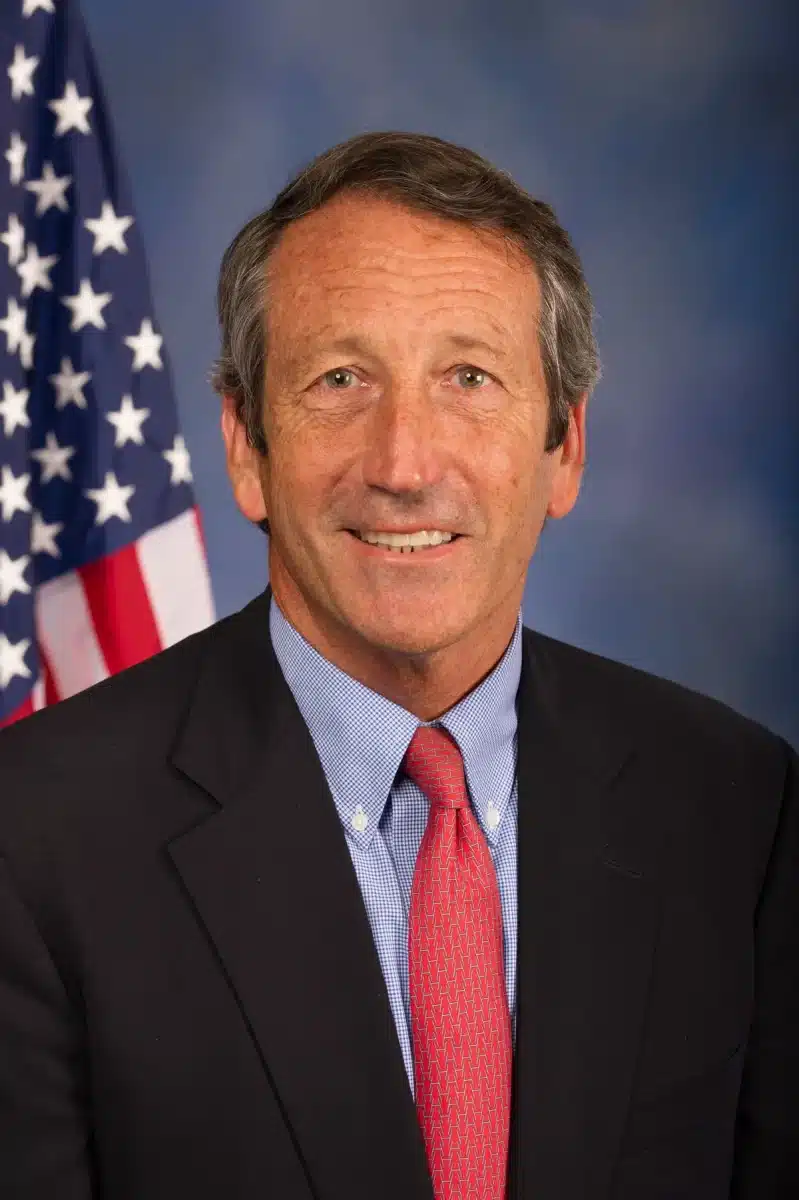
Mark Sanford conceded South Carolina’s Republican Senate primary on August 11, finishing with 14.9% of the vote and ending what appears to be his final bid for elected office. The former governor and six-term congressman received 50,001 votes but failed to advance to the runoff, which will pit Darlene Graham and Ralph Norman against each other on August 25.
Sanford’s exit from the race marked another defeat in a series of comeback attempts. In his concession speech, he acknowledged the mathematical reality he had campaigned on: the nation’s $40 trillion debt was unsustainable and posed an existential threat to American civilization.

Though he will not serve as a U.S. senator, Sanford said he would continue fighting the debt issue through a nonprofit organization he planned to start. “One chapter closes, another one opens,” he told supporters, adding he likely would not endorse either runoff candidate.
Sanford announced his Senate bid on July 23, entering a crowded field to replace the late Senator Lindsey Graham. He was the only major candidate in the race who did not align with the MAGA movement, according to Live5News, and he ran counter to the prevailing Republican sentiment that backed Graham’s sister, Darlene Graham, with President Trump’s endorsement.
This primary loss caps a tumultuous political trajectory. Sanford served as South Carolina governor from 2003 to 2011 and spent more than a decade in Congress across two separate stints. But his career was derailed in 2009 when he disappeared from the state for six days, initially claiming to his staff he was hiking the Appalachian Trail. He later admitted he had traveled to Argentina to visit a woman with whom he was having an affair, according to multiple sources including the New York Times.

The scandal cost him his marriage and shadowed his political comeback attempts for years. When Sanford returned to Congress in 2013, he tried to rebuild his image as a fiscal conservative focused on government spending. But that message proved unpopular in a Republican Party increasingly shaped by Trump’s influence.
In 2018, Sanford lost his House seat in a primary to Katie Arrington, a pro-Trump challenger, by a margin of 50.5% to 46.5%. Trump had tweeted against Sanford hours before polls closed that day. Sanford also lost a House primary bid in June 2026 before pivoting to the Senate race just weeks later.
His Senate campaign centered on warnings about the national debt and fiscal responsibility—themes that resonated with some voters but failed to gain traction in a primary dominated by candidates aligned with Trump’s agenda. Graham led the primary throughout election night, while Norman’s strength in the Upstate and along the North Carolina border secured his second-place finish ahead of Rep. Russell Fry, who received 19.6% of the vote.
At 66 years old, Sanford’s concession suggests the end of a political career marked by early promise, personal scandal, and persistent inability to adapt to the Republican Party’s transformation. His shift from fiscal conservative to outsider candidate unable to compete in a Trump-dominated primary underscores the broader realignment that has reshaped Republican politics over the past decade.
Sources
- Live5News — primary results, Sanford’s vote total and concession speech, candidate vote counts
- The Hill — Sanford’s July 23 Senate announcement
- Politico — 2018 primary loss to Katie Arrington details and Trump’s involvement
- New York Times — 2009 Appalachian Trail scandal details and Sanford’s extramarital affair
- Ballotpedia — Sanford’s congressional service dates and 2018 primary margin











Mark Sanford has learned a hard lesson about politics. Trump can get away with past exploits but he is unable to. In today’s Republican Party there is the MAGA way or no way.