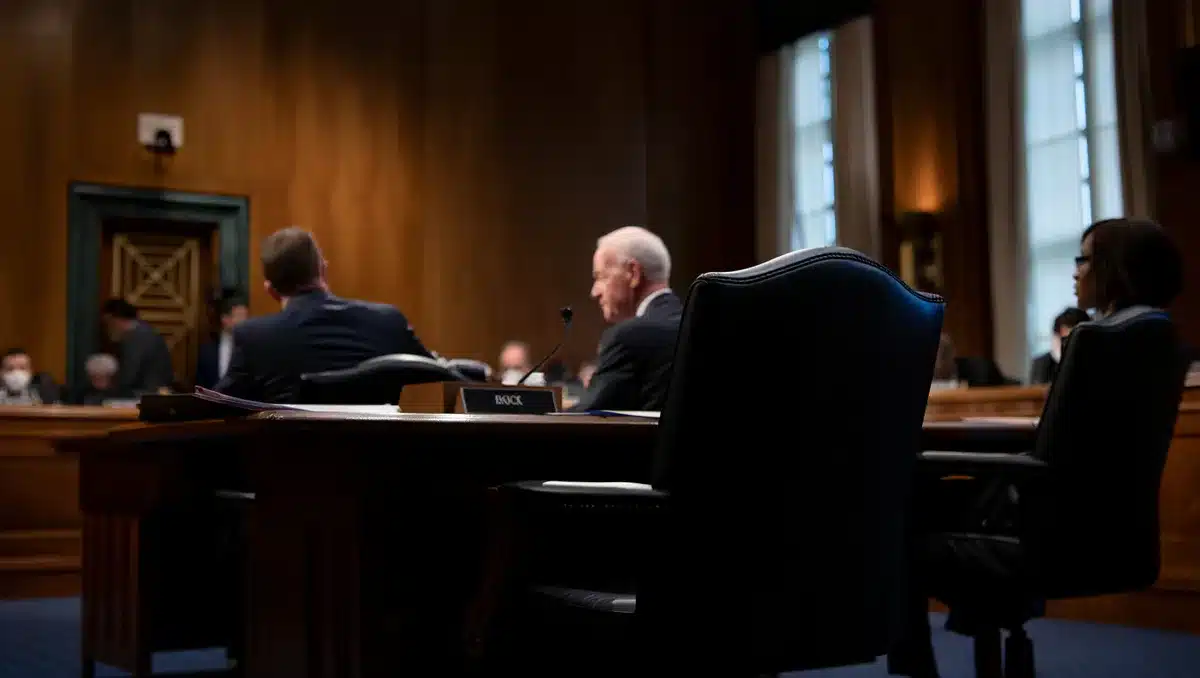
The Senate Homeland Security Committee voted 8-7 on August 6 to hold former health official Anthony Fauci in contempt of Congress, a week after he invoked the Fifth Amendment over 100 times during a hearing on COVID-19’s origins and the government’s pandemic response.
Fauci, the former director of the National Institute of Allergy and Infectious Diseases, testified before the committee on July 29 in a tense three-hour hearing. After a brief opening statement in which he accused committee chairman Senator Rand Paul of Kentucky of having an “unhinged obsession” with him, Fauci declined to answer more than 100 questions, citing his Fifth Amendment right against self-incrimination.
In his opening remarks, Fauci said that Paul had “an attempt to trick Fauci into lying under oath” and that “under the advice of my attorneys, I will invoke my right under the Fifth Amendment of the Constitution to refrain from answering your questions.” Fauci noted he had answered many of the committee’s questions in previous testimony.
The hearing centered on Republican allegations that Fauci misled Congress about the origins of COVID-19 and the role of U.S.-funded research. Paul has long argued that the coronavirus may have leaked from a laboratory in Wuhan, China, and questioned whether the National Institutes of Health funded gain-of-function research—the modification of viruses to understand how they evolve—at the Wuhan Institute of Virology. Fauci has consistently denied these allegations, saying scientific evidence points to natural spillover from animals to humans.
In the days before the hearing, Paul released more than 1,000 pages of Fauci’s private diary entries. Paul claimed the notes showed differences between Fauci’s private discussions and his public statements about the pandemic’s origins. Fauci’s supporters countered that the diary entries reflect the uncertainty scientists faced as they learned about a novel virus.
The Contempt Vote and Its Implications
The committee’s party-line vote on August 6 came after Paul announced the committee would hold Fauci in contempt over his refusal to answer questions. According to NPR, the vote was along party lines, with Republicans leading the charge.
David Schertler, Fauci’s attorney, called the vote “a crude political stunt intended to punish Dr. Fauci for exercising his constitutional rights.” During the hearing, Capitol Police removed Schertler after he attempted to speak without being recognized by the committee.
Fauci invoked the Fifth Amendment on the advice of his lawyers, who argued that his answers could expose him to new legal risks. Although President Joe Biden granted Fauci a full pardon in January 2025 covering federal offenses from 2014 through January 2025, Republicans argue that the pardon does not protect him from prosecution for any false statements made under oath during the current hearing, such as perjury charges for conduct after the pardon was issued.

The contempt resolution directs the President of the Senate to certify the committee’s decision to the U.S. Attorney for the District of Columbia. According to NPR, it will ultimately be up to the Justice Department to decide whether to pursue criminal prosecution. While such prosecutions are rare, two former Trump advisers—Steve Bannon and Peter Navarro—were imprisoned on contempt-of-Congress charges during the Biden administration.
Democrats on the committee opposed the contempt vote. Michigan Senator Gary Peters, the committee’s top Democrat, warned that “criminal contempt is punitive. It does not compel a witness to answer questions or produce the documents we’d all like to see. What it will do is create a damaging precedent that future witnesses will use to resist legitimate congressional oversight, and weaken this committee’s ability to compel testimony.”
Sources
- NPR — Fauci’s testimony, the committee’s party-line vote, the pardon details, and the potential for Justice Department prosecution
- Al Jazeera — The hearing’s focus on COVID-19 origins, gain-of-function research allegations, Fauci’s diary release, and Biden’s pardon scope