Senate leaders unveiled a short-term spending bill on August 2 that would fund the federal government through December 11, 2026, allowing lawmakers to avoid a shutdown during the midterm election season while buying time to negotiate full-year appropriations.
The measure, which the Senate is expected to vote on before the August recess, funds federal agencies at current levels and includes several provisions negotiated between Republicans and Democrats. Senate Majority Leader John Thune called passing the bill his top priority, noting that the nation has already endured two record-breaking government shutdowns in the past 10 months.

“We need to ensure that they do not face a third,” Thune said, according to the Associated Press.
The House passed a similar continuing resolution in July, though the Senate version includes several exceptions the House measure did not. Democrats secured language ensuring the Trump administration cannot transfer funds from other programs to the Border Patrol, a key priority for the party. The Senate bill also excluded a White House request for $1 billion to build “Trump-class” battleships.
A major point of negotiation centered on an Office of Management and Budget proposed rule that would require senior political appointees at each federal agency to review grant proposals based on criteria including “ensuring that discretionary awards advance the President’s policy priorities.” Senate Republicans and Democrats agreed that the rule would not take effect during the course of the stopgap spending bill. Senate Appropriations Committee chair Susan Collins said she pushed for significant changes to the rule, citing its potential to politicize grants and harm rural communities and biomedical research. Democrats sought to eliminate the rule outright, with Senate Democratic leader Chuck Schumer calling it a “disgraceful” effort to politicize federal grants.
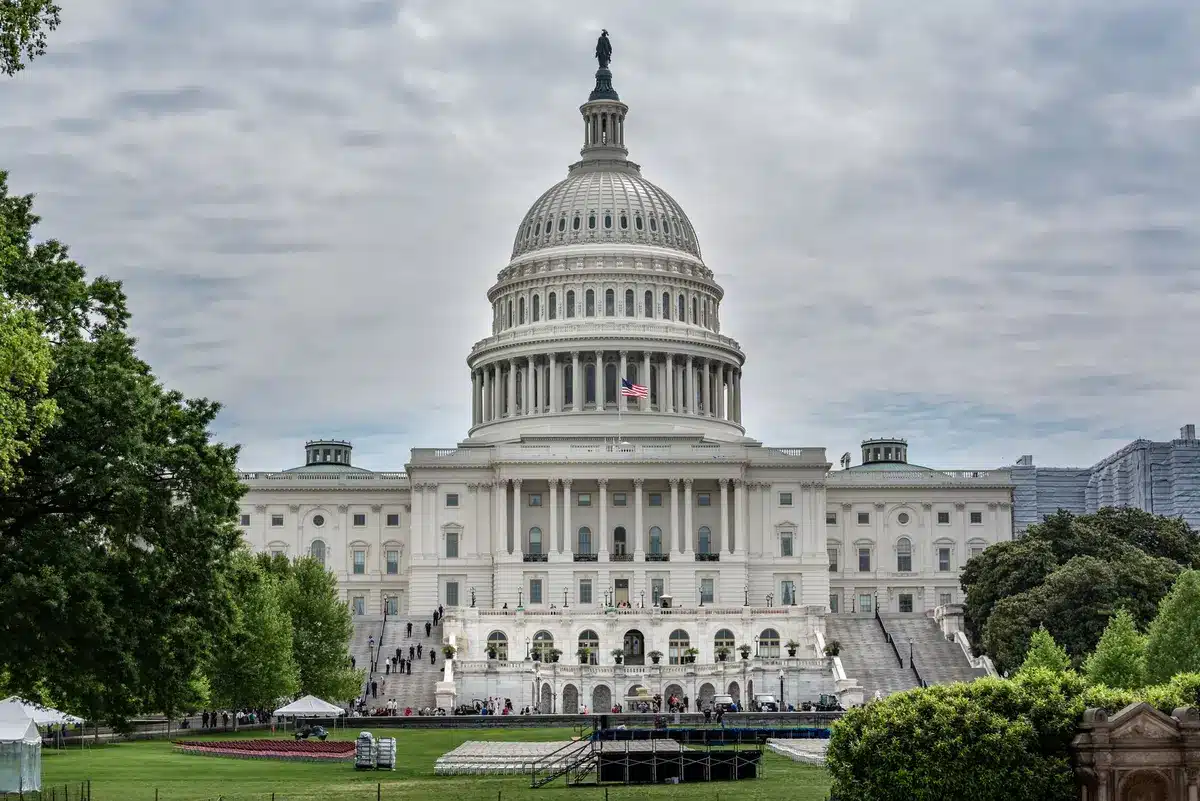
The timing of the spending action is unusual. Normally, Congress waits until the final days before a funding deadline to pass short-term extensions, but this time lawmakers are acting two months before the September 30 fiscal year end. A short-term funding extension is necessary because Congress has struggled to pass the dozen annual appropriations bills required before the deadline. By extending government funding now, lawmakers can use the ensuing months to work out their differences on full-year spending.
The disagreement over full-year funding reflects deeper partisan divides. Republicans are seeking a dramatic increase in defense spending while cutting non-defense programs. President Trump proposed a 10 percent cut in non-defense programs overall while calling for boosting defense spending by 44 percent. Democrats, meanwhile, have sought to extend an expiring health insurance tax credit, a priority they refused to abandon in earlier negotiations.
The 43-day government shutdown that lasted from October 1 through November 12, 2025, was the longest in U.S. history. According to Goldman Sachs, a shutdown of that length reduced quarter-on-quarter annualized growth in the economy. A second partial shutdown over Department of Homeland Security funding took 76 days to resolve when Democrats refused to fund U.S. Immigration and Customs Enforcement and the Border Patrol without changes to those operations. Both parties are motivated to avoid a shutdown before voters go to the polls, as polling indicated that neither party evaded blame for the record 43-day shutdown.
Sources
- ABC News — Senate leaders’ August 2 announcement of the short-term spending bill extending government funding through December 11, details on the OMB grant rule, battleship request, and Border Patrol language
- Associated Press — Senate Majority Leader Thune’s statement and details on the continuing resolution
- Goldman Sachs analysis — Economic impact assessment of the 43-day shutdown
- Congress.gov — Information on the 43-day shutdown duration and appropriations bill requirements