The top U.S. general in Europe privately warned the Pentagon this week that he lacks sufficient naval forces to continue protecting Israel from incoming ballistic missiles, illustrating how the ongoing Iran war has imposed significant constraints on the military. General Alexus Grynkewich, commander of U.S. European Command, raised the concern about a shortage of Navy destroyers equipped with advanced missile defense systems.
The warning reflects a broader strain on Pentagon resources as the U.S. military balances competing demands across two major theaters. Since February 2026, the United States has conducted its largest military buildup in the Middle East since the 2003 Iraq invasion, deploying additional air defense systems, troops, and naval assets to the region. Simultaneously, EUCOM has faced force reductions and redeployment decisions as the Pentagon reviews its military posture in Europe.
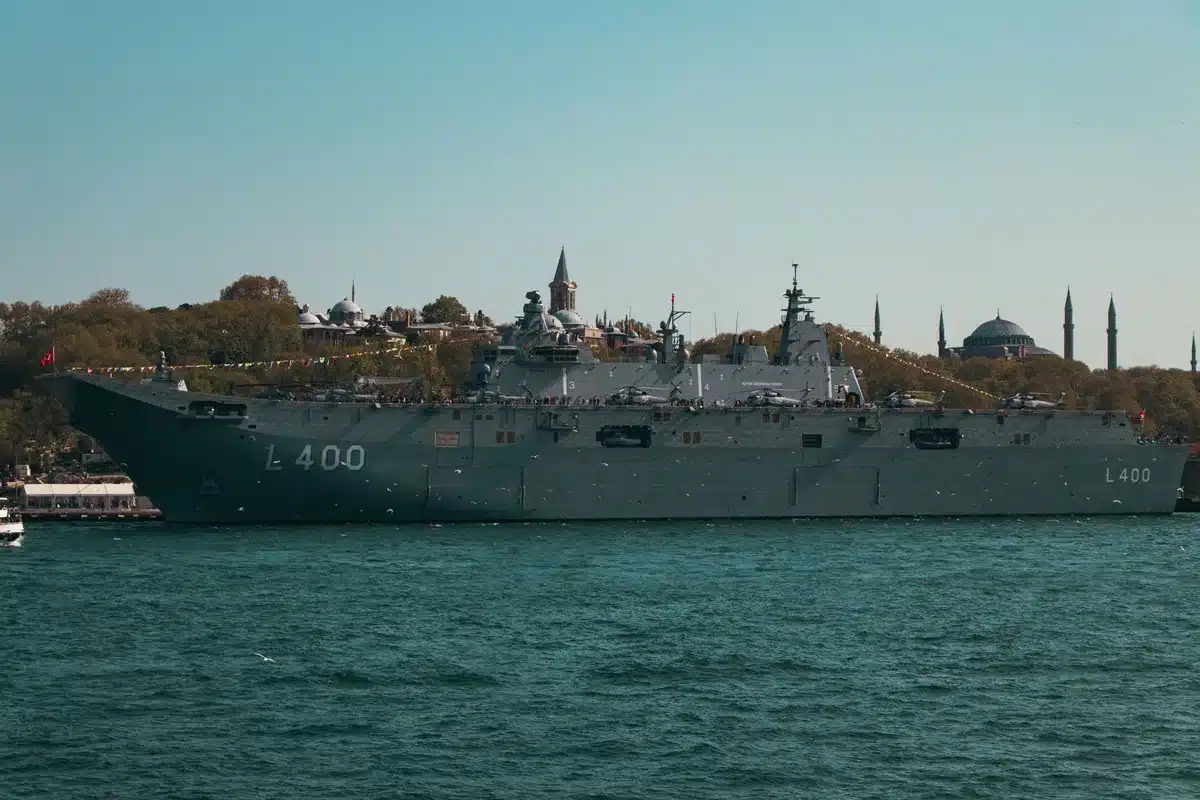
Navy destroyers equipped with the SM-3 interceptor system have played a critical role in defending Israel against Iranian attacks throughout the 2026 Iran war. In March 2026, when Iran launched hundreds of ballistic missiles and unmanned aerial vehicles at Israel, U.S. Navy destroyers and air defense systems helped intercept the incoming threats. The vessels have continued to provide layered defense capabilities alongside Israel’s own multi-layered missile defense architecture, including the Arrow system.
The shortage of available destroyers for Israel defense represents a trade-off as the Pentagon manages its global commitments. Grynkewich’s warning suggests that maintaining continuous protection for Israel against Iranian ballistic missile attacks may require difficult choices about force allocation. The issue underscores how extended military operations in the Middle East can strain the Navy’s operational capacity, particularly for specialized capabilities like ballistic missile defense.

The challenge reflects broader concerns raised by defense analysts about the Pentagon’s ability to sustain simultaneous operations in multiple regions. In June 2026, Pentagon leadership announced a comprehensive review of U.S. military presence in Europe, citing frustration with NATO allies and budgetary constraints. That same month, the Pentagon canceled planned troop deployments to Poland and reduced force contributions to NATO’s integrated force model.
Grynkewich also serves as NATO’s Supreme Allied Commander Europe (SACEUR), giving him responsibility for both European defense and the broader alliance structure. His dual role has placed him at the center of Pentagon decisions about how to allocate limited military resources between strengthening NATO deterrence against Russia and supporting Middle East operations, particularly Israel’s ongoing conflict with Iran and its regional allies.
Sources
- The Washington Post — reported that EUCOM commander privately warned Pentagon about insufficient naval forces for Israel defense due to Iran war constraints
- Business Insider — documented U.S. Navy destroyers’ use of SM-3 interceptors in combat to defend Israel from Iranian missile attacks
- Defense News — confirmed Navy destroyers intercepted multiple Iranian ballistic missiles in June 2025 and provided ongoing air defense support
- The Hill — reported on U.S. military resource shifts in the Middle East in response to Iranian strikes
- Stars and Stripes — covered Pentagon force posture review and reductions in Europe announced in June-July 2026