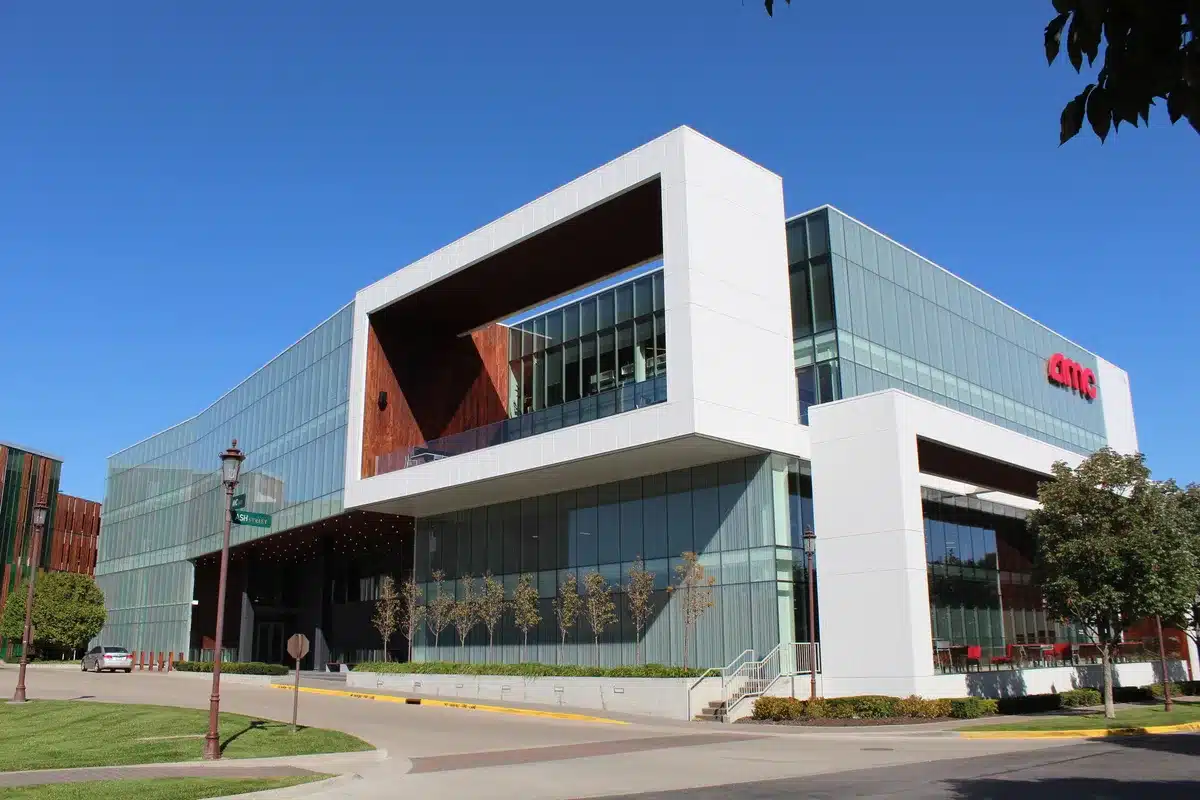
AMC Entertainment reported record second-quarter revenue of $1.6 billion, the highest in the company’s 106-year history, as a blockbuster summer film slate and premium large-format screens drove attendance and per-patron spending to new heights.
The nation’s largest theater chain posted adjusted EBITDA of $321.4 million in Q2 2026, a 70% surge year-over-year and the first time the company has exceeded $300 million in a single quarter. Revenue rose 14.2% from the prior-year period, beating analyst expectations of $1.47 billion by roughly $100 million, according to Reuters and multiple earnings reports.

U.S. attendance climbed 12% to 52.5 million patrons in the quarter, while globally, AMC and its European Odeon chain served 71.3 million guests—the highest quarterly figure in years, according to TechTimes. The strong performance reflected six separate films that each delivered domestic opening weekends exceeding $75 million, including Christopher Nolan’s “The Odyssey,” which opened July 17 with a $124.5 million domestic debut and $264 million globally.
The attendance growth alone does not fully explain the record earnings. Instead, AMC’s results emerged from a strategic bet on premium large-format cinema—IMAX, Dolby Cinema, and proprietary screens—that now accounts for a disproportionate share of revenue. Premium formats command ticket prices roughly 33% above general admission and generated approximately 45% to 58% of revenue for major blockbusters, according to TechTimes analysis and CNBC reporting. For “The Odyssey,” 45% of domestic tickets were sold in premium auditoriums at an average of $19 each, with coveted 70mm screenings accounting for 5% of tickets at $22.50.
AMC holds 184 IMAX screens in the U.S., representing 56% of the domestic IMAX market and giving the company a structural advantage over competitors through geographic exclusivity agreements. The premium strategy expanded adjusted EBITDA margin from 13.6% in Q2 2025 to 20.1% in Q2 2026—a margin expansion TechTimes called “the largest single-quarter increase in recent memory”—while the company served 12% more patrons on 153 fewer average screens than a year earlier.

CEO Adam Aron attributed the results to a combination of market position, premium offerings, marketing, and cost controls. “The second quarter of 2026 was nothing short of extraordinary for AMC,” Aron said in the company’s earnings statement, according to TechTimes. “In our 106-year history, never before has AMC had such superb results.” Adjusted earnings per share came in at $0.14, beating analyst expectations for a $0.06 loss, and shares surged 18% in morning trading on July 20.
The recovery reflects a parallel shift in how major studios approach theatrical distribution. During the pandemic, distributors experimented with simultaneous streaming releases, compressing theatrical exclusivity windows. That trend has reversed. Universal now commits to 45 days or more of theatrical exclusivity for major releases, with a public commitment toward seven-weekend windows from 2027. “The Super Mario Galaxy Movie” remained exclusive to theaters for 49 days before arriving on digital platforms, according to TechTimes, validating that longer windows can generate additional box office revenue without cannibalizing streaming performance.
The Q2 results marked a significant milestone for a company that faced existential challenges in recent years. In Q4 2025, reported in February 2026, AMC had posted disappointing results with attendance falling nearly 10%. The turnaround underscores how dependent the theater chain remains on blockbuster film releases and premium-format demand. Adjusted EBITDA for the first half of 2026 reached $359.7 million, more than 2.5 times the $131.8 million posted in the first half of 2025, according to FinanceBuzz.
Still, the company carries real financial headwinds. AMC reported a GAAP net loss of $11.4 million in Q2 despite record adjusted EBITDA, and balance sheet debt totals $3.9 billion in principal. The company has issued equity aggressively to fund operations and refinance debt, with weighted average diluted shares outstanding rising from 433 million in Q2 2025 to 722 million in Q2 2026—a 67% increase in one year, according to TechTimes. Wall Street analysts remain cautious: before Monday’s results, Roth Capital held a Neutral rating and Citi maintained a Sell rating, though both acknowledged the improving film slate.
Looking ahead, Aron said AMC expects the full-year 2026 domestic box office to finish $500 million to $1.2 billion ahead of 2025, with “Spider-Man: Brand New Day” (opening July 31), “Dune: Part Three,” and “Avengers: Doomsday” as Q3 and Q4 catalysts. The company also reported that AMC Theatres recorded its most successful IMAX run in history with “The Odyssey,” cementing the role of premium formats in the recovery. Whether the record-setting first half translates into sustained profitability depends on whether the box office can maintain momentum through the remainder of the year and whether blockbuster dependency remains a feature or a vulnerability of the recovery.
Sources
- Reuters — AMC posts surprise profit, record revenue, blockbuster films lift ticket sales
- Yahoo Finance — AMC Entertainment Holdings Inc Q2 2026 Earnings; adjusted EBITDA and revenue figures
- TechTimes — AMC Breaks 106-Year Revenue Record as Premium Screens Drive $321M EBITDA in Q2 Surge; attendance figures, premium screen economics, margin expansion, debt and dilution details
- FinanceBuzz — AMC Posts the Best Quarter in Its 106-Year History; first-half 2026 EBITDA comparison
- Celluloid Junkie — AMC Entertainment Holdings, Inc. Reports Second Quarter 2026 Results; 106-year history confirmation
- Quartz — AMC Entertainment Q2 2026 earnings: record revenue, surprise profit; CEO attribution of results
- CNBC — AMC Entertainment CEO Adam Aron on record Q2 results; premium format ticket pricing and revenue share