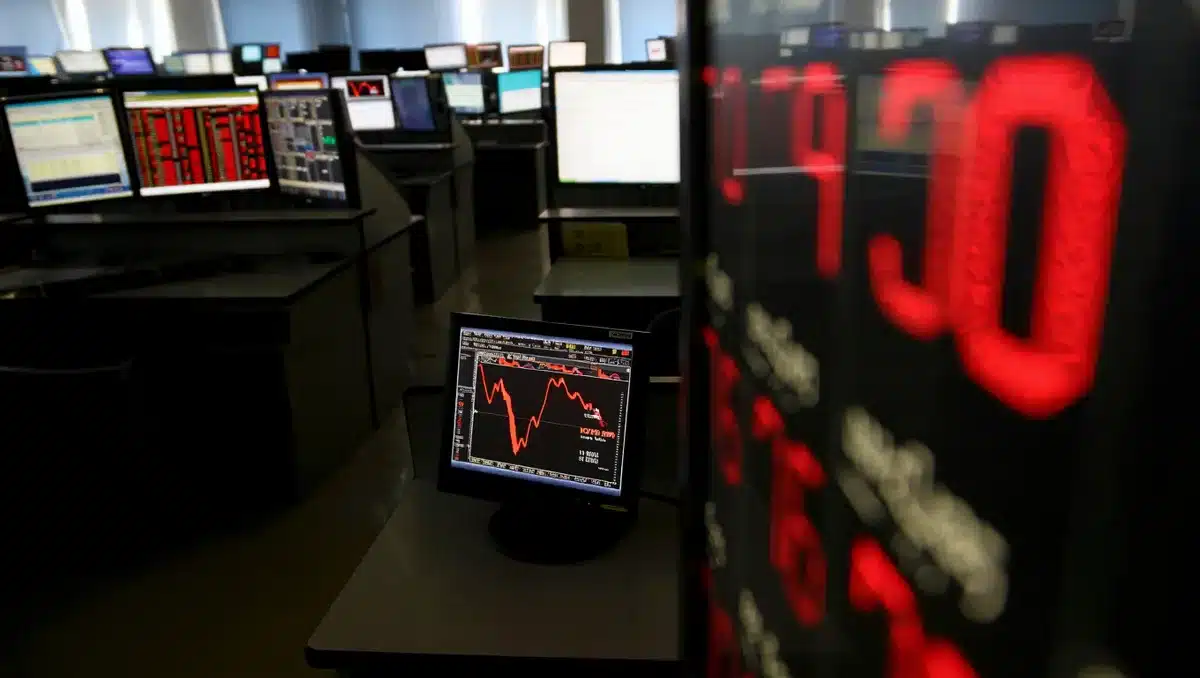
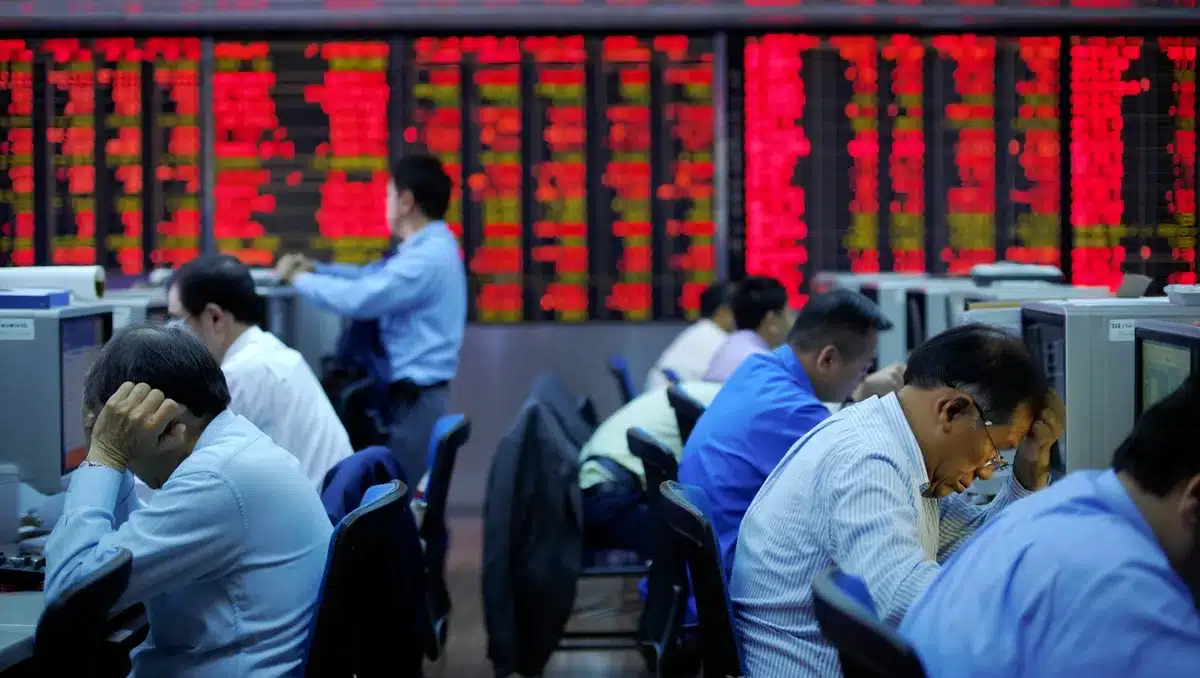
South Korea’s stock market has fallen into bear market territory as semiconductor stocks tumble, with the KOSPI index down more than 25% from its June record high. The sharp decline accelerated on July 29 after SK Hynix reported earnings that missed analyst expectations, sending the memory chipmaker’s shares plunging and deepening losses across the sector.
SK Hynix reported second-quarter revenue of 79 trillion Korean won, falling short of expectations of 84 trillion won, despite posting record quarterly profits and a 257% year-over-year revenue increase. The earnings miss triggered a sharp selloff, with SK Hynix shares sliding 19% on the day and the broader KOSPI index dropping over 11%.
Samsung Electronics and SK Hynix, which together dominate South Korea’s stock market, have been the primary drivers of the decline. On July 28, Samsung fell 13.4% and SK Hynix dropped 14.6%, marking Samsung’s worst single-day performance in nearly two decades, according to Reuters. The two companies have shed significant market value as investors reassess the sustainability of the artificial intelligence boom that propelled them earlier in 2026.
The selloff reflects a combination of concerns that have rattled investors since late June. Analysts attributed the decline to renewed worries about the massive amounts of borrowing among AI companies to fund datacentre expansion, as well as fears that Chinese competitors are advancing their chipmaking capabilities. A report that China had begun mass production of homegrown deep ultraviolet (DUV) chipmaking tools sparked particular concern about threats to the competitive position of global chip leaders, according to The Guardian.
The KOSPI’s volatility has reached levels unseen since the 2008 financial crisis. The KOSPI Volatility Index spiked to its highest level since the 2008 crisis, according to Reuters reporting, underscoring the intensity of the market swings. This sharp reversal comes after the Korean stock market was the world’s best-performing index in the first half of 2026, with the KOSPI up more than 100% for the year before the decline began in late June.
SK Hynix’s capital expenditure plans also weighed on sentiment. The company announced it expects capital investments to rise around 50% to at least 45 trillion won ($31 billion), signaling continued heavy spending even as investors question whether AI infrastructure investments will deliver returns. Analyst Jing Jie Yu at Morningstar characterized the sell-off as “largely a kneejerk reaction and overdone,” though the market has continued to decline as uncertainty persists.
The decline in the Korean stock market has reverberated globally, with US semiconductor stocks extending losses as investors reassess the AI sector more broadly. The sharp reversal highlights the concentration risk in the Korean market, where semiconductor stocks account for a major portion of the KOSPI’s value, and the broader question of whether the surge in AI spending can be sustained at current levels.
Sources
- Reuters — KOSPI bear market entry, Samsung and SK Hynix declines, volatility comparison to 2008 financial crisis, and SK Hynix US listing context
- The Guardian — AI sell-off details, Samsung and SK Hynix share price declines on July 28, Chinese DUV chipmaking tools report, analyst commentary from Morningstar and other sources
- Barron’s — SK Hynix Q2 earnings figures (revenue 79 trillion won vs. 84 trillion expected), year-over-year growth, and share price reaction
- Bloomberg — SK Hynix capital expenditure guidance ($31 billion increase) and profit miss details
- Economic Times — KOSPI crash magnitude (43% from June peak as of July 29) and recent trading data
- Investors.com — KOSPI decline magnitude (25.9% from June 22 record) and recent bounce context