Todd Blanche’s nomination for attorney general faces uncertainty as Republican Sen. John Cornyn of Texas demands written assurances from the Justice Department on a contentious $1.8 billion settlement fund, threatening to derail a planned Senate Judiciary Committee vote scheduled for Thursday.
Cornyn, an outgoing senator unburdened by political pressures after losing his primary race in May, has become a critical undecided vote on the panel, where Republicans control 12 of 22 seats. One Republican defection would deadlock the committee and block Blanche’s advancement to the full Senate.
The Texas senator is demanding written guarantees that the “anti-weaponization fund,” announced in May as part of a settlement between Trump and his own Justice Department, is permanently dead and cannot be revived through future lawsuits. He also wants written modification of an audit immunity shield that the DOJ extended to Trump and his associates as part of the same settlement agreement, insisting it apply only to parties to the original lawsuit and not to future cases.

Blanche submitted a written proposal to Cornyn and other key Republicans on Wednesday afternoon in an attempt to address the senator’s concerns, according to Reuters. However, Cornyn said the proposal fell short of what he required. He set a 4 p.m. Wednesday deadline for the DOJ to provide the written guarantees and told reporters that the department had not followed through.
“We’ve tried to make it easy for them,” Cornyn said, according to the Texas Tribune. “They won’t take the help.”
The anti-weaponization fund was created as part of a May settlement in which Trump dropped a $10 billion lawsuit against the Internal Revenue Service over the unauthorized release of his tax returns. The fund, drawn from a permanent Treasury account used for federal settlements, was designed to compensate people who claim they were victims of prosecutorial overreach by the Justice Department under the Biden administration. The Trump administration announced it would terminate the fund in early June after widespread criticism, including concerns that it could be used to compensate rioters who assaulted police officers on January 6, 2021. However, Cornyn has pressed Blanche to put that commitment in writing and ensure it cannot be resurrected through legal challenges.
At Blanche’s confirmation hearing in mid-July, Cornyn questioned whether, absent a written agreement, a plaintiff could sue to revive the fund. Blanche acknowledged the risk but assured the senator the fund was dead. That verbal commitment was not sufficient for Cornyn, who told reporters that Blanche’s promises were not reflected in the text of the settlement agreement itself.
Sen. Thom Tillis, a North Carolina Republican also in his final term, has emerged as a second key undecided vote. Tillis demanded that Blanche meet with survivors of Jeffrey Epstein’s crimes before he would support the nomination. Blanche held that meeting, but survivors criticized it as performative and said the nominee was dismissive of their concerns, according to USA Today and PBS NewsHour reporting from late July.
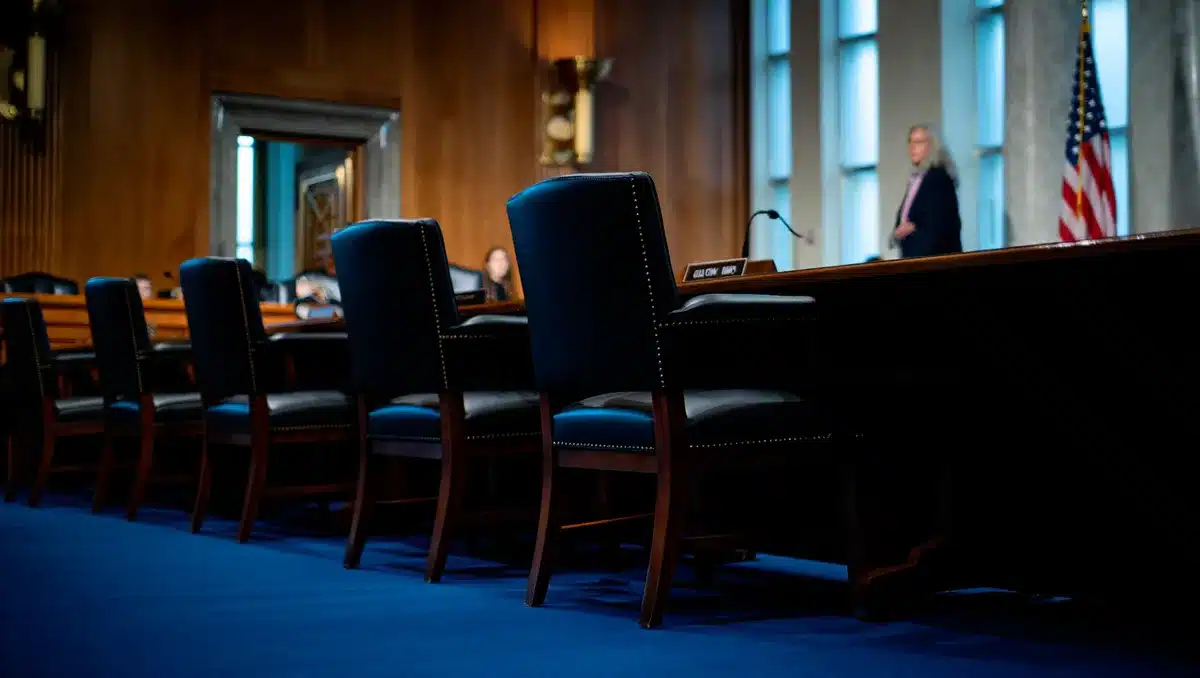
The Judiciary Committee had not announced changes to its schedule as of Wednesday afternoon, keeping the Blanche vote on tap for Thursday morning, according to the Texas Tribune. However, the dispute threatened to upend those plans. If Cornyn follows through on his position and votes no, and if Tillis remains undecided or votes no, the committee would be deadlocked and unable to advance Blanche’s nomination without Democratic support—an unlikely prospect in a GOP-controlled chamber.
Cornyn’s leverage in recent months reflects his unusual position as an outgoing senator freed from reelection pressure. He lost his primary race to Texas Attorney General Ken Paxton after Trump endorsed Paxton, a longtime ally. Since that loss, Cornyn has used his remaining influence to extract concessions from the Trump administration on unrelated matters, including accelerating the release of border-spending reimbursements to Texas and securing assurances on global HIV-prevention funding, according to the Texas Tribune.
Sources
- Texas Tribune — Cornyn’s demands for written assurances on the anti-weaponization fund and audit immunity shield, his position as a key undecided vote, and his leverage as an outgoing senator
- Reuters — Blanche’s submission of a written proposal to Cornyn on Wednesday and the senator’s statement that the DOJ had not followed through with guarantees
- AP News — The Judiciary Committee vote scheduled for Thursday and Cornyn’s demand for written assurances
- USA Today — Epstein survivor criticism of Blanche’s meeting as performative and dismissive
- PBS NewsHour — Tillis’s demand that Blanche meet with Epstein survivors and survivor criticism of that meeting
- The Guardian — Cornyn’s position on the anti-weaponization fund and the 4 p.m. Wednesday deadline
- Spokesman — Cornyn setting the 4 p.m. deadline and the committee’s schedule as of Wednesday afternoon