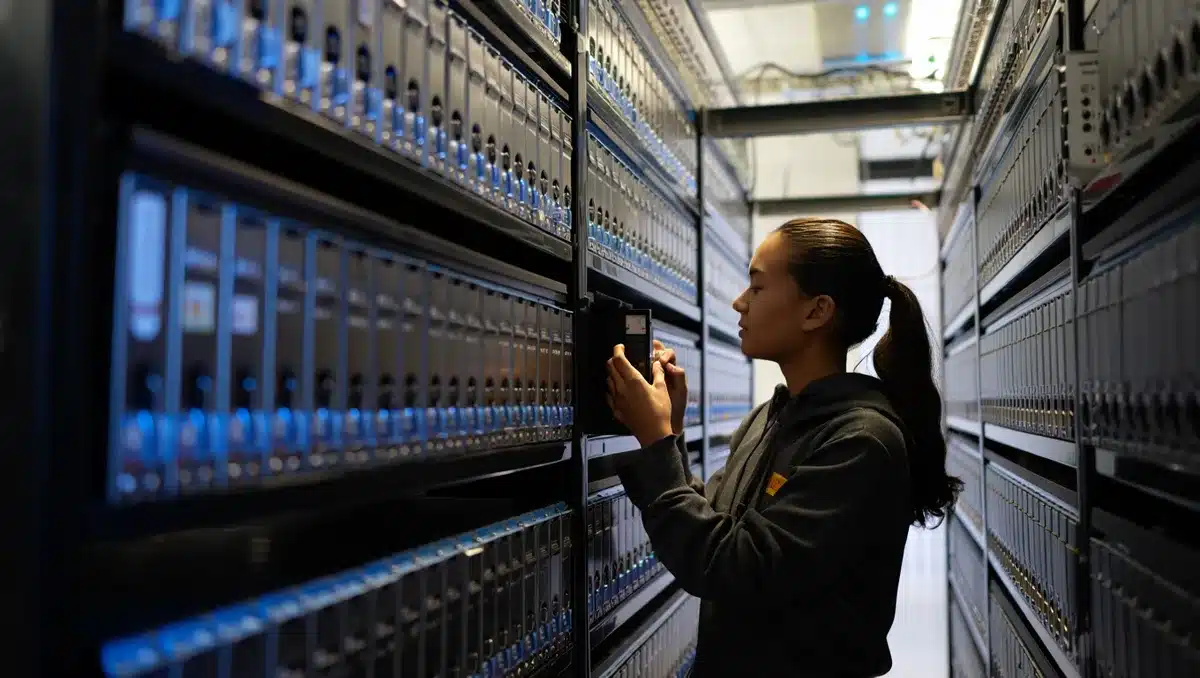
Seagate Technology reported fiscal fourth-quarter results that beat Wall Street expectations, with adjusted earnings of $5.71 per share and revenue of $3.629 billion, driven by surging demand for data storage in artificial-intelligence data centers.
The earnings beat capped a year of exceptional growth for the mass-capacity storage maker. For the full fiscal 2026 year ended July 3, Seagate posted revenue of $12.2 billion, up 34 percent year-over-year, and non-GAAP diluted earnings per share of $15.58, up 92 percent.
Seagate’s fourth-quarter revenue rose 48 percent year-over-year, surpassing the company’s prior guidance of $3.45 billion and beating analyst estimates of $3.49 billion. The non-GAAP EPS beat consensus estimates of $5.10 by $0.61 per share. The company reported net income of $1.294 billion, more than double the $488 million it earned in the same quarter a year earlier.
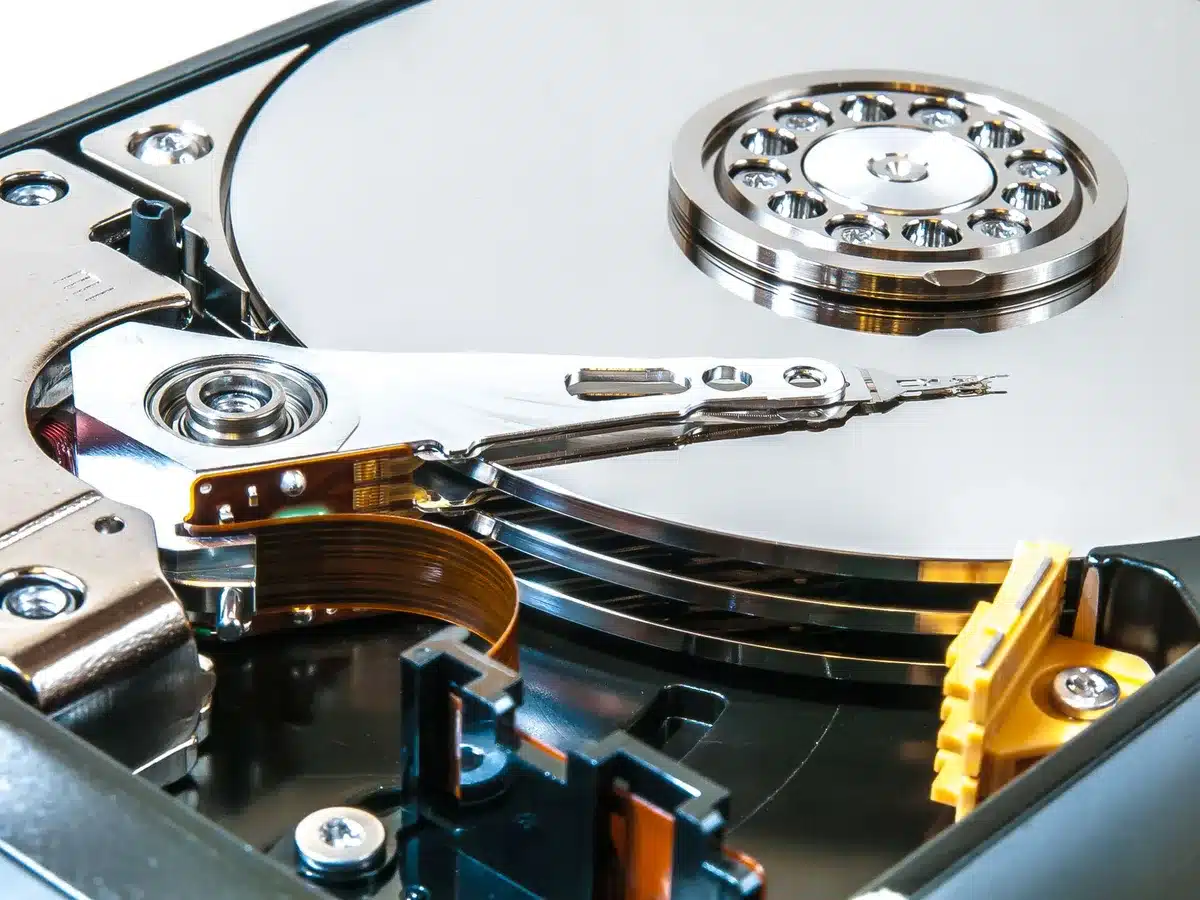
Data center demand remained the primary growth driver, representing approximately 90 percent of Seagate’s exabyte shipments. Data center revenue specifically increased 57 percent year-over-year, outpacing the broader 43 percent growth in data-center exabytes, indicating that price and mix improvements contributed meaningfully to the revenue surge.
The earnings beat follows a pattern seen across the AI infrastructure supply chain. Seagate stock tumbled 11 percent ahead of the earnings report, reflecting pre-announcement caution, but shares rebounded sharply in after-hours trading on the positive results.
Seagate’s gross margin expanded to a record 52.7 percent on a non-GAAP basis in the quarter, up from 37.9 percent in the prior-year quarter. Operating margin reached 44.6 percent, reflecting the company’s ability to capitalize on strong demand while managing costs. The company generated $1.3 billion in operating cash flow and $1.1 billion in free cash flow during the quarter.
Chief Executive Officer Dave Mosley said the company sees “durable long-term demand for mass capacity storage” as AI accelerates data generation. Seagate is positioning itself around its Mozaic platform and HAMR (Heat-Assisted Magnetic Recording) technology roadmap to meet future exabyte demand.
Looking ahead, Seagate guided for fiscal first-quarter 2027 revenue of $4.1 billion, plus or minus $100 million, and non-GAAP diluted earnings per share of $7.30, plus or minus $0.20. The guidance implies continued momentum from AI-driven data center buildout and suggests that the company expects to sustain elevated demand through at least the next quarter.
Analysts have grown increasingly bullish on Seagate’s long-term prospects. Morningstar analysts stated that the AI buildout is likely to give hard disk drive makers stronger pricing power through at least 2030. The earnings beat reinforces that narrative and positions Seagate as a key beneficiary of the ongoing shift toward large-scale AI infrastructure, where massive storage capacity is essential.
For fiscal 2026 as a whole, Seagate returned $810 million to shareholders through dividends and share repurchases while reducing debt by $1.4 billion. The company exited the year with $1.7 billion in cash and total debt of $3.6 billion, strengthening its balance sheet for future investments in manufacturing and technology development.
Sources
- Seagate Investor Relations — official fiscal Q4 2026 earnings release with revenue, EPS, margin, and full-year results
- Wall Street Journal — quarterly profit and earnings-per-share figures
- Seeking Alpha — revenue and adjusted EPS beat figures
- Zacks — data center demand representing 90% of exabyte shipments and data center revenue growth
- Morningstar — analyst commentary on pricing power through 2030