Boeing announced an additional $280 million charge on its Air Force One contract in the second quarter, bringing total program cost overruns to more than $3.1 billion as the company ramps up resources to deliver the first of two presidential jets by 2028.
CEO Kelly Ortberg told employees in an internal email that Boeing is allocating “significant resources” to the troubled VC-25B program to keep it on schedule for delivery mid-2028, according to filings released on July 28. The latest quarterly loss reflects the company’s commitment to accelerate production and certification work on the heavily modified 747-8 aircraft, which was originally promised to the U.S. Air Force by 2024.
The program has become a cautionary tale for fixed-price defense contracts. In 2018, President Trump persuaded then-CEO Dave Calhoun to sign a government contract capping costs to taxpayers at $3.9 billion. That agreement shifted all cost overruns onto Boeing’s balance sheet. By mid-2026, Boeing has absorbed roughly $2.8 billion in losses on the program, according to Aviation Week, as engineering design changes, supply chain disruptions, and structural requirements ballooned expenses far beyond initial estimates.
Calhoun himself acknowledged the gamble in 2022, telling investors the company “probably shouldn’t have taken” the fixed-price contract. The presidential aircraft is far more complex than any commercial jet, requiring secure global communications, missile-defense systems, aerial refueling capability, and hardened wiring—each adding layers of technical risk and cost.
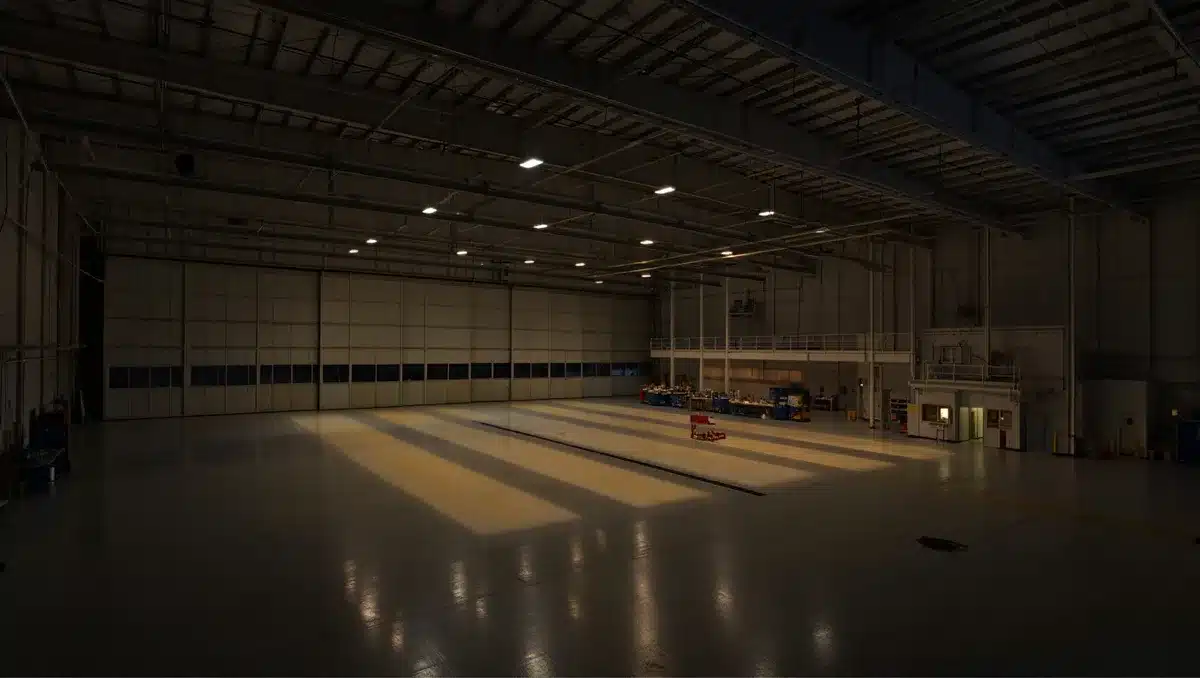
Boeing’s defense unit head Steve Parker warned that additional cost growth is likely ahead. Speaking at the Farnborough Airshow this month, Parker told reporters, “I do expect to see some cost growth there as we come through final assembly and we finish off the wiring and the structures, as well as finishing off with certification.” The remaining work on wiring and structural systems represents some of the most technically demanding phases of the program.
The Air Force One delays have compounded Boeing’s broader financial troubles. The company posted a $428 million loss in Q2 2026, part of a pattern of red ink that has included the 737 Max crashes and the January 2024 door-plug blowout. Meanwhile, the existing presidential aircraft, in service since 1990, have become increasingly expensive to maintain and fly, making the replacement program essential despite its spiraling costs.
The government’s original 2018 announcement claimed the deal would save taxpayers over $1.4 billion compared to earlier estimates. The contract has since been modified to include spare parts and other items, growing the total government obligation to around $4.5 billion. Boeing remains responsible for all costs beyond that ceiling, making each delay and technical challenge a direct hit to the company’s bottom line.
Sources
- CNN — Boeing CEO announcement of $280 million Q2 charge and total overruns exceeding $3.1 billion, July 28, 2026
- Forbes — Boeing’s cumulative $2.8 billion loss on Air Force One program and Steve Parker’s comments on future cost growth, July 28, 2026
- Aviation Week — Boeing’s $2.8 billion total losses on VC-25B program and fixed-price contract analysis, July 15, 2026
- Breaking Defense — Steve Parker’s statement on expected cost growth through final assembly and certification, July 19, 2026
- Defense News — Original 2018 contract details and program schedule delays, July 21, 2026