
AMD stock price fell as part of a broader semiconductor sector sell-off on July 28, 2026, triggered by reports of China’s advances in chip-manufacturing technology and mounting investor doubts about the sustainability of artificial intelligence infrastructure spending.
South Korea’s SK Hynix, a major supplier of memory chips to the AI industry, plunged 13 percent on July 28 to 1.55 million won, marking one of the steepest single-day declines in recent weeks. Samsung Electronics fell as much as 12 percent, while the KOSPI benchmark index collapsed 7 to 11 percent, putting South Korea on track for its worst month since 1997.
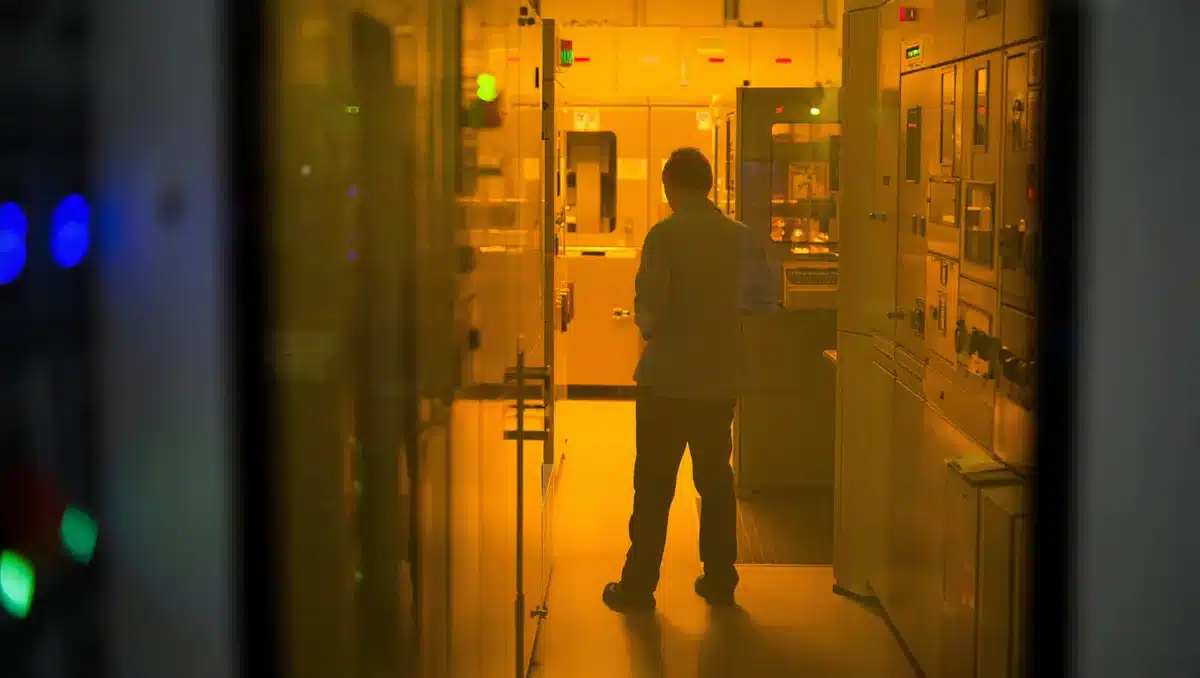
The immediate catalyst was news that China’s state-owned Shanghai Yuliangsheng has begun mass-producing deep ultraviolet lithography machines—equipment critical to manufacturing advanced microchips used in AI systems. According to reporting on the development, leading Chinese chipmakers are expected to receive their first deliveries of these machines later in 2026, potentially reducing China’s dependence on Western equipment suppliers like Dutch firm ASML.
The sell-off rippled globally. Japan’s Nikkei and Taiwan’s Taiex both sank more than 4 percent, while ASML fell more than 8 percent in European trading. In the US, Nvidia dropped 5 percent, wiping $250 billion from the world’s largest listed company by market capitalization, while SanDisk tanked 11 percent. The broader semiconductor index fell as investors took profits amid concerns about whether massive AI infrastructure investments could be sustained.
SK Hynix shares have now fallen nearly 50 percent from all-time highs reached in June 2026. The memory chipmaker, which raised $26.5 billion on its Nasdaq debut earlier in July, closed its first day of US trading below its initial public offering price of $149 at $143.02.
The AI Spending Debate
The chip sector’s weakness extends beyond China’s technological progress. For weeks, investors have questioned the sustainability of AI capital expenditure and the lofty valuations assigned to memory chipmakers. SK Hynix, which had gained over 500 percent in the past year on soaring demand for high-bandwidth memory chips powering AI servers, faced mounting skepticism about whether those gains could be justified.
Stephen Innes of SPI Asset Management offered a broader perspective on the selloff, noting that the decline reflects not a collapse in semiconductor demand but rather a shift in investor risk appetite. “What has changed is the market’s willingness to capitalise those promises at almost any price,” Innes said. “The AI trade spent the past several years behaving like a flywheel: rising equity values encouraged more spending, more spending validated higher earnings expectations, and those expectations pushed valuations higher again. Now that same wheel is beginning to throw investors off at speed.”

Jing Jie Yu, an analyst at Morningstar, attributed the market’s sharp reaction to China’s technological progress. “We believe the market was likely spooked by the progress of China’s chipmaking equipment capabilities, and was worried that this progress would threaten the competitive position of global chipmaking and chip equipment leaders,” Yu said.
Additional concerns compounded the sell-off. A Wall Street Journal report that Nvidia could provide a roughly $250 billion financial backstop for an OpenAI data centre project sent investors questioning the extent to which the AI chip leader may be financing its own customers. The growing popularity of low-cost Chinese open-source AI models such as Kimi K3 also raised questions about whether future AI workloads could prove less intensive than previously expected, meaning less demand for advanced AI chips and high-bandwidth memory.
Deep ultraviolet lithography, the technology China has begun producing domestically, remains a step below the most advanced extreme ultraviolet lithography mastered by ASML. However, it is sufficient for many advanced chip applications. US export controls have historically prevented Western companies from selling their most advanced equipment to China, but Shanghai Yuliangsheng’s domestic capability could alter that competitive dynamic.
SK Hynix is scheduled to report second-quarter earnings on July 30, 2026, with Samsung set to follow. The earnings reports may provide insight into whether current demand trends support the sector’s valuations or confirm investor concerns about the sustainability of the AI spending boom. This earnings season will be closely watched as a test of whether the semiconductor sector’s recent weakness signals a temporary correction or a more fundamental reassessment of AI infrastructure economics.
Sources
- ECIKS — SK Hynix plunge of 13 percent on July 28, China’s Shanghai Yuliangsheng lithography breakthrough, KOSPI collapse, Nvidia $250 billion market cap loss, analyst commentary from Morningstar and SPI Asset Management
- The Straits Times — Samsung and SK Hynix declines, Nvidia financing concerns for OpenAI project, China’s deep ultraviolet lithography progress, low-cost Chinese AI model competition, CXMT’s market debut
- Forbes — Hyperscalers’ 67 percent jump in AI capital expenditures to $650 billion and sustainability concerns
- Bloomberg — Chip stock selloff amid AI spending concerns, TSMC results and spending outlook
- Reuters — Nasdaq decline, chipmaker doubts about sustainability of AI-driven rally
- The New York Times — Investor unease about increasing competition from China in global AI race