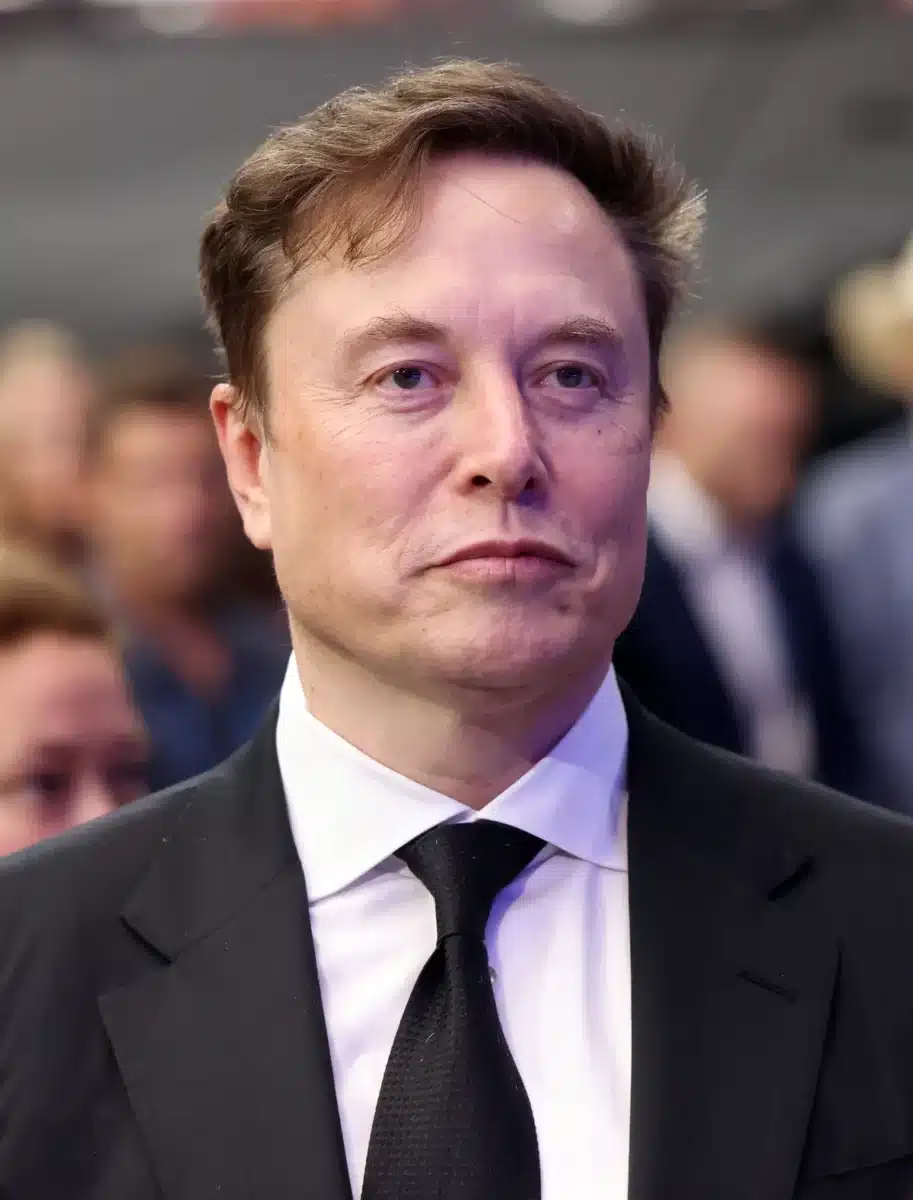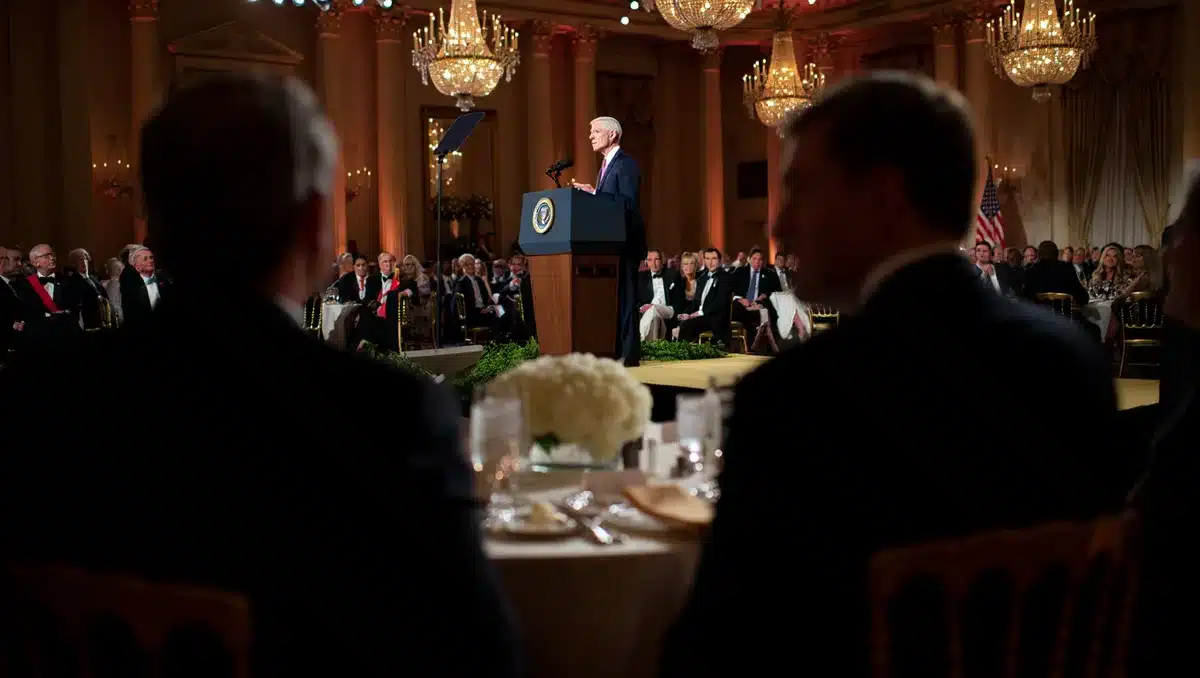
President Donald Trump announced a 2028 presidential bid at the rescheduled White House Correspondents’ Dinner on July 24, 2026, reviving talk of a potential third term that the U.S. Constitution explicitly forbids. Trump donned a red “Trump 2028” cap during his hour-long speech and declared his “intention to run for a fourth term as president,” though he insisted the remarks were jokes.
The announcement came three months after the original dinner was disrupted by an assassination attempt in April. The rescheduled event took place at the Waldorf Astoria in Washington, with heightened security measures in place. Trump’s speech mixed light jabs at the press with attacks on Democratic opponents and media figures, drawing a muted response from much of the audience.
Trump’s 2028 remarks were not his first flirtation with the idea of circumventing the two-term limit. In a March 2025 interview with NBC News, Trump suggested “there are methods” to serve a third term, citing one possible scenario in which Vice President JD Vance would run for office and then step aside. Trump later said he would run alongside Vance as his 2028 successor, though the exact mechanics of that arrangement remained unclear.
The 22nd Amendment to the Constitution, ratified in 1951, states plainly: “No person shall be elected to the office of the President more than twice.” The amendment was adopted in response to President Franklin D. Roosevelt being elected four times, establishing a consensus that future presidents should face term limits. Trump is currently in his second term, having been elected in 2016 and 2024.

Legal scholars have long disputed whether any constitutional “loophole” exists for Trump to serve a third term. In a 1999 Minnesota Law Review article, some academics argued that the 22nd Amendment’s use of the word “elected” might not prevent a twice-elected president from assuming the presidency through succession or other means. However, constitutional experts told FactCheck.org that this interpretation is “implausible” and “defeats the clear intent” of the amendment.
David A. Super, a professor of law and economics at Georgetown University Law Center, said the loophole argument misinterprets the 12th Amendment, which addresses eligibility for both president and vice president. Paul Gowder, a professor at Northwestern Pritzker School of Law, argued that the loophole theory would allow Trump to be “president for life” if he could keep finding nominal running mates—an outcome that contradicts the framers’ stated goal to prevent any president from perpetuating himself in office beyond two terms.
Any attempt to repeal the 22nd Amendment would require a two-thirds majority in both the House and Senate, followed by ratification by 75 percent of the states. Constitutional law experts have said such a repeal is “extremely unlikely” to succeed. Trump’s jokes about a third term at the dinner may have been lighthearted, but they revived a constitutional debate that has simmered throughout his second presidency.

Sources
- Nine.com.au — Trump’s announcement and remarks at the rescheduled White House Correspondents’ Dinner, July 25, 2026
- RNZ (Radio New Zealand) — Trump’s speech, third-term jokes, and security context at the dinner, July 25, 2026
- NBC News — Trump’s March 2025 interview about methods to serve a third term
- FactCheck.org — Legal scholars’ analysis of the 22nd Amendment and purported loopholes, April 3, 2025
- Congress.gov — Text and history of the 22nd Amendment