
SpaceX stock plunged below its $135 IPO price for the first time since going public in June 2026, hitting a 52-week low and erasing roughly $1 trillion in market value from its mid-June peak. The shares fell 5.4% to $123.99 on July 18, 2026, marking a sharp reversal from the record-breaking initial offering that had valued the company at $1.77 trillion and made it the seventh-largest U.S. company by market capitalization.
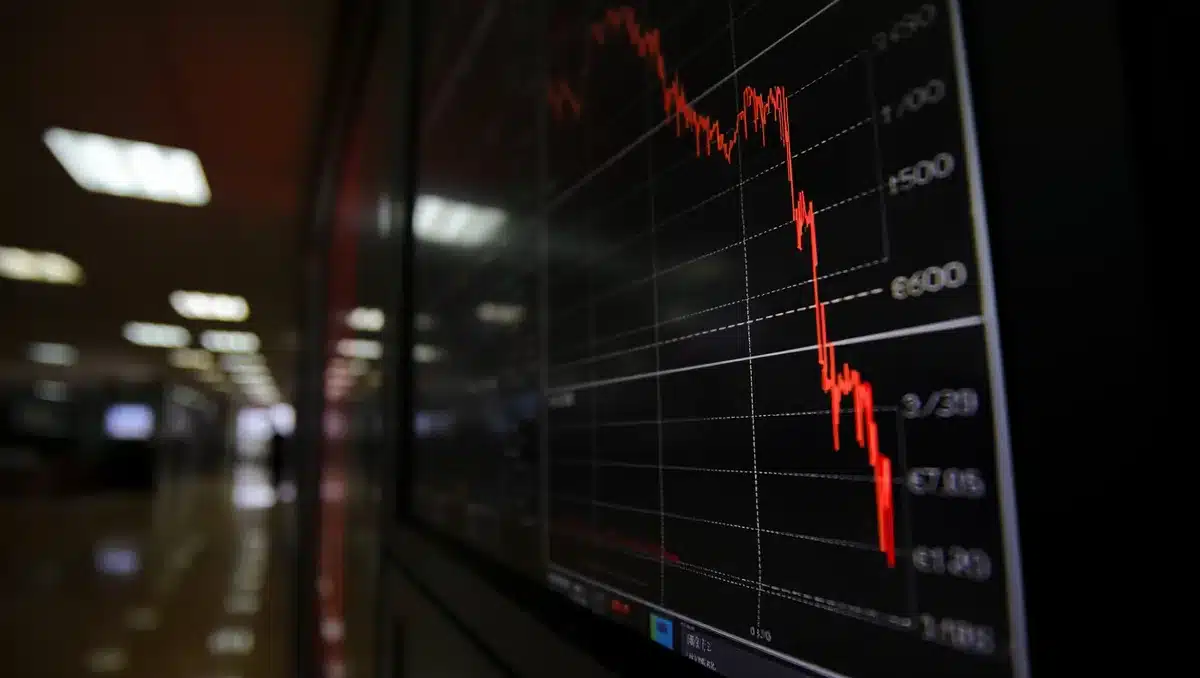
The decline reflects two separate pressures on SpaceX shares. The first is a cooling of post-IPO enthusiasm as investors digest the company’s valuation and move past the initial excitement of the June listing. Some analysts attributed the dropoff to “sputtering demand” as the market reality set in following the company’s splashy public debut.
The second catalyst was a failed Starship test launch. SpaceX called off its first Starship launch since going public after engine ignition issues triggered an automatic abort at the company’s Starbase facility in South Texas on July 17, 2026. The scrub was the first public test of how investors would react to a Starship setback, and the answer was immediate: shares fell 5.4% on heavy volume of 83.4 million shares.
Overvaluation Concerns From the Start
Analyst skepticism about SpaceX’s IPO valuation had surfaced before the stock ever traded. Morningstar analyst Nicolas Owens estimated the company’s fair value at roughly $780 billion, less than half the $1.77 trillion IPO target. Owens valued Starlink’s satellite business at about $611 billion and assigned another $170 billion in “probability-weighted scenarios” for SpaceX’s AI operations, xAI.
Other analysts were even harsher. Ed Elson, a co-host of the Prof G Markets podcast, called SpaceX’s S-1 filing “unserious, empty, hallucinatory, and borderline dishonest.” He noted the stock was set to be priced at 107 times sales, which would make it one of the most expensive stocks in history—more valuable than Walmart while generating less revenue than Macy’s. SpaceX’s own filing disclosed “a history of net losses and may not achieve profitability in the future.”

Despite the early warnings, the stock soared above $190 in mid-June before the recent decline. The pullback has been steep: shares have shed 35% from their peak, and the company has lost more than $1 trillion in market value. SpaceX remains approximately 8% below its IPO price as of late July 2026.
An employee lockup expiration looming in August adds another layer of pressure. Up to 911.5 million shares held by rank-and-file employees and early investors are expected to become eligible for sale following SpaceX’s first quarterly earnings report, scheduled for August 4. That volume represents more than 6% of total shares and creates a potential supply overhang. Macquarie analysts noted the pullback presented a buying opportunity, rating SpaceX at outperform with a $250 price target, but acknowledged that the lockup expiration window would likely drive near-term volatility.
SpaceX announced a second Starship launch attempt for late July 2026. A successful test could restore investor confidence in the program’s execution and serve as a positive catalyst for shares. However, sustained trading below the $135 IPO price keeps the stock in the media spotlight and may continue to attract technical selling from momentum investors until the company can prove its operational reliability to the public markets.
Sources
- StartupHub.ai — SpaceX stock price on July 18, 2026 ($123.99), Starship launch abort, and employee lockup details
- MarketWatch — Seven-session losing streak and 21% decline, stock recovery on July 21, August earnings date and lockup expiration timeline
- Yahoo Finance / Moneywise — Morningstar analyst Nicolas Owens’ $780 billion fair value estimate, Ed Elson’s criticism of IPO valuation, and historical loss disclosure from S-1 filing
- ABC News — Analyst commentary on post-IPO hype cooling and sputtering demand
- CNBC — Starship launch abort details and engine ignition failure