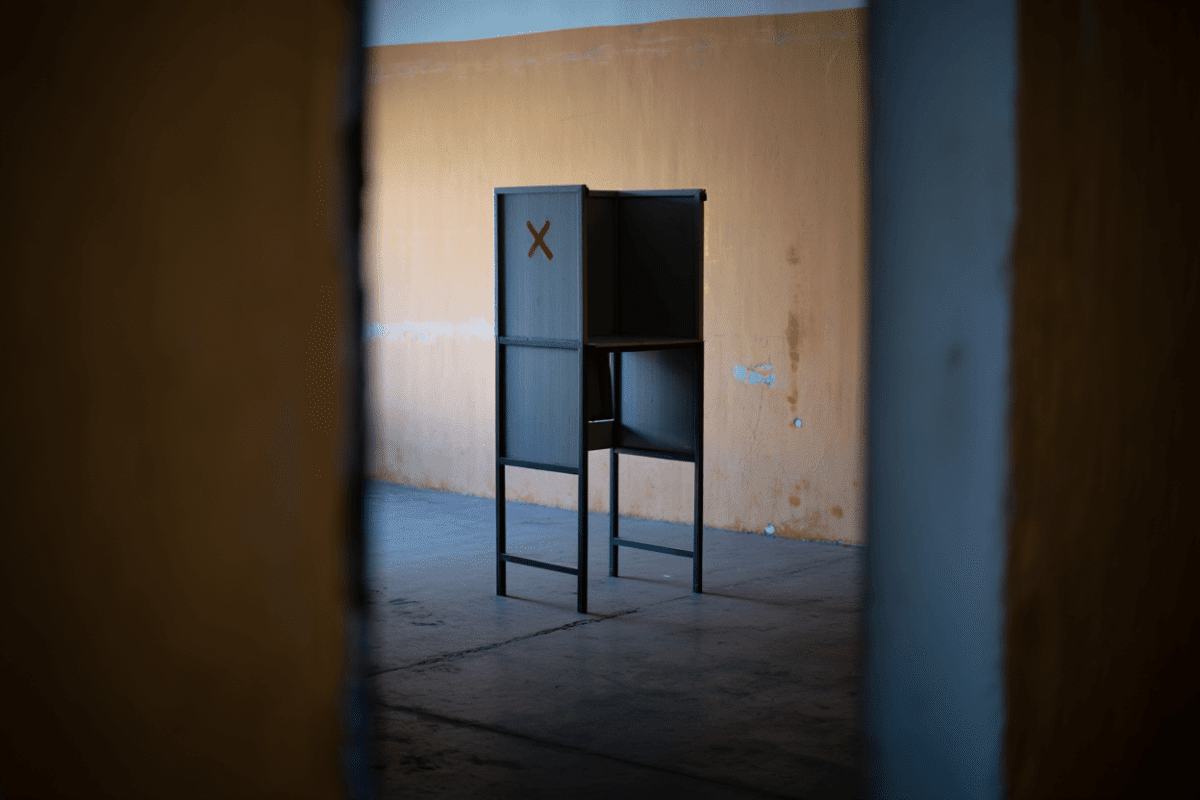
Nicaraguan President Daniel Ortega announced on Sunday that his country will no longer hold elections, a declaration that eliminates any possibility of electoral challenge to his nearly two-decade rule and further entrenches the authoritarian control he shares with his wife.
Speaking at a ceremony marking the 47th anniversary of the 1979 Sandinista revolution, the 80-year-old president said, “There won’t be any more elections here for them to try to seize the government and seize power.” He added, “The days when parties backed by the Yankees and the Somocistas would return to power are over – never again,” according to Reuters.
Ortega has continuously held power since 2007, following an earlier presidential term in the 1980s when he led Nicaragua as part of the Sandinista junta. The announcement effectively cancels elections originally scheduled for November 2027, after the government-controlled Congress voted in January 2025 to extend the presidential term from five to six years.
Last year, Ortega consolidated his grip through sweeping constitutional reforms that named his wife, Rosario Murillo, as “co-president” and extended presidential authority over all branches of government. The reforms gave Ortega and Murillo what analysts described as unprecedented power in the Central American nation, with the U.S. State Department referring to their administration as the “Murillo-Ortega dictatorship.”
Tiziano Breda, a senior analyst at the conflict-monitoring organization Armed Conflict Location and Event Data, told Reuters that the election ban marks a rhetorical and strategic escalation. “Ortega and Murillo are evidently afraid at the idea that the slightest political opening could create the conditions for dissent to manifest and threaten their grip on power,” Breda said. “Instead of staging a rigged election, they have opted to eliminate electoral competition altogether.”
The announcement reflects deepening authoritarianism in Nicaragua. In 2018, Ortega’s regime responded to widespread anti-government protests with a violent crackdown that, according to the U.N. Human Rights Council and international observers, killed more than 300 people, wounded hundreds, and forced nearly 1 million Nicaraguans into exile. The regime has since stripped nearly 550 people of citizenship, shut down more than 5,600 non-governmental organizations, closed 29 universities, and shuttered 58 media outlets.
Opposition figures described the election ban as both a confession and a calculation. Felix Maradiaga, a 2021 presidential candidate who was jailed until 2023 before being expelled to the U.S., told Reuters that Ortega’s announcement reveals “his true intention: to prevent his tyrannical project from being subjected to any form of democratic competition.” Danny Ramírez Ayérdiz, a Nicaraguan lawyer investigating government abuses, said the move “reveals the face of a dictatorship that, without any shame, has entrenched itself in power” and suggests “a potentially higher level of repression against people who demand the removal of the government.”
At least 46 people remain imprisoned in Nicaragua on political grounds, according to the Mechanism for Recognition of Political Prisoners, though Nicaragua’s government denies holding any political detainees. The country has also seen the death of imprisoned Indigenous leader Brooklyn Rivera, a four-term congressman who spent nearly three years “unjustly imprisoned” before dying in custody, according to the U.S. State Department.
Sources
- Reuters — Ortega’s announcement and quotes, constitutional reforms, 2018 crackdown death toll, analyst commentary from Tiziano Breda
- The Guardian — Ortega’s statement, 2025 constitutional reforms extending presidential term to six years and naming Murillo co-president, 2018 crackdown toll, shutdown of NGOs and media outlets
- ABC News — Ortega’s announcement, 20-year rule timeline, 2018 crackdown context, opposition commentary from Juan Sebastián Chamorro and Danny Ramírez Ayérdiz, political prisoner numbers
- Al Jazeera — 2025 constitutional reforms granting sweeping powers
- International Center for Transitional Justice — January 2025 constitutional reforms details