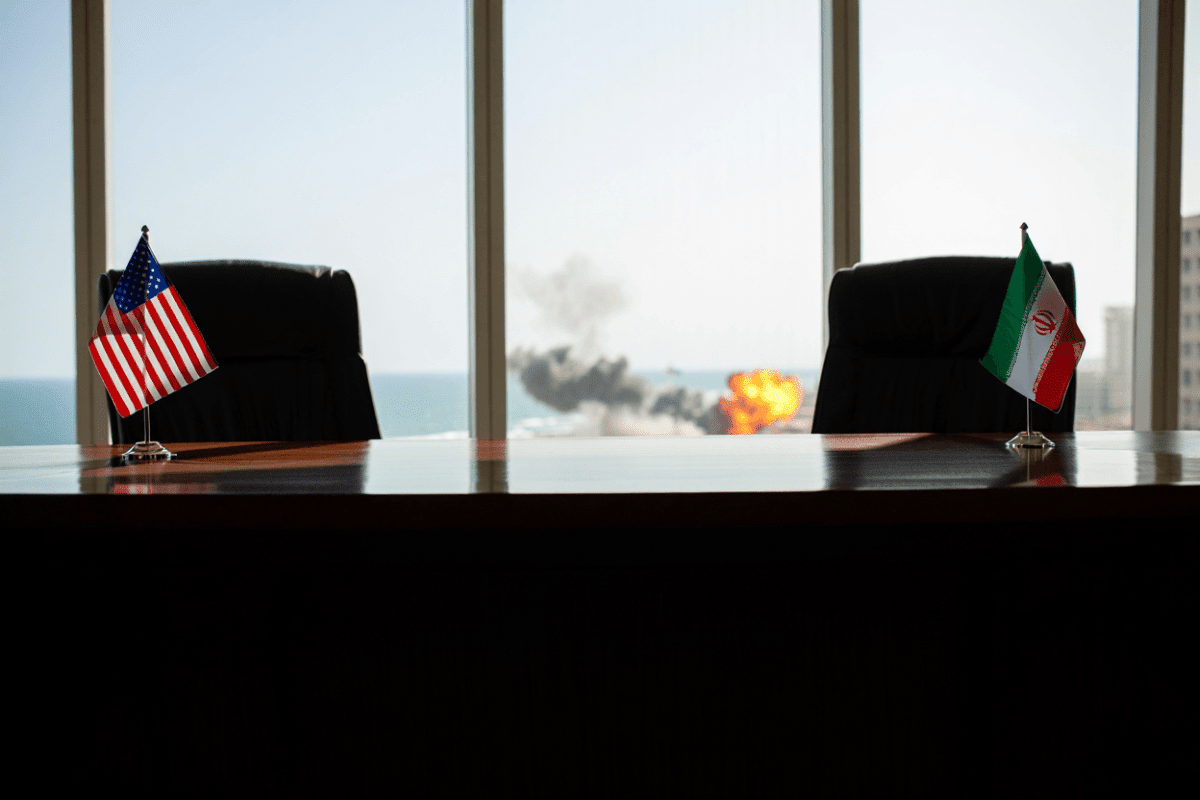
U.S. Secretary of State Marco Rubio said the United States remains open to diplomacy with Iran after the military completed its ninth consecutive night of strikes on the country, as three American service members were confirmed killed in the escalating conflict.
Rubio stated that the U.S. is “always open to a diplomatic solution,” according to remarks made on July 20, 2026. The statement came as the military campaign intensified and Iranian retaliatory attacks spread across the Persian Gulf region.
U.S. Central Command said it completed the ninth night of strikes, targeting Iranian military command centers, air defense systems, coastal surveillance sites, maritime capabilities, and missile and drone launch sites. The operation aimed to further degrade Tehran’s ability to threaten shipping through the Strait of Hormuz.
The confirmed deaths marked the first American combat casualties announced during the latest phase of the conflict. According to CENTCOM, the service members were killed in action on July 17 as U.S. and partner forces defended against Iranian ballistic missile and drone attacks in Jordan. One additional American service member remained missing in action.
The renewed military campaign follows a fragile interim agreement signed in June between Washington and Tehran—the Islamabad memorandum of understanding—which had aimed to halt attacks on shipping and provide a framework for broader negotiations. The agreement had set a 60-day implementation period intended to reopen the Strait of Hormuz and create space for talks on Iran’s nuclear program and regional conduct.
Despite the military escalation, Rubio’s statement reflected the Trump administration’s position that military pressure and diplomatic engagement can proceed in parallel. Vice President JD Vance has made similar remarks, arguing that military preparedness and negotiations should advance together.
Iran’s response has been increasingly confrontational. Iranian media reported explosions across the country’s southern coastline and, for the first time in the latest campaign, in the northwestern city of Tabriz, suggesting the geographic scope of the strikes may be expanding. The Islamic Revolutionary Guard Corps claimed it had launched missile attacks on U.S. facilities in Kuwait and Bahrain, and warned that further American military operations would trigger stronger retaliation.
The escalation has also disrupted efforts to stabilize the Strait of Hormuz. Iranian officials suspended the country’s commitments under the memorandum, accusing the United States of violating the agreement. Deputy Foreign Minister Kazem Gharibabadi said Washington had “trampled all of its commitments” and that Iran was no longer implementing its own obligations.
The widening military campaign has raised concerns about the viability of continued negotiations. Iranian Foreign Ministry spokesman Esmaeil Baghaei said Tehran was still pursuing diplomacy while keeping its armed forces fully prepared, but that the memorandum had operated on a basis of “commitment for commitment” and that Tehran no longer regarded itself as bound by it.
President Donald Trump said the latest attacks honored the fallen American service members and described them as soldiers who had fought to ensure “Iran cannot have a nuclear weapon.” He told reporters the U.S. would continue striking Iranian targets and warned of further escalation if Tehran did not return to negotiations.
The confrontation centered increasingly on control of the Strait of Hormuz, one of the world’s most important energy corridors. Brent crude oil rose more than 3 percent on Monday, climbing above $90 a barrel for the first time since June 11 as attacks on shipping and uncertainty over the waterway intensified.
A comparable prior escalation occurred in April 2020, when the U.S. killed IRGC commander Qasem Soleimani, triggering Iranian retaliation and a cycle of military exchanges that lasted weeks before de-escalating through diplomatic channels.
The deaths of the three service members brought the total number of American military personnel killed since the Iran war began in late February to 16, with more than 430 wounded, according to official figures.
Sources
- Al Jazeera — Rubio’s statement that the U.S. is “always open to a diplomatic solution” after ninth night of strikes; confirmation of three American service members killed
- Iran International — Detailed reporting on the ninth night of strikes, Iranian responses, the collapse of the memorandum of understanding, and the broader context of the U.S.-Iran conflict
- The New York Times — Coverage of Rubio’s diplomatic remarks and Iranian officials signaling openness to negotiations despite military escalation