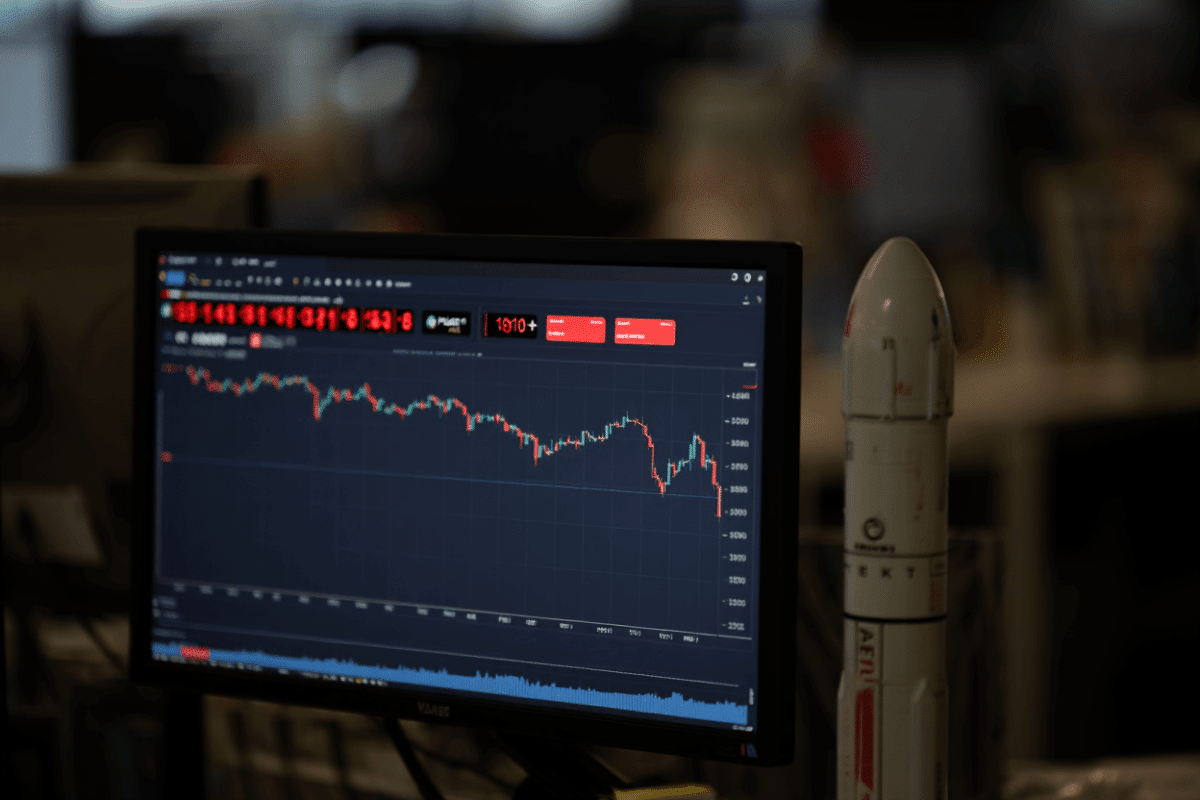
SpaceX stock has fallen below its $135 initial public offering price, down 23 percent since the company was added to the Nasdaq-100 on June 26, marking a sharp reversal from its blockbuster debut just five weeks earlier.
The stock slipped below the IPO price on July 15, touching a low of $132.28 before recovering slightly to close at $135.27, according to Reuters. It has continued to slide since then, with shares trading well below that threshold as of mid-July.
SpaceX raised $85.7 billion in June’s record-breaking IPO, the largest public debut in history, with shares priced at $135 and opening at $150 on June 12. The stock climbed as high as $225 in early trading before the steady decline began. The company’s market capitalization has lost roughly $1 trillion since its June 16 peak, according to Yahoo Finance, erasing about $320 billion since IPO day alone.
The latest pressure came from a Starship test flight abort on July 16. SpaceX had planned to launch the Starship mega rocket from its Starbase facility in South Texas, but the countdown reached zero and engines began to ignite before an automatic abort triggered, according to Spaceflight Now. Four Raptor engines on the Super Heavy booster failed to ignite as planned, forcing the scrub.
“Some of the engines didn’t start, triggering an automatic launch abort,” Elon Musk said in a post on X, adding that the company would remove and replace two Raptor engines and target an early-next-week launch attempt. Musk’s statement came as SpaceX stock posted losses in nine of the previous ten trading days, with Friday’s 5.43 percent drop marking a sixth consecutive losing day, according to CNBC.
Starship carries significant weight in SpaceX’s future. The fully reusable rocket is designed to launch the company’s next generation of Starlink satellites and is central to NASA’s Artemis program, which has contracted a modified version to land astronauts on the moon. The July 16 abort was meant to be Starship’s first test flight since the company went public, following a May test that ended in a booster mishap when five of 33 Raptor engines failed to reignite.
Beyond the Starship setback, looming lockup expirations have also weighed on the stock. Rank-and-file employees and early investors will be able to sell 911.5 million shares shortly after SpaceX’s first quarterly report, expected in August, according to Business Insider. The first quarterly report will trigger the first in a series of selling restrictions set to lift in the coming months, potentially adding downward pressure on the share price as insiders move to liquidate positions.
The decline means investors who purchased shares at the $135 IPO price are now underwater, a stark contrast to the euphoria that surrounded the company’s public market debut.
Sources
- Business Insider — SpaceX market cap loss, Starship launch abort details, lockup expiration timeline
- CNBC — Stock performance since Nasdaq-100 inclusion, engine failure details, Musk’s statements
- Spaceflight Now — Starship engine failure details and launch abort circumstances
- Yahoo Finance — Market cap loss since June 16 peak
- Reuters — Stock price movement below IPO price on July 15