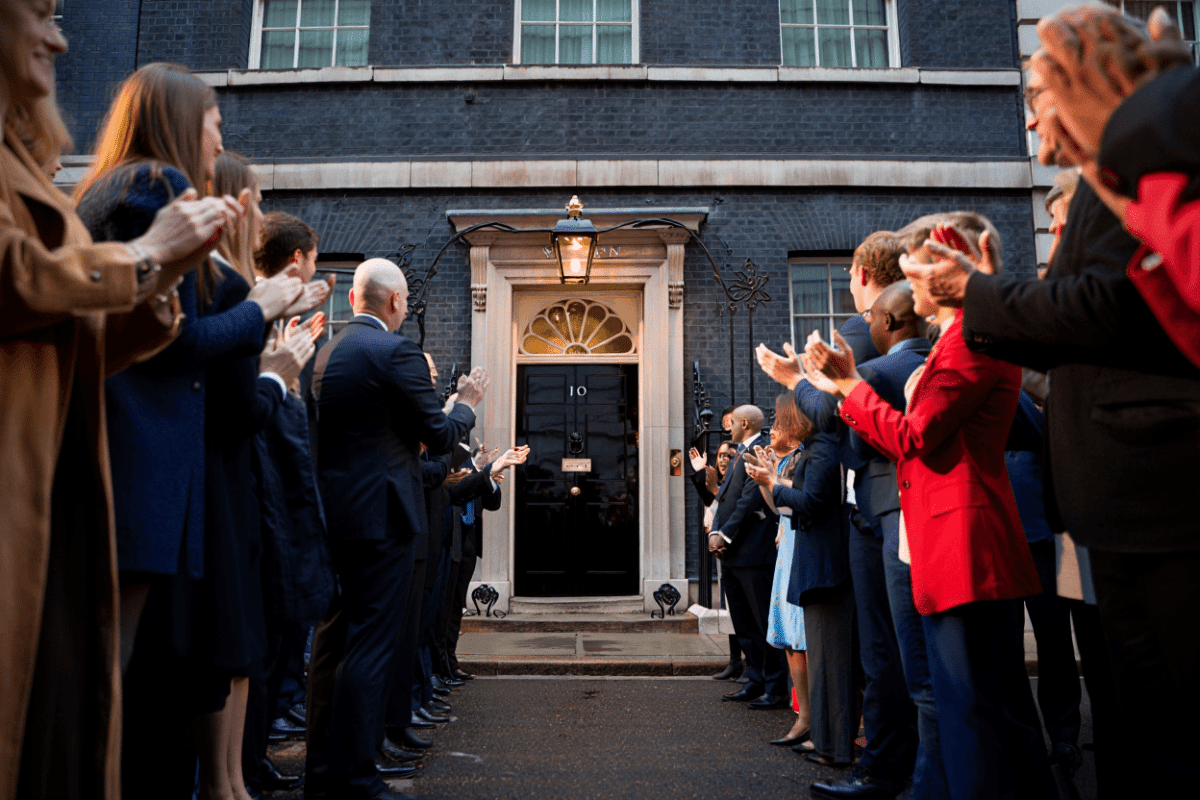
Andy Burnham became the UK prime minister on July 20, 2026, after meeting King Charles III at Buckingham Palace, making him the country’s seventh prime minister in just over a decade. In his first speech from Downing Street, Burnham pledged to make politics “work better” and said Britain must “regain our stability once again,” according to CNN.
Burnham’s rapid ascent to power began in May when Labour lost more than 1,400 seats in local elections while the hard-right Reform party surged in popularity. Keir Starmer, who had won a landslide general election victory in 2024, announced his resignation as prime minister on June 22, 2026, after mounting pressure from within his own governing party, according to Reuters. Starmer had served as prime minister for less than two years.
The path to Burnham’s premiership was unusually swift. He was not an MP when Starmer resigned; the MP for Makerfield stepped down to allow Burnham to run for his seat. Burnham won that by-election decisively on June 17, was sworn in as an MP on June 22—the same day Starmer announced his resignation—and became Labour leader on July 17, before taking office as prime minister three days later, according to CNN.
In his inaugural speech, Burnham promised to make his premiership a “circuit breaker” for Britain, pledging “the biggest changes in the last 40 years.” He argued that Britain took “some wrong turns” in the 1980s and committed to changing politics to be “more collaborative, more about problem solving than point scoring,” according to CNN. He also announced an extra £340 million ($457 million) to tackle homelessness, pledging to “end rough sleeping in our country,” and committed to measures including education reform, mental health support, and building more social housing.
Burnham’s political platform centers on devolution—shifting power away from Westminster toward regional and local governments. He plans to split his time between London and Manchester, and has pledged to establish a “Northern No. 10” in Manchester as a prime ministerial outpost, according to CNN. During his tenure as mayor of Greater Manchester from 2017 onward, the region’s economy grew at roughly twice the rate of the country as a whole, and homelessness in Manchester nearly halved from 2017 to 2024, though those figures have begun rising again since 2021.
The UK’s repeated prime ministerial turnover reflects deep political instability. When Burnham took office, he became the seventh PM in a decade—a historic pattern of leadership changes that has left many Britons concerned about the country’s direction. International leaders, including those from the European Commission, Ukraine, Ireland, and Australia, quickly sent congratulations to Burnham, with many expressing hope for stability and continued partnership with the UK, according to CNN.
Sources
- CNN — Live coverage of Burnham’s appointment, first speech, pledges on homelessness and policy measures, and international reactions
- Reuters — Starmer’s resignation announcement and Burnham’s election as Labour leader
- BBC — Confirmation of Starmer’s resignation and Burnham’s cabinet formation
- The New York Times — Burnham’s leadership election and policy pledges
- Time Magazine — Burnham’s “new politics” speech and devolution plans