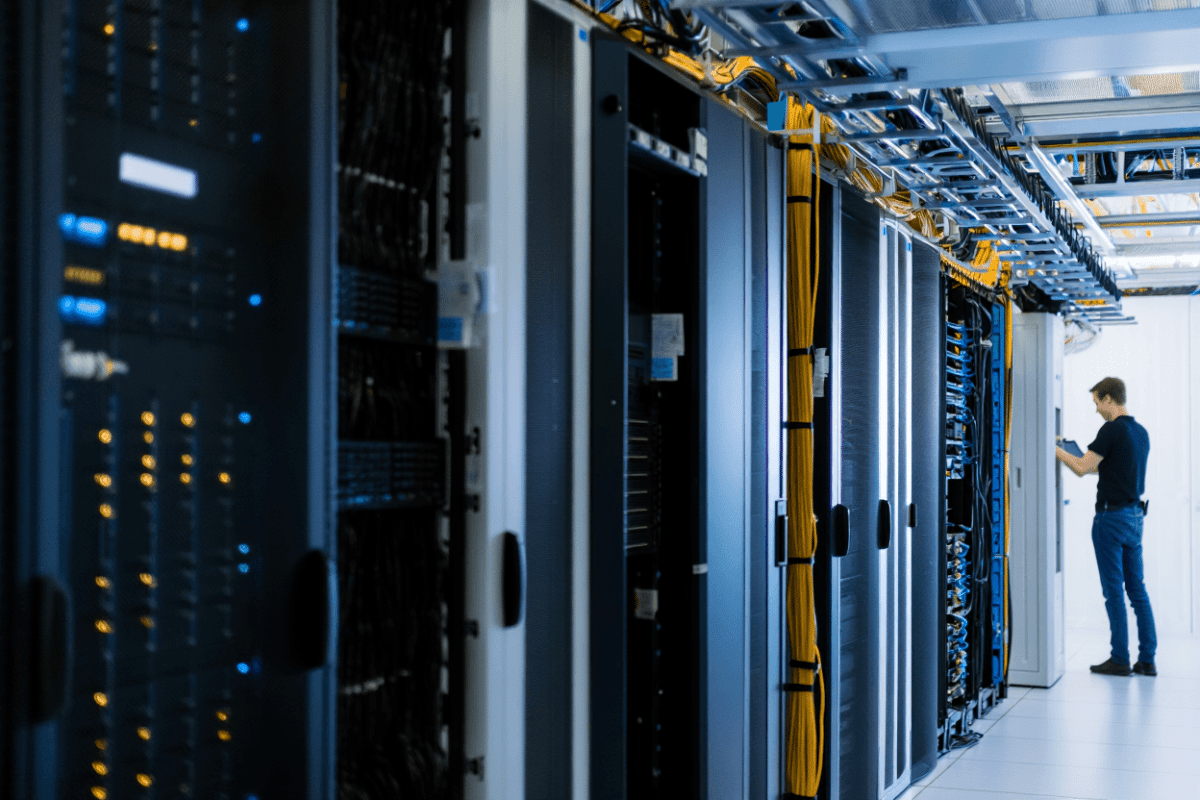
Nebius unveiled an asset-light model on July 15, 2026, allowing infrastructure partners to finance, own, and operate AI data centers while the company supplies its software platform and connects them to customers, enabling the AI cloud provider to scale globally without bearing the full capital burden of facility construction.
Under the model, partners—ranging from data center developers and infrastructure investors to regional operators—provide the physical infrastructure and hardware. Nebius contributes its systems architecture, supply-chain access, hardware design, cloud software, and services stack, then takes the resulting capacity to market through its global sales organization.
Nebius said it has already signed initial arrangements under the structure and anticipates a mix of revenue-sharing agreements, licensing fees, commissions, and committed-capacity contracts. CEO Arkady Volozh stated that the software platform “allows partners to reach a much wider customer base with much better margins than conventional wholesale bare-metal contracts,” positioning the model as a way to keep up with AI demand that continues to outrun supply across the industry.
Why the Shift Matters
The asset-light approach addresses a core constraint in AI infrastructure scaling: capital requirements. Hyperscaler cloud spending exceeded $400 billion in 2025, according to analyst estimates, and the buildout shows no sign of slowing. By delegating facility ownership to partners, Nebius reduces its own balance-sheet burden while maintaining control over the software layer and customer relationships—the highest-margin components of the business.
Partners’ data centers will join capacity from Nebius-owned facilities and colocations in a unified pool, with Nebius remaining responsible for cloud software and service levels. Customers are meant to receive the same standard of service regardless of who owns the underlying infrastructure.
Nebius’s existing customer base underscores the model’s appeal. The company holds a five-year deal with Microsoft worth up to $19.4 billion for dedicated GPU capacity, including more than 100,000 Nvidia GB300 chips. It also signed a $3 billion contract with Meta in December, later expanded to $27 billion in total commitments, including $12 billion of dedicated capacity. Those anchors give prospective infrastructure partners confidence that Nebius can deliver demand to fill their facilities.
On July 15, NBIS stock rose more than 3% in morning trading following the announcement, recovering from a nearly 8% drop the previous day when the stock fell below $200. The stock remains up more than 123% year-to-date, though down from a 52-week high near $299 in June.
The model supplements Nebius’s direct infrastructure expansion. Contracted power increased from more than 2 gigawatts at the end of 2025 to more than 3.5 gigawatts in the first quarter of 2026, with a target of at least 4 gigawatts by the end of 2026. Nvidia committed $2 billion to Nebius in March through a strategic partnership, and the company plans to bring more than 5 gigawatts of capacity online by the end of 2030.
Sources
- Blockspace Media — Detailed explanation of the asset-light model structure, partner roles, and revenue arrangements
- Nebius official newsroom — Press release announcing the business model, CEO quote, and company details
- Yahoo Finance — Stock reaction, prior day decline, year-to-date performance, and analyst context on the neocloud sector
- McKinsey & Company — Context on hyperscaler cloud spending and AI infrastructure investment scale