Saving money in 2026 requires a three-pronged approach: automate transfers to high-yield accounts, audit and cancel unused subscriptions, and take advantage of accounts offering competitive interest rates. These strategies address the core obstacles to building savings—temptation, forgotten expenses, and low returns on traditional accounts.
High-yield savings accounts have become the foundation of modern saving. As of July 2026, the best accounts offer annual percentage yields (APYs) up to 4.21%, far exceeding the national average savings rate. According to Fortune, these accounts help savers grow their money significantly faster than traditional savings vehicles.
Automating transfers is the most effective way to ensure money reaches savings before it can be spent. Most banks allow recurring transfers between accounts set for the same day you receive your paycheck. Research from BECU shows that regular automatic transfers increased both the dollar amount saved and achievement of savings goals by 1.5 to 3.5 times compared to manual saving.
The automation removes emotion and temptation from the equation. According to banking experts, setting up automatic transfers moves money to savings before you have a chance to spend it, reducing impulse purchases and eliminating the need for superhuman willpower. Even small amounts add up—as Kennebec Savings Bank notes, an extra $10 a week can make a significant difference over the course of a year.
Subscription auditing offers immediate and often substantial savings. The average American spends $219 per month on subscriptions across 8.2 active services, according to ReSubs data from March 2026, yet estimates spending only $86—a 2.5-times perception gap. This gap exists because subscriptions operate on autopilot, spread across multiple payment methods and billing dates.
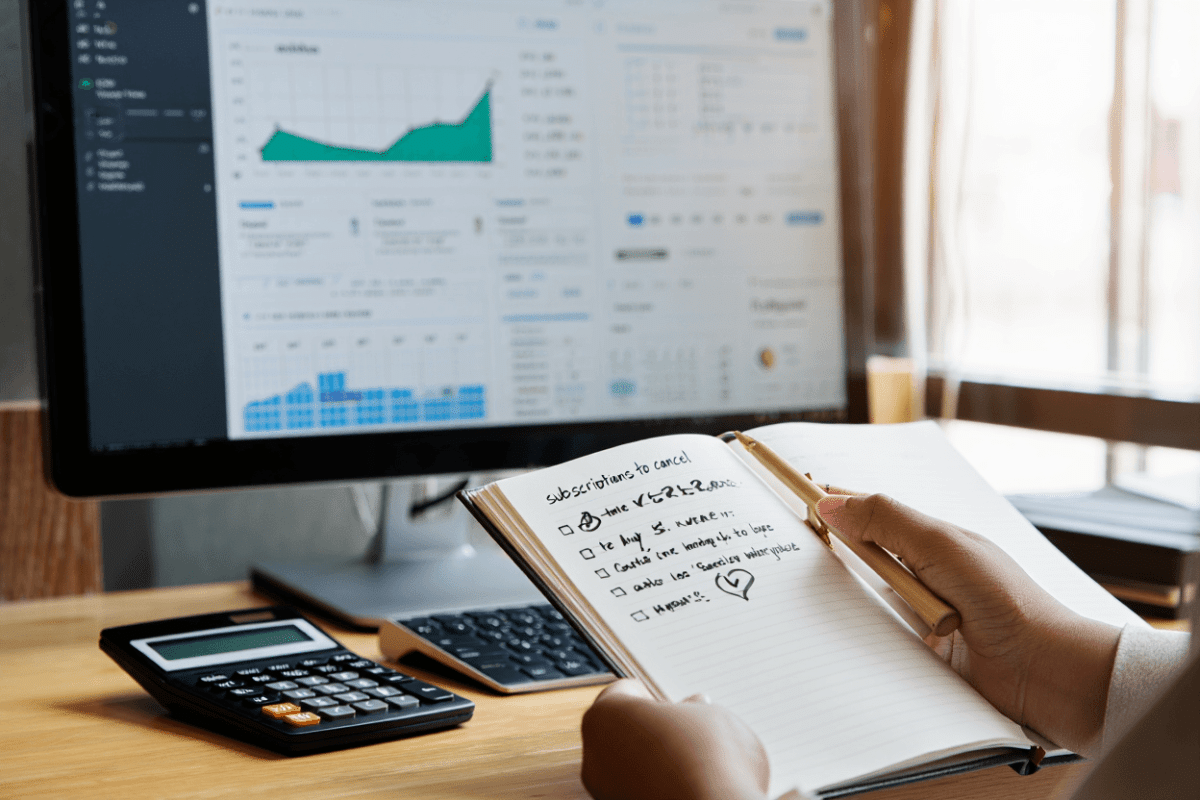
To audit subscriptions, pull your last two to three months of bank and credit card statements and identify all recurring charges. Many people discover they’re paying for services they’ve forgotten about entirely. According to industry research, 74% of consumers say it’s easy to forget about recurring charges, and 42% admit they’ve forgotten about a subscription while still being charged for it.
Once you’ve listed all subscriptions, decide what to cancel, downgrade, or keep. Tools like Quicken Simplifi and Apple’s App Store or Google Play subscription managers make tracking easier. Canceling just three or four unused subscriptions can free up $30 to $100 per month—money that can flow directly into a high-yield savings account through automatic transfers.
Combining these three strategies creates a compounding effect. A person who automates $50 monthly to a high-yield account earning 4% APY while cutting $75 in unused subscriptions would add $1,500 to savings in a year, plus roughly $30 in interest—without any additional effort after the initial setup.
Sources
- Fortune — Best high-yield savings accounts offering APYs up to 4.21%
- BECU — Research on automatic savings plan effectiveness, showing 1.5 to 3.5x improvement in savings goals
- ReSubs — Subscription spending statistics showing $219 monthly average spend with 2.5x perception gap
- Kennebec Savings Bank — Benefits of automating savings and impact of small recurring transfers
- GreenFi — Expert tips for maximizing savings including automating deposits after payday
- Bankrate — Methods for growing savings with automatic transfers