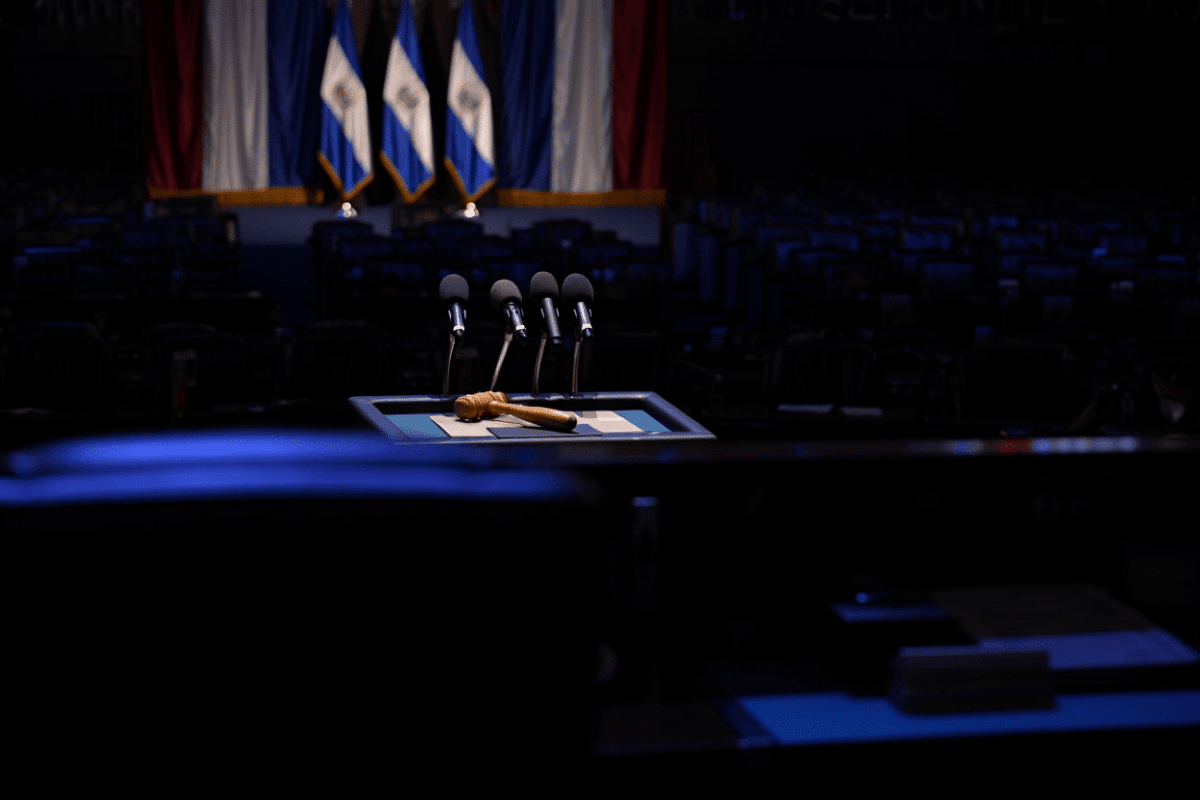
El Salvador’s ruling Nuevas Ideas party secured Nayib Bukele’s nomination for the 2027 presidential election on July 13, 2026, setting the stage for a third consecutive term after the country abolished presidential term limits last year.
Bukele, 44, ran unopposed in the party’s internal primary and will be joined by Vice President Félix Ulloa as his running mate for the February 2027 general election. The nomination comes after El Salvador’s Legislative Assembly approved a sweeping constitutional reform in July 2025 that eliminated the ban on consecutive presidential reelection and extended the presidential term from five to six years.
The constitutional changes represent a dramatic shift in El Salvador’s political framework. A September 2021 Constitutional Court ruling had previously allowed presidential reelection for only one term. The 2025 reform, passed by Bukele’s supermajority-controlled legislature, abolished that restriction entirely and moved up the presidential elections to 2027, effectively opening the door for indefinite reelection.
Bukele’s push for a third term has drawn sharp criticism from constitutional scholars and human rights advocates. Ingrid Escobar, a lawyer and director of the Salvadoran group Humanitarian Legal Aid, argued that seeking a third term is unconstitutional. She stated that “remaining in power is to avoid accountability for grave acts of corruption and crimes against humanity.” Constitutional scholars have also highlighted that Bukele’s 2024 reelection, in which he won nearly 85 percent of the vote, violated the original constitutional ban on consecutive reelection.
Despite the legal challenges to his rule, Bukele maintains extraordinarily high approval ratings. According to a Statista survey from May 2026, over 87 percent of respondents approved of his performance as president. Other recent polling has suggested approval ratings ranging from 84 to 92 percent, making him one of the most popular leaders in Latin America.
Bukele’s popularity stems largely from his aggressive security policies. Since launching a state of emergency in March 2022, his government has imprisoned more than 90,000 Salvadorans in a sweeping crackdown on gang violence. The policy has dramatically reduced homicides: El Salvador ended 2025 with just 82 recorded murders, a historic low, compared to 6,656 killings in 2015 when the country registered one of its most violent years with a homicide rate of 106 per 100,000 inhabitants.
Salvadorans credit the security crackdown with making the country safer. Bukele has defended the constitutional reforms by arguing that many developed democracies allow indefinite reelection of their heads of government. He contended that when a small, poor country like El Salvador attempts the same, it faces international criticism that larger nations do not encounter.
The ruling party controlled Legislative Assembly will now advance Bukele’s candidacy toward the February 2027 election. In that race, he is expected to face a candidate from the leftist Farabundo Marti National Liberation Front, the party that expelled Bukele in 2017. Human rights organizations have raised concerns about the state of emergency, noting that more than 500 people have died in prison since its implementation, though the government attributes most deaths to health reasons rather than violence.
Sources
- Reuters — El Salvador president’s party nominates Bukele to seek third term (July 13, 2026)
- AP News — El Salvador’s ruling party clears the way for Bukele’s 3rd term (July 14, 2026)
- BBC — El Salvador scraps term limits, paving way for Bukele to run again (July 31, 2025)
- NPR — El Salvador approves indefinite presidential reelection (July 31, 2025)
- Statista — Approval rate Nayib Bukele’s performance as president 2026 (May 2026)