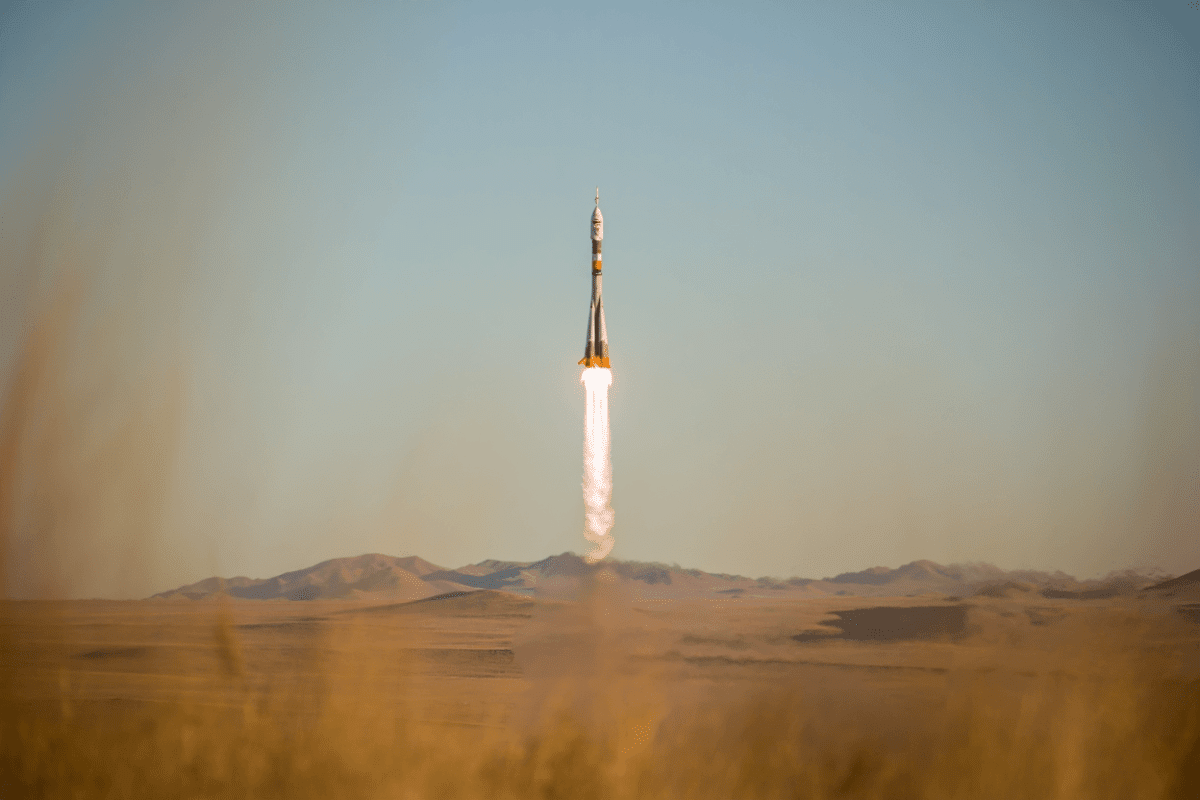
NASA astronaut Anil Menon launched to the International Space Station last night aboard Russia’s Soyuz MS-29 spacecraft, marking a significant moment for space exploration as the U.S. and Russian space agencies continue their joint operations despite ongoing geopolitical tensions. Menon, along with cosmonauts Pyotr Dubrov and Anna Kikina, lifted off at 10:47 a.m. EDT on July 14 from the Baikonur Cosmodrome in Kazakhstan, completing a three-hour, two-orbit journey before docking at the station’s Prichal module at 1:52 p.m. EDT.
Menon’s arrival marks his first spaceflight after being selected as an astronaut candidate in 2021 and graduating with NASA’s 23rd astronaut class in 2024. The 49-year-old former U.S. Space Force Colonel previously served as SpaceX’s first flight surgeon, helping to launch the company’s first crewed missions and building medical protocols for commercial spaceflight. His appointment to the ISS represents a milestone for Indian-origin space explorers, as he becomes part of a rare crew rotation combining American and Russian personnel at a time when such cooperation has faced scrutiny.
During his eight-month stay aboard the orbiting laboratory, Menon will conduct scientific research aimed at advancing human space exploration and benefiting life on Earth. His work will include research on semiconductor crystal production in microgravity to enable large-scale manufacturing of components for high-performance computers and artificial intelligence systems, as well as ultrasound imaging using augmented reality and AI methods that could eliminate the need for medical support from Earth on future deep-space missions. He will also serve as a test subject to help researchers understand how blood flow is affected in space, critical data for protecting future astronauts on long-duration missions.
The successful launch underscores the resilience of NASA-Roscosmos cooperation on the ISS, a partnership that has survived decades of Cold War legacy and recent geopolitical friction. According to U.S. News and World Report, cooperation on the 27-year-old station between NASA and Russia’s space agency Roscosmos has endured years of tensions, demonstrating the station’s role as a unique platform for international collaboration. In July 2025, the heads of Roscosmos and NASA agreed to extend joint operations of the ISS until 2030, reaffirming both nations’ commitment to the mission despite broader diplomatic challenges.
Menon’s crewmates on the Expedition 75 mission will join seven other crew members already aboard the station, bringing the total to 10 for about two weeks. The existing Expedition 74 crew includes NASA astronauts Jessica Meir, Jack Hathaway, and Chris Williams; European Space Agency astronaut Sophie Adenot; and Roscosmos cosmonauts Sergey Kud-Sverchkov, Sergei Mikaev, and Andrey Fedyaev. The crew rotation continues a tradition of integrated missions that has defined the ISS program since its inception, with Expedition 75 officially beginning on July 26 following the departure of three crew members.
Sources
- NASA — Official news release confirming Menon’s arrival at ISS, launch time, docking time, crew composition, and research objectives
- Space.com — Reporting on the July 14 launch of NASA astronaut Anil Menon and cosmonauts aboard Soyuz MS-29
- CBS News — Coverage of the crew’s eight-month mission timeline and launch details
- U.S. News & World Report — Analysis of NASA-Roscosmos cooperation on the ISS and its resilience despite geopolitical tensions
- Известия (Izvestia) — Reporting on recent agreements between Roscosmos and NASA to extend ISS operations until 2030