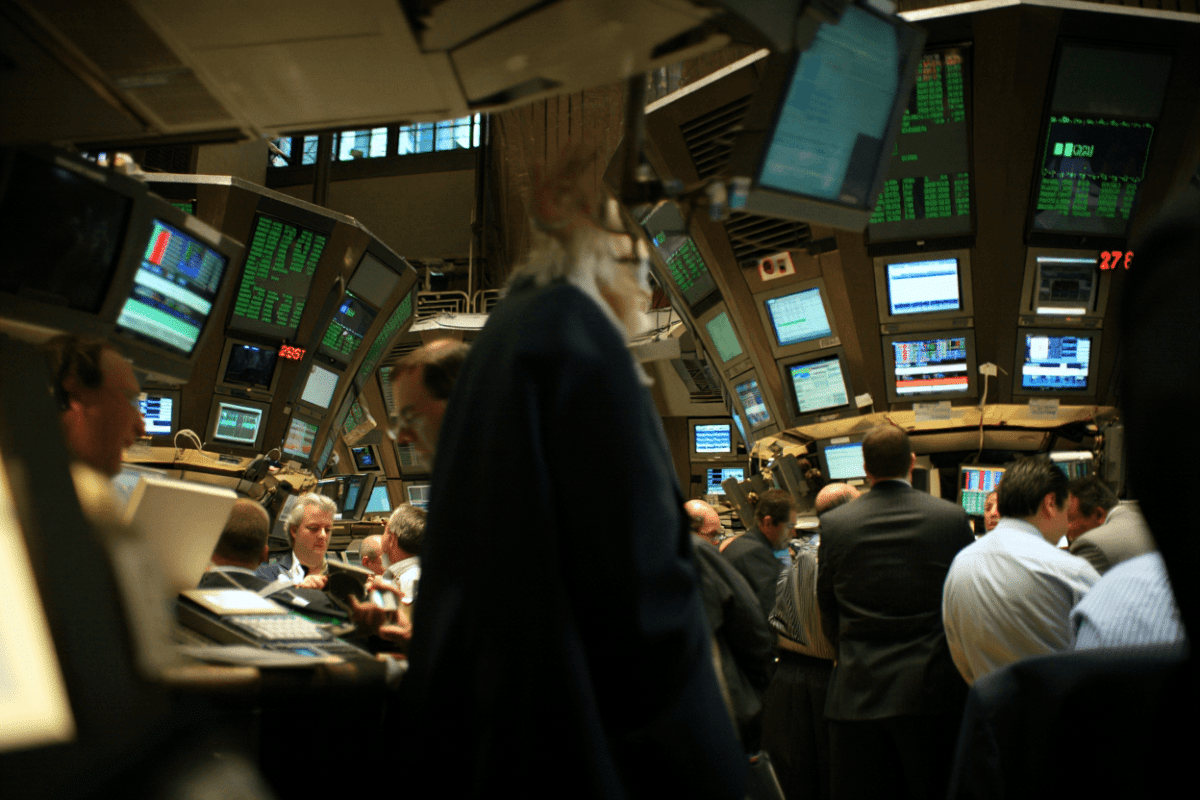
The stock market rose on softer-than-expected inflation data and strong bank earnings on July 14, with the S&P 500 gaining 0.38% and the Nasdaq Composite climbing 0.90% as investors grew more confident the Federal Reserve won’t need to raise interest rates soon. The Consumer Price Index came in at 3.5% for June, below the market consensus of 3.8%, driven largely by declining gasoline prices amid signs of progress in U.S.-Iran peace negotiations. According to Reuters, financial markets responded by pricing in an 83.4% likelihood that the Fed would hold rates steady at its July policy meeting, up from 58.3% on Monday.
The cooler inflation reading gave the market a significant boost despite ongoing Middle East tensions that have kept oil prices elevated. Chuck Carlson, chief executive at Horizon Investment Services, told Reuters that “the inflation report seems to have weakened the argument that the Fed is going to raise rates,” adding that it “gives the Fed cover, for now.” Fed Chair Kevin Warsh’s first congressional testimony since his confirmation reinforced the central bank’s commitment to containing price pressures, further reassuring investors that rate hikes may not be imminent.
Bank Earnings Deliver Strong Results
Second-quarter earnings season kicked off with five major U.S. banks reporting solid results, buoyed by trading strength and dealmaking activity. JPMorgan Chase posted the highest quarterly profit ever recorded by a U.S. bank, reaching $21.2 billion, according to Reuters. The bank’s adjusted earnings per share hit $6.14, beating Wall Street expectations of $5.85, while markets revenue surged 35% year-over-year and investment banking fees jumped 30%. JPMorgan shares rose nearly 3% despite initially falling in premarket trading, as the bank raised its 2026 expense forecast to $107.5 billion from $105 billion on the back of higher volume and revenue-related costs.
Goldman Sachs surged 9% after surpassing second-quarter profit expectations, as dealmaking picked up pace and geopolitical uncertainties boosted its trading business, according to Reuters. Bank of America advanced 2.5% after delivering consensus-beating profits, while Wells Fargo dropped 2.7% despite posting higher profits. Citigroup slid 5.3% as investor worries over expenses overshadowed its profit beat—the bank’s profit rose 45% with net income of $5.8 billion, according to the Wall Street Journal, but concerns about rising costs weighed on its stock.
Investment banking activity has been particularly robust this quarter. JPMorgan benefited from the largest initial public offering in history—Elon Musk’s SpaceX—and served as a lead underwriter on major deals including NextEra Energy’s $67 billion merger with Dominion Energy and Alphabet’s $85 billion equity offering. Global mergers and acquisitions announced so far in 2026 have surpassed $3 trillion, according to Dealogic data, providing momentum for one of Wall Street’s biggest fee-generating businesses. JPMorgan CEO Jamie Dimon said the bank was operating in “a very healthy, active, exuberant market with very high prices and very high volumes,” though he cautioned that “we just don’t know how long it will continue.”
Sources
- Reuters — Market gains, inflation data, Fed rate expectations, and bank earnings results and stock movements
- Wall Street Journal — Citigroup profit figures and stock reaction
- Dealogic — Global M&A data and investment banking revenue trends